Home Blog Page 122

Robinhood Bets Big: Prediction Markets Hub Signals New Era for Retail Trading

Robinhood establishes prediction market hub.

Robinhood, the trading platform synonymous with the rise of retail investing, has unveiled its latest innovation; a prediction markets hub. This new feature allows users to trade contracts based on real-world events, from Federal Reserve interest rate decisions to NCAA tournament outcomes. The move signals Robinhood’s ambition to expand beyond traditional equities and options into event-driven speculation. This domain was previously dominated by decentralized blockchain-based platforms like Polymarket.

While prediction markets promise a new frontier for retail traders, they also pose significant regulatory concerns and ethical questions. Do they represent a sophisticated financial instrument, or are they merely a rebranded form of gambling? And what does this shift mean for the broader fintech industry and the evolution of trading strategies?

Robinhood’s Expansion: Financial Innovation or Regulatory Minefield?

Robinhood’s prediction markets hub integrates with KalshiEX LLC, a platform regulated by the Commodity Futures Trading Commission (CFTC). This regulatory framework provides some legitimacy, distinguishing it from purely speculative or offshore betting sites. Unlike traditional sportsbooks, where bookmakers fix the odds, prediction markets function like derivatives exchanges. Prices fluctuate based on market sentiment and supply-demand dynamics.

However, regulators remain cautious. The CFTC has historically been skeptical of event contracts, due to their potential for market manipulation and ethical concerns. That’s particularly the case for those related to political outcomes. The agency previously halted Kalshi’s attempt to offer contracts on U.S. congressional elections, citing fears of undue influence and financial interests corrupting democratic processes.

Robinhood is likely to face regulatory scrutiny over how it structures these contracts. While it remains compliant with the CFTC framework, questions linger over whether these products encourage gambling behavior among retail investors. Such issues have plagued Robinhood in the past, particularly with its gamification of options trading.

The Ethical Debate: Trading Tool or Gamified Betting?

One of the central debates surrounding prediction markets is their ethical standing. Proponents argue that they serve as a collective intelligence mechanism. They aggregate insights from diverse participants to predict real-world events more accurately than traditional forecasting models. Research has shown that markets like these can outperform expert analysis in elections, economic trends, and even disease outbreaks.

On the other hand, critics warn that prediction markets can promote reckless speculation, especially when tied to sensitive or morally contentious events. The risk of market participants intentionally influencing outcomes, such as large traders affecting Federal Reserve policy expectations through mass speculation, raises concerns about financial integrity.

Moreover, Robinhood’s user base skews toward younger, less experienced traders, increasing the risk of impulse-driven trading. Given its past controversies, including the gamification of stock and options trading, some analysts worry that prediction markets could further encourage high-risk behavior.

The Broader Trend: Are Prediction Markets the Future of Trading?

Robinhood’s entry into event-driven speculation is part of a larger fintech trend. Decentralized platforms like Polymarket and Augur have already demonstrated the potential of blockchain-based prediction markets. They allow users to wager on anything from Bitcoin ETF approvals to geopolitical events. These platforms operate on the principle of crowdsourced intelligence, using decentralized oracles to settle contracts transparently.

Institutional investors are also taking notice. Hedge funds and data-driven trading firms have explored predictive markets as alternative data sources. They leverage them to enhance algorithmic trading models. If prediction markets prove to be a reliable indicator of economic shifts, they could become a valuable tool for risk management and financial planning.

However, the line between speculation and gambling remains thin. While Robinhood’s prediction hub operates within regulatory bounds, it enters a gray area where finance and entertainment intersect. Whether this becomes a mainstream investment tool or a regulatory headache will depend on how authorities define and oversee event-based trading.

Conclusion: A Calculated Bet on the Future

Robinhood’s launch of prediction markets is an unmistakable signal that retail trading is evolving. It goes beyond stocks and crypto, entering a new, event-driven era. With CFTC oversight and institutional interest, prediction markets have the potential to become a legitimate financial tool. They can offer valuable insights into global events and economic trends.

However, the ethical and regulatory implications remain unresolved. Whether Robinhood’s latest move will be hailed as an innovative expansion of financial markets or condemned as a gambling loophole remains to be seen. As regulators monitor the development, and traders test the waters, one thing is certain: prediction markets are no longer a niche experiment but a rising force in modern finance.

Readers’ frequently asked questions

How do prediction markets work, and how do they differ from traditional trading?

Prediction markets function by allowing users to buy and sell contracts that represent the likelihood of a specific event occurring. Each contract typically has a price between $0 and $1, with the price reflecting the probability assigned by market participants. If an event occurs, the contract settles at $1, and if it doesn’t, it settles at $0. This differs from traditional stock or options trading. The value of a prediction market contract is purely tied to whether an event happens, rather than company performance or underlying asset movements. Unlike binary options, which are often banned due to concerns over gambling mechanics, regulated prediction markets, like Robinhood’s hub in partnership with Kalshi, are structured to provide financial instruments for event-based speculation while maintaining compliance with commodity and futures regulations.

Do I need cryptocurrency to trade in Robinhood’s prediction markets?

No, Robinhood’s prediction markets hub does not require cryptocurrency. Unlike blockchain-based platforms like Polymarket, which uses stablecoins like USDC, Robinhood allows users to trade event contracts using U.S. dollars directly through its app. This makes it more accessible to retail investors who are not familiar with crypto wallets or decentralized exchanges. Since Robinhood’s platform is regulated by the Commodity Futures Trading Commission (CFTC) through its partnership with KalshiEX LLC, it operates similarly to a traditional trading platform rather than a blockchain-based betting market.

Are there risks associated with trading on prediction markets, and can they be manipulated?

Yes, prediction markets come with inherent risks, just like any other form of speculative trading. Since the price of a contract reflects the probability of an event occurring, incorrect or biased market sentiment can lead to misleading prices, especially in low-liquidity markets where a few traders can disproportionately influence outcomes. Keep in mind that prediction markets deal with real-world events. They are susceptible to manipulation if participants attempt to influence outcomes to profit from their positions. For example, if a trader places a large bet on a specific Fed rate decision, they might try to spread misleading information to sway public perception. Regulatory oversight, such as Robinhood’s compliance with the CFTC, helps mitigate some risks. Nevertheless, traders should remain cautious. Prediction markets, like all trading platforms, can be influenced by speculation, misinformation, and unexpected real-world developments.

What Is In It For You? Action Items You Might Want to Consider

Use Prediction Markets as a Strategic Hedge

If you’re already active in traditional or crypto markets, event contracts can be a hedging tool against economic uncertainty. For instance, if you’re heavily invested in tech stocks sensitive to interest rate hikes, trading a Fed rate decision contract could help you offset potential losses. You can mitigate risks associated with market-moving announcements By taking positions on key macroeconomic events.

Compare Robinhood’s Platform with Decentralized Alternatives

Robinhood’s prediction markets hub is regulated and USD-based, making it accessible for traditional traders. However, if you’re comfortable with crypto-based alternatives like Polymarket, you might find a wider variety of events to trade on. That may include political outcomes and crypto-specific market trends. Consider experimenting with both platforms to understand their advantages. Robinhood for regulatory security and ease of use, Polymarket for broader market access, and higher volatility opportunities.

Monitor Liquidity and Market Sentiment Before Entering a Trade

Unlike stocks or crypto, where deep liquidity ensures smoother price movements, prediction markets can be more volatile due to fewer participants. This means a small number of traders can significantly influence prices. Before taking a position, assess how liquid a contract is and whether price movements reflect genuine market sentiment. Look for shifts in public opinion, economic data, or breaking news that could alter the probability of an event occurring, giving you an edge in trading decisions.

OKX Halts DEX Aggregator as EU Investigates Potential Links to Crypto Laundering

OKX suspends its DEX aggregator service.

Crypto exchange OKX has temporarily suspended its decentralized exchange (DEX) aggregator service amidst increasing regulatory scrutiny from the European Union. Reports indicate that EU authorities are investigating whether OKX’s Web3 infrastructure was used to launder funds linked to the $1.5 billion Bybit hack. OKX has denied being the subject of a direct investigation. The pause still raises broader concerns about compliance risks in decentralized finance (DeFi) and the challenges of maintaining regulatory adherence while ensuring security in crypto transactions.

Regulatory Pressure Mounts on OKX

OKX’s move comes amid growing regulatory concerns over illicit financial activity in the cryptocurrency sector. According to reports, EU regulators are examining whether OKX’s Web3 services were exploited to facilitate money laundering operations. This follows an extensive probe into the Bybit hack. In what has been described as one of the largest cyber breaches in the industry the exchange saw over a billion dollars worth of crypto assets siphoned off its reserves.

OKX, however, has refuted claims that it is under investigation, emphasizing its commitment to compliance and proactive security measures. The exchange characterized the suspension as a precautionary step. It wants to reinforce its security protocols and ensure malicious actors cannot misuse its decentralized trading services.

Security Concerns and Lazarus Group Threat

In addition to regulatory pressure, security concerns played a pivotal role in OKX’s decision to halt the DEX aggregator. Intelligence reports suggest that the notorious North Korean hacking syndicate, Lazarus Group, attempted to exploit vulnerabilities in OKX’s DeFi infrastructure. The group has been linked to multiple high-profile cyber heists in the past. Exchanges and regulators are increasingly vigilant over potential threats.

To counter these risks, OKX has introduced enhanced security measures, including real-time blocking of suspicious addresses. It also implemented a hacker address detection system within its Web3 services. While the exchange has reassured users that its wallet services remain operational, the temporary halt of the DEX aggregator underscores the ongoing struggle between maintaining decentralized accessibility and ensuring robust security measures.

Impact on Traders, Liquidity Providers, and DeFi Markets

The suspension of OKX’s DEX aggregator has had immediate ramifications for traders and liquidity providers relying on the platform for decentralized asset exchanges. With the service currently unavailable, users must seek alternative routes to access liquidity pools. The DeFi market could become increasingly fragmented.

This suspension could temporarily disrupt liquidity providers’ trading volume and capital efficiency. DeFi protocols depend on seamless aggregator services to optimize trading routes and minimize slippage. Any disruption could impact the broader ecosystem’s stability.

Moreover, the regulatory scrutiny surrounding OKX signals a wider trend of heightened compliance enforcement in the DeFi sector. Market participants may need to brace for further interventions as regulators worldwide seek to impose stricter oversight on decentralized trading platforms, particularly those suspected of being exploited for illicit financial activity.

The Future of DeFi Under Regulatory Scrutiny

OKX’s DEX aggregator suspension reminds us that DeFi platforms are increasingly under the regulatory microscope. While decentralization remains a core principle of blockchain-based finance, we cannot ignore the need for compliance and security. Exchanges like OKX face the challenge of navigating between maintaining decentralized access and implementing safeguards that align with regulatory expectations.

Moving forward, industry stakeholders must work collaboratively with regulators to establish transparent frameworks that protect users without stifling innovation. DeFi platforms may need to adopt more rigorous Know Your Customer (KYC) and Anti-Money Laundering (AML) measures to prevent exploitation by bad actors.

For traders and liquidity providers, the current suspension highlights the importance of diversifying exposure across multiple DeFi platforms to mitigate risks associated with regulatory actions or security breaches. As OKX works toward reinstating its DEX aggregator service, market participants will watch closely how the exchange balances compliance, security, and decentralization in an increasingly scrutinized industry.

OKX’s decision to halt its DEX aggregator reflects the mounting challenges DeFi platforms face in a rapidly evolving regulatory and security landscape. Though the exchange positioned the move as a precautionary step, it has far-reaching implications for compliance, security, and market stability. As regulators continue to tighten oversight on crypto transactions, the industry must adapt to new realities while striving to preserve DeFi’s core tenets.

Readers’ frequently asked questions

What exactly is a DEX aggregator?

A DEX aggregator is a service that scans multiple decentralized exchanges (DEXs) to find the best available prices and liquidity for a given trade. Instead of a trader manually comparing rates across different DEXs, a DEX aggregator automatically routes transactions through the most efficient trading path. That minimizes costs and slippage. A standalone DEX executes trades only on its own platform. In contrast, a DEX aggregator acts as a bridge, optimizing trade execution by tapping into multiple liquidity sources. The suspension of OKX’s DEX aggregator means traders must manually search for the best trade routes or use alternative aggregators to execute their transactions efficiently.

How does money laundering happen in DeFi, and why is OKX being scrutinized?

In traditional finance, banks and financial institutions enforce strict Know Your Customer (KYC) and Anti-Money Laundering (AML) protocols to prevent illicit activities. However, in decentralized finance (DeFi), users can interact with smart contracts without intermediaries. Criminals can exploit this anonymity to move stolen funds. In cases like the Bybit hack, bad actors often “wash” stolen crypto assets through multiple DeFi protocols. That makes it harder to trace the assets. Authorities suspect that OKX’s Web3 infrastructure, particularly its DEX aggregator, may have been used as part of a laundering process. OKX, however, denies direct involvement. EU regulators are investigating whether OKX’s platform was leveraged to facilitate fund movements tied to the hack. In the aftermath of this breach, we could see regulators tighten compliance measures in the DeFi space.

How does the suspension affect regular traders and liquidity providers on OKX?

The immediate impact is that users who relied on OKX’s DEX aggregator must now manually search for optimal trading routes or use alternative aggregators. This can lead to less efficient trading, increased transaction costs, and potential liquidity fragmentation across DeFi markets. For liquidity providers, the pause means a temporary disruption of trading volumes. They deposit funds into decentralized pools to earn fees but they now face reduced potential earnings. Additionally, this suspension signals a broader regulatory shift. DeFi users might face stricter compliance measures in the future, possibly affecting the ease of access and anonymity many traders value in decentralized platforms.

What Is In It For You? Action Items You Might Want to Consider

Explore Alternative DEX Aggregators for Efficient Trading

With OKX’s DEX aggregator temporarily suspended, traders should consider using other well-established aggregators like 1inch, Matcha, or Paraswap. These platforms offer similar services by scanning multiple decentralized exchanges to find the best trading routes. Before switching, check their liquidity sources, fee structures, and security measures to ensure they are a reliable and efficient alternative.

Monitor Regulatory Developments to Stay Ahead of Compliance Changes

The EU’s scrutiny of OKX highlights the increasing regulatory focus on decentralized finance (DeFi). Traders should keep an eye on upcoming regulatory changes that could impact how they access and use DeFi services. Follow updates from regulatory bodies and crypto news sources. Also, OKX’s official announcements will help you stay informed and adapt your trading strategy accordingly.

Diversify Trading Strategies to Reduce Dependence on a Single Platform

Relying solely on one exchange or aggregator can be risky, especially when regulatory issues or security concerns arise. To minimize disruptions, traders should diversify their trading tools and strategies. Consider using multiple decentralized and centralized exchanges. Keep a mix of self-custody and exchange wallets, and establish alternative trading routes to maintain flexibility in volatile market conditions.

Crypto-Powered Betting: The Rise of DeFi Sportsbooks

Blockchain technology is reshaping sports betting and prediction markets far beyond its use of crypto for payments.

Traditional sportsbooks have long dominated the sports betting industry, setting odds, holding funds, and controlling payouts. But as March Madness fever sweeps the nation, decentralized finance (DeFi) offers a new way to bet. It entirely removes the middleman! Platforms like BetDEX, Polymarket, and Wagerr use blockchain-based smart contracts to automate bets, eliminate counterparty risk, and ensure transparent outcomes. With crypto betting gaining traction, will this year’s NCAA tournament be a proving ground for DeFi sportsbooks? Or will regulatory roadblocks keep blockchain’s impact on the sidelines?

How DeFi is Changing the Betting Landscape

Decentralized sports betting platforms operate on blockchain networks, leveraging smart contracts to facilitate wagering without a central authority. Unlike traditional sportsbooks, relying on bookkeepers and betting operators to set odds and process payouts, DeFi sportsbooks enable peer-to-peer (P2P) betting with verifiable transparency.

One of the key advantages of DeFi betting is its trustless nature. Smart contracts automatically execute wagers, holding funds in escrow and distributing winnings based on predefined conditions. This eliminates disputes over payouts and ensures that bets are settled fairly and instantly. Additionally, because blockchain transactions are immutable and publicly recorded, bettors can verify that odds and payouts are determined honestly.

Platforms Leading the DeFi Betting Revolution

Several blockchain-based sports betting platforms are gaining momentum as alternatives to traditional bookmakers:

  • BetDEX: Built on the Solana blockchain, BetDEX is a decentralized betting exchange that eliminates counterparty risk using smart contracts for direct peer-to-peer betting. With fast transactions and low fees, it seeks to offer a more efficient and transparent alternative to centralized sportsbooks.
  • Polymarket: A decentralized prediction market platform running on Ethereum and Polygon. Polymarket allows users to bet on various events, including sports outcomes, with settlements based on real-world data oracles. The platform offers a liquid market where bettors trade shares of outcomes rather than placing traditional wagers.
  • Wagerr: Operating on its own blockchain, Wagerr uses an oracle system to verify sports results and settle bets. Focused on automation and decentralization, Wagerr aims to remove the operational risks associated with centralized sportsbooks while providing seamless betting experiences.

These platforms showcase DeFi’s potential to disrupt the traditional sports betting model by offering fairer odds, reducing operational costs, and increasing accessibility for global users.

Challenges and Regulatory Hurdles

Despite the advantages, DeFi sportsbooks face significant regulatory challenges. Unlike centralized operators, which must comply with gambling regulations in specific jurisdictions, decentralized platforms operate globally and without direct oversight. This raises concerns about anti-money laundering (AML) compliance, consumer protection, and the legality of borderless wagering.

In the U.S., sports betting is regulated on a state-by-state basis, with licensed operators required to adhere to strict guidelines. DeFi betting platforms, by contrast, are largely unregulated, which may prompt scrutiny from lawmakers and financial watchdogs. Platforms like Polymarket have already faced regulatory actions, such as the Commodity Futures Trading Commission (CFTC) issuing fines for offering event-based binary options without proper registration.

Moreover, scalability and user experience remain barriers to widespread adoption. Many blockchain-based betting platforms require users to manage crypto wallets, deal with gas fees, and navigate complex interfaces. This can deter casual sports bettors accustomed to the simplicity of traditional platforms.

Will March Madness Be a Game-Changer?

With millions of dollars wagered annually on March Madness, the tournament presents a massive opportunity for DeFi sportsbooks to showcase their benefits. If platforms like BetDEX and Polymarket can demonstrate faster transactions, better odds, and increased transparency, they could attract a growing segment of bettors seeking alternatives to traditional bookmaking.

However, the future of DeFi betting will depend on its ability to balance innovation with regulatory compliance. As governments consider how to regulate blockchain-based gambling, platforms must navigate legal uncertainties while improving accessibility and security for users.
Blockchain and DeFi are no longer just theoretical disruptors in sports betting – they are real, functional, and ready to challenge the status quo. Whether regulators embrace or resist this evolution, the decentralized betting revolution is well underway.

Readers’ frequently asked questions

How do I place a bet on a DeFi sportsbook like BetDEX or Polymarket?

Placing a bet on a DeFi sportsbook involves a few steps that differ from traditional betting platforms. First, you need a cryptocurrency wallet, such as MetaMask or Phantom, depending on the blockchain the platform operates on. For example, BetDEX runs on Solana, so you’ll need a wallet compatible with Solana-based assets. Once you set up your wallet, you need to deposit funds in the form of cryptocurrency, usually stablecoins or a platform-specific token. After connecting your wallet to the DeFi sportsbook, you can browse available betting markets, select an event, and place a wager. Instead of placing a bet with a centralized bookmaker, your funds are locked in a smart contract, paying out winnings automatically if your prediction is correct. Unlike traditional sportsbooks, there are no account verifications or withdrawal delays because all transactions are handled through blockchain technology.

The legality of DeFi sports betting depends on your location. Traditional online sportsbooks must comply with state and national regulations, and many jurisdictions strictly regulate gambling activities. DeFi sportsbooks operate on decentralized networks. They are not licensed in any single country, which creates a legal gray area. Some platforms block access from certain regions due to regulatory concerns, but many do not impose restrictions based on user location. However, just because a DeFi sportsbook allows you to place a bet does not mean it is legal in your jurisdiction. If your country or state has strict online gambling laws, you could potentially be violating regulations by using a decentralized betting platform. It’s advisable to research your local laws and understand the risks before placing a bet.

What happens if a DeFi sportsbook is hacked or a smart contract fails?

Since DeFi sportsbooks operate using blockchain technology, they are generally more secure than traditional online betting platforms in terms of data integrity and fund management. However, they are not immune to risks such as smart contract vulnerabilities, hacking attempts, or oracle manipulation. If a platform’s smart contract has a flaw, hackers could exploit it to drain funds or manipulate bets. In such cases, recovering lost funds can be difficult, as transactions on a blockchain are immutable. Some platforms mitigate these risks by undergoing third-party audits, implementing bug bounties, and using decentralized oracles to verify event outcomes. However, there is always a degree of risk when using any blockchain-based financial service. Users should research whether the used platform has been independently audited, store only the necessary amount of funds in their betting wallet, and be cautious of new or unproven DeFi betting platforms.

What Is In It For You? Action Items You Might Want to Consider

Explore DeFi Betting Platforms Before March Madness Begins

With major decentralized sportsbooks like BetDEX, Polymarket, and Wagerr gaining traction, now is the time to explore how these platforms work before the NCAA tournament starts. Create a crypto wallet compatible with the platform of your choice. Familiarize yourself with the betting process, and test small wagers to understand how smart contract-based betting operates. This will give you a head start in leveraging DeFi sportsbooks when betting volume surges during March Madness.

Diversify Your Betting Strategy with Crypto and Stablecoins

Unlike traditional sportsbooks that deal in fiat, DeFi platforms typically use cryptocurrencies, often stablecoins like USDC. To manage risk, consider diversifying your betting bankroll between crypto and stable assets. While betting in native platform tokens can offer additional rewards or lower fees, stablecoins help you maintain value stability. Having a mix ensures you’re not overly exposed to market volatility while participating in DeFi betting markets.

Stay Updated on Regulatory Developments Affecting DeFi Betting

Regulation around DeFi sportsbooks remains a gray area, with authorities closely watching blockchain-based gambling platforms. As these platforms grow in popularity, regulatory action could impact their accessibility, taxation, or legal standing in various jurisdictions. Keep an eye on developments from financial regulators like the CFTC and SEC, especially regarding event-based prediction markets. Being informed will help you adapt to any changes and ensure you’re betting within legal frameworks.

Sanctions Under Siege: Can Crypto Crackdowns Stop Russia’s Blockchain-Backed Oil Trade?

Russia’s Crypto Loophole: Can Sanctions Stop Blockchain-Powered Oil Trade?

As Russia ramps up its use of Bitcoin (BTC) and stablecoins such as Tether (USDT) to facilitate oil trade with China and India, Western regulators are scrambling to close the loopholes that allow such transactions to bypass sanctions. Governments and financial watchdogs are now eyeing stricter measures against crypto exchanges, wallet providers, and on-chain tracking firms that facilitate these trades. But with blockchain’s decentralized nature and the rising influence of BRICS nations in alternative financial networks, can sanctions enforcement agencies truly keep up? The answer may redefine the future of financial regulation in the digital age.

How Crypto is Powering Russia’s Oil Trade

According to recent reports, Russian oil exporters increasingly rely on digital assets to process payments from buyers in China and India. Since many Russian banks were cut off from SWIFT – the global financial messaging system – cryptocurrency has provided an alternative way to settle international trade transactions without using Western-controlled banking networks.

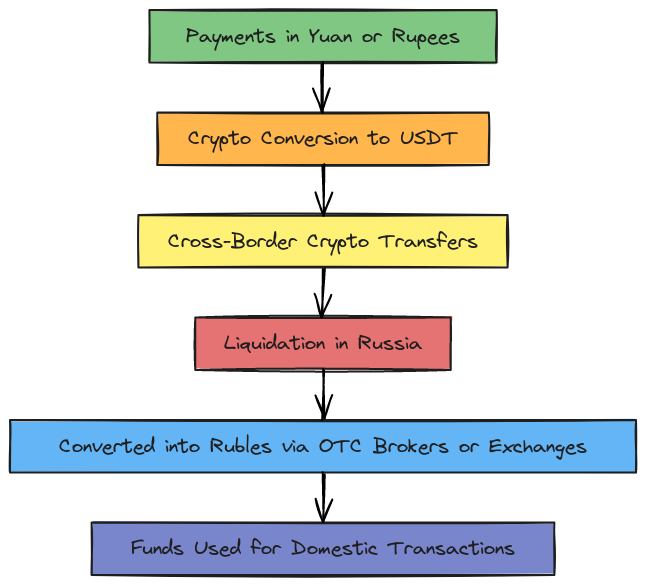
The mechanism behind this operation is relatively straightforward:

Payments in Yuan or Rupees: Chinese and Indian buyers pay for Russian oil in their respective national currencies.

Crypto Conversion: These payments are then converted into cryptocurrencies – mainly stablecoins like USDT, which provide liquidity and stability.

Cross-Border Transfers: The crypto assets are transferred across borders, bypassing financial institutions subject to Western sanctions.

Liquidation in Russia: The received crypto is ultimately converted into Russian rubles through local exchanges or over-the-counter (OTC) brokers.

While crypto transactions currently account for a small portion of Russia’s $192 billion annual oil trade, their use is steadily growing. Insiders suggest that digital assets are being deployed strategically, particularly in dealings where traditional banking channels pose higher risks due to sanctions compliance.

Western Regulators Respond: Sanctioning Exchanges and Crypto Firms

To curb Russia’s reliance on crypto for trade, the U.S. and European Union have started targeting crypto exchanges and financial service providers that facilitate illicit transactions. One of the key enforcement actions has been against Garantex, a Russian-based crypto exchange sanctioned by the U.S. Treasury and the European Union for allegedly processing transactions linked to illicit funds, including those associated with Russian oil sales.

Western regulators also work closely with blockchain analytics firms to monitor large transactions, track wallet addresses linked to Russian entities, and identify suspicious activity. The Office of Foreign Assets Control (OFAC) expanded its blacklist to include digital wallets suspected of involvement in sanctions evasion. At the same time, the European Union pushed for stricter KYC (Know Your Customer) and AML (Anti-Money Laundering) regulations across crypto service providers.

Yet, enforcing such measures remains a challenge. Unlike traditional banks operating within centralized regulatory frameworks, crypto transactions are largely decentralized. Russian oil traders can shift between different exchanges, use privacy-focused assets, or conduct transactions through peer-to-peer (P2P) networks.

The BRICS Factor: A Growing Alternative Financial System

Russia’s increasing reliance on cryptocurrencies also coincides with the BRICS bloc – comprising Brazil, Russia, India, China, and South Africa – pushing for a de-dollarization strategy to diminish the influence of Western sanctions. In 2023, BRICS nations discussed developing a blockchain-based payment system to facilitate trade settlements outside the traditional financial ecosystem dominated by the U.S. dollar.

China, in particular, has been at the forefront of this shift. They are exploring state-backed digital currencies such as the digital yuan (e-CNY) to conduct trade with Russia and other partners. If BRICS nations successfully implement alternative financial mechanisms, it will significantly weaken the West’s ability to enforce sanctions through the banking system.

Is Russia Alone in Using Crypto to Evade Sanctions?

Russia is not the first country to use digital assets to evade economic restrictions. Other sanctioned nations, such as Iran, North Korea, and Venezuela, have long relied on crypto to sustain trade operations.

  • Iran has used Bitcoin mining to generate revenue while circumventing U.S. financial restrictions, exchanging mined BTC for imports.
  • North Korea has allegedly conducted large-scale cyberattacks to steal cryptocurrencies, using them to finance weapons programs.
  • Venezuela attempted to launch its own state-backed digital currency, the Petro, to conduct trade outside the dollar system.

While Russia’s case is unique due to its scale and strategic oil partnerships, it reflects a broader trend of sanctioned states leveraging blockchain technology as a tool of economic resilience.

Can Crypto Crackdowns Work? The Future of Financial Sanctions

As Western regulators tighten the noose around crypto-based transactions, the ultimate question remains: Can enforcement agencies truly stop nations from using decentralized financial networks to evade sanctions? The challenges to enforcement are substantial. Unlike traditional banks, crypto transactions do not rely on a central authority, making it difficult to block them outright. Additionally, sanctioned entities like Russia can bypass exchanges entirely by using direct peer-to-peer (P2P) transfers, further complicating oversight.

Privacy-enhancing technologies add another layer of difficulty. While Russia primarily relies on stablecoins, there is potential for greater use of privacy-focused cryptocurrencies such as Monero or mixing services that obscure transaction trails. At the same time, jurisdictional loopholes remain a key issue. Many crypto exchanges operate in regions with loose regulatory frameworks, making international enforcement efforts fragmented and inconsistent.

Despite these obstacles, governments are adopting a multi-pronged approach to curbing illicit crypto use. Measures include sanctioning non-compliant exchanges, blacklisting wallet addresses linked to evasion schemes, and implementing stricter anti-money laundering (AML) requirements across digital asset platforms. However, as blockchain technology evolves and new financial alliances emerge, traditional methods of sanctions enforcement may prove insufficient. The global financial order is shifting. Hence, regulators may need to rethink their approach to financial restrictions in an increasingly decentralized world.

Conclusion: A Defining Moment for Crypto Regulation

The battle between regulators and crypto-fueled sanction evasion is far from over. Russia’s use of blockchain in oil trade exposes the limits of traditional financial controls. It pushes the West to rethink how it can effectively enforce economic restrictions in a decentralized world.

As digital currencies continue to gain prominence in global trade, the future of financial regulation may depend on whether governments can strike a balance between security and the ethos of decentralization that cryptocurrencies were built upon.

The coming years will determine whether crypto becomes a backdoor for sanctioned nations or a regulated financial tool that upholds economic transparency – a decision that could reshape international finance for decades to come.

Readers’ frequently asked questions

How does Russia convert cryptocurrencies like Bitcoin or USDT into rubles without using Western banks?

Russia uses a network of intermediaries, including crypto exchanges, OTC (over-the-counter) brokers, and peer-to-peer (P2P) trading platforms to convert cryptocurrencies into rubles. When Russian oil exporters receive payments in stablecoins like USDT or Bitcoin from China and India, they can liquidate these digital assets through non-sanctioned exchanges, especially those operating in crypto-friendly jurisdictions. Alternatively, Russian entities can engage directly with local buyers (P2P) who want to acquire USDT or BTC in exchange for rubles. Some of these transactions may happen outside traditional banking systems, making it difficult for Western regulators to track or block them. Additionally, Russia has developed domestic crypto infrastructure, allowing for easier integration of digital assets into its financial system.

Why is the West struggling to enforce sanctions on Russia’s crypto transactions?

Unlike traditional banking, where transactions pass through centralized financial institutions that can be monitored and blocked, cryptocurrencies operate on decentralized networks. This means that Russian oil traders can move funds across borders without needing banks or government-controlled financial intermediaries. Even when regulators sanction crypto exchanges or blacklist specific wallet addresses, Russian actors can use alternative platforms. They can create new wallets, or use mixing services to obscure transaction trails. Furthermore, some crypto exchanges operate in neutral or Russia-aligned jurisdictions, making them less likely to comply with Western enforcement measures. The rise of peer-to-peer trading and privacy-focused cryptocurrencies further complicates efforts to track and regulate illicit transactions.

If cryptocurrencies enable Russia to bypass sanctions, will Bitcoin and stablecoins become dominant in the global oil trade?

While cryptocurrencies are playing an increasing role in Russia’s oil trade, they are not yet dominant in the global energy market. Most oil transactions are still conducted in fiat currencies, particularly the U.S. dollar, Chinese yuan, and Indian rupee. However, if Russia and other BRICS nations continue pushing for de-dollarization and develop blockchain-based settlement systems, digital assets could gain more traction in global trade. The success of this shift depends on factors such as international regulatory responses, the willingness of major economies to adopt crypto for trade settlements, and the stability of digital assets compared to traditional fiat currencies. While crypto offers advantages like speed and reduced reliance on Western-controlled financial infrastructure, traders still view it as a complementary rather than a primary payment method in the global oil market.

What Is In It For You? Action Items You Might Want to Consider

Monitor Crypto Exchange Regulations Closely

With Western regulators cracking down on crypto exchanges that facilitate sanctioned transactions, traders should stay informed about new compliance measures, potential blacklisted platforms, and tightening KYC/AML requirements. If you’re trading on international exchanges, check whether they’re at risk of regulatory action. Sudden sanctions or shutdowns could impact liquidity and access to funds.

Pay Attention to Stablecoin Liquidity and Market Shifts

With Russia increasing its reliance on stablecoins like USDT for oil trade, demand fluctuations could impact liquidity, pricing, and regulatory scrutiny. Watch for any shifts in stablecoin reserves or de-pegging risks. Watch out for major movements of Tether on-chain that might indicate geopolitical market reactions. If regulations tighten, the adoption of alternatives like USDC or regionally backed stablecoins might increase, creating new trading opportunities.

Russia’s use of crypto in oil trade signals a broader shift toward de-dollarization, especially among BRICS nations. Traders should keep an eye on developments like state-backed digital currencies (e.g., the digital yuan) and blockchain-based payment networks altering cross-border trade dynamics. If BRICS nations successfully implement a crypto-powered settlement system, it could reshape the global financial landscape and open new trading opportunities in emerging markets.

Trump’s Tariff War Shakes Crypto: Is Bitcoin Still a Safe Haven?

Bitcoin tumbles amidst trade tensions.

As President Donald Trump’s trade war escalates, global markets are experiencing heightened volatility. Stocks, commodities, and currencies are all feeling the pressure. Traditionally, economic uncertainty has driven investors toward safe-haven assets like gold, government bonds, and, more recently, Bitcoin. However, Bitcoin’s recent price swings in response to trade-related tensions have reignited the debate over whether it can truly function as a reliable store of value in times of financial turmoil or remains a highly speculative asset vulnerable to macroeconomic shocks.

Bitcoin’s Recent Market Reaction to Trade Tensions

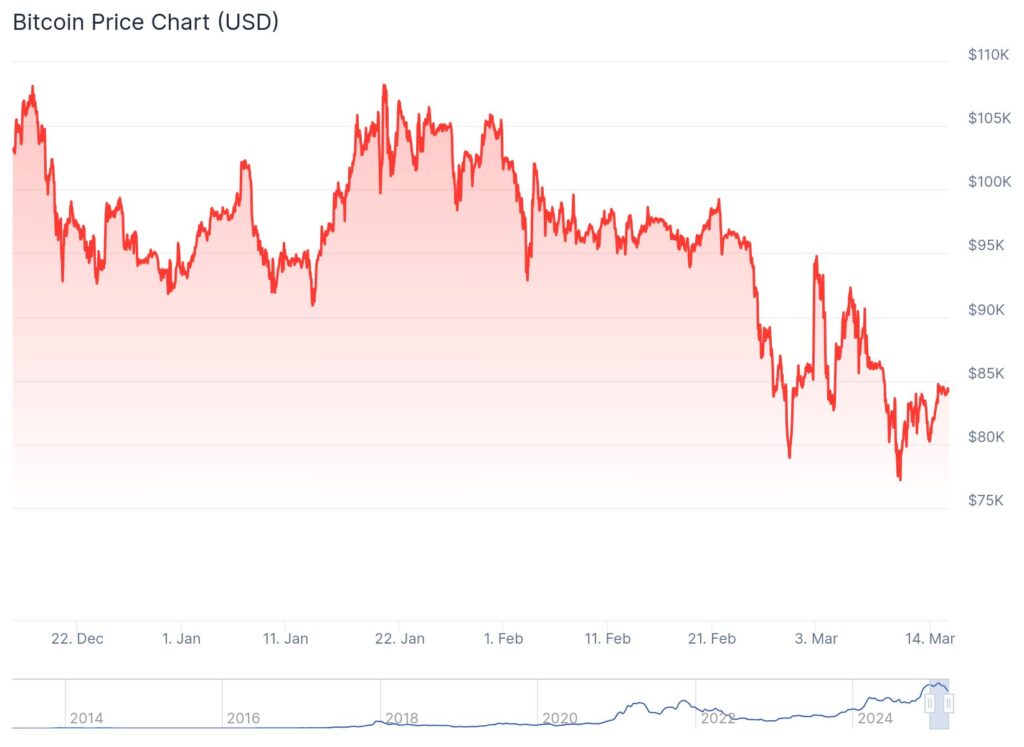
The cryptocurrency market has not been insulated from the turbulence caused by Trump’s tariff policies. Bitcoin had reached highs above $100,000 earlier this year but has fallen below $90,000 in recent weeks, mirroring the uncertainty in traditional financial markets. The sharp decline suggests that, rather than serving as a safe-haven asset, Bitcoin behaves more like a risk asset, responding to shifts in investor sentiment amid economic instability.

According to a report by The Guardian, Bitcoin experienced its steepest monthly loss since 2022, shedding nearly 17.5% in February alone. Analysts attribute this drop to rising concerns over a potential global recession. Increased tariffs on imports from China, Mexico, and the European Union further exacerbate the unease.

Despite this downturn, some investors believe that Bitcoin’s decentralized nature still positions it as an alternative hedge against inflation and fiat currency devaluation. The growing skepticism surrounding central bank policies, coupled with geopolitical uncertainty, could eventually drive more capital into crypto markets. Still, recent trends suggest that Bitcoin is not yet immune to broader economic headwinds.

Is Bitcoin a Safe Haven or a Risk Asset?

Historically, assets like gold and U.S. Treasury bonds have been regarded as safe-haven investments during periods of economic distress. These assets tend to retain or increase in value as investors flee riskier holdings. Bitcoin has often been compared to gold due to its fixed supply, decentralization, and resistance to government control. However, its recent price volatility raises doubts about its ability to function as a true safe-haven asset.

A report by MarketWatch highlights how Bitcoin’s price movements have closely mirrored those of risk assets, such as tech stocks, during periods of economic uncertainty. When trade war fears intensified, Bitcoin fell alongside equities rather than appreciating as a hedge. This pattern suggests that, while some investors see Bitcoin as a long-term store of value, it has yet to demonstrate consistent safe-haven characteristics during short-term market shocks.

On the other hand, some crypto advocates argue that Bitcoin’s adoption as a hedge asset is still in its early stages. Over time, as institutional investors continue to integrate Bitcoin into diversified portfolios, its correlation with traditional financial markets may weaken. If global trade tensions persist and confidence in fiat currencies erodes, it could strengthen Bitcoin’s long-term safe-haven narrative.

Trump’s Trade Policies and Their Impact on Crypto Markets

Trump’s aggressive stance on trade has had ripple effects across financial markets, including cryptocurrencies. While his administration has taken steps to embrace aspects of the crypto industry – such as the proposed U.S. Crypto Strategic Reserve, which includes Bitcoin and Ethereum – his broader economic policies have injected uncertainty into the market.

The recent tariffs have fueled inflation concerns and increased volatility, raising questions about how crypto markets will react to prolonged economic instability. If traditional markets continue to suffer under the weight of trade tensions, Bitcoin could see renewed demand as an alternative financial asset. However, its unpredictable price swings indicate that investors remain divided on whether it can be a true hedge against government-induced economic turmoil.

Conclusion: Bitcoin’s Uncertain Role in a Changing Global Economy

The ongoing trade war has exposed Bitcoin’s evolving and uncertain role in the global financial system. While some investors still view it as a hedge against economic instability, its recent price fluctuations suggest it is not yet a universally accepted safe-haven asset. Bitcoin’s future as a store of value may depend on whether it can decouple from traditional market cycles and establish itself as a more stable alternative to fiat currencies and traditional investment instruments.

As Trump’s trade war continues to reshape global markets, Bitcoin faces a defining moment. Will it emerge as the digital gold many proponents envision, or will it remain a high-risk asset subject to the same market forces as traditional investments? The coming months may provide a clearer answer as investors navigate the complexities of a shifting economic landscape.

Readers’ frequently asked questions

Why does Bitcoin’s price drop when markets are uncertain if it’s supposed to be a hedge against economic instability?

Bitcoin is often compared to gold as a hedge against economic instability, but unlike gold, Bitcoin has not yet demonstrated consistent safe-haven behavior during financial downturns. Its price is largely influenced by market sentiment, investor behavior, and liquidity conditions. When uncertainty rises – such as during trade wars – many investors sell riskier assets, including stocks and cryptocurrencies, to move into more stable investments like government bonds or gold. Additionally, because Bitcoin is still relatively young compared to traditional safe-haven assets, its market is more speculative. This leads to larger price swings.

How do tariffs and trade wars affect Bitcoin and the broader cryptocurrency market?

Tariffs and trade wars create uncertainty in financial markets, affecting investor confidence and risk appetite. When tariffs increase the cost of goods and disrupt global supply chains, traditional markets react with volatility. Since many cryptocurrency traders also invest in stocks and other assets, market-wide sell-offs can lead to declines in Bitcoin’s price. Additionally, if trade tensions impact the broader economy, investors may have less disposable income to put into speculative assets like Bitcoin and other cryptocurrencies. Therefore, trading volumes and prices drop. However, in some cases, prolonged economic instability has also driven interest in Bitcoin as an alternative to government-controlled financial systems.

If Bitcoin is affected by global economic policies, does that mean governments can control its value?

Governments do not directly control Bitcoin’s value, as it operates on a decentralized blockchain with no central authority. However, government policies – such as trade tariffs, inflation measures, or cryptocurrency regulations – can influence investor sentiment and market behavior. These then affect Bitcoin’s price. For example, if a government implements strict crypto regulations or financial policies reducing liquidity in the economy, it could lead to lower demand for Bitcoin. On the other hand, if economic instability caused by government actions weakens trust in traditional financial systems, some investors might turn to Bitcoin as an alternative asset. While governments cannot manipulate Bitcoin’s supply, their policies can shape market conditions that impact its price.

What Is In It For You? Action Items You Might Want to Consider

Watch Bitcoin’s Correlation with Traditional Markets

Bitcoin’s recent price movements suggest it still behaves like a risk asset rather than a safe haven. Keep an eye on how Bitcoin reacts alongside traditional financial markets, particularly stock indices like the S&P 500 or gold prices. If Bitcoin starts moving independently from stocks and more in line with gold, it could signal a shift toward its long-anticipated role as a hedge against economic uncertainty.

Use Market Volatility to Your Advantage

Trade wars create uncertainty, and uncertainty fuels price swings. Instead of fearing volatility, use it to your advantage. If Bitcoin continues to dip alongside broader market instability, consider accumulating in phases rather than making large trades all at once. Look for key support levels and use limit orders to enter positions strategically rather than reacting emotionally to price movements.

Diversify Beyond Bitcoin

If Bitcoin is still behaving like a risk asset, it makes sense to diversify. Consider stablecoins as a temporary safe haven during high volatility. You might want to look into assets with historically lower correlation to global economic turmoil. Ethereum, for instance, may benefit from continued network adoption, while privacy-focused coins could see increased demand if geopolitical tensions escalate. Stay informed and adjust your portfolio based on Bitcoin’s evolving market behavior.

- Advertisement -

FEATURED