Home Blog Page 146

Crypto Exchange XT.com Halts Withdrawals After $1.7M Security Breach

XT.com halts withdrawals after $1.7M breach

XT.com, a Seychelles-based cryptocurrency exchange with a daily trading volume exceeding $3.4 billion, has suspended all withdrawal services following a security breach. The hack resulted in the theft of approximately $1.7 million worth of digital assets. The incident has reignited concerns about the vulnerability of cryptocurrency exchanges to cyberattacks and the subsequent impact on user trust.

The Incident: What Happened?

Blockchain security firm PeckShield identified an abnormal transfer of 461.58 Ether (ETH) from XT.com’s wallet to an external address. The exchange initially cited a “wallet upgrade and maintenance” as the reason for the suspension of withdrawals. However, further analysis confirmed the unauthorized transaction. While the affected assets belong to the platform and not its users, this reassurance has done little to alleviate user concerns, particularly with no clear timeline for resuming withdrawal services.

XT.com’s Response and Measures

XT.com has stated that its reserves are 1.5 times greater than total customer assets, emphasizing that users’ holdings remain unaffected. In an effort to restore trust, the platform plans to implement a Merkle Tree Asset Proof System by mid-December. This system is intended to provide enhanced transparency regarding asset reserves and security measures.

Despite these assurances, users have voiced frustration over the abrupt suspension of withdrawals and the lack of detailed communication from the exchange. The delay in providing a precise reopening date for withdrawal services has further compounded their concerns.

Broader Implications for the Crypto Industry

This breach is a stark reminder of the ongoing security challenges that plague the cryptocurrency sector. Even as exchanges adopt more sophisticated technologies, cybercriminals continue to exploit vulnerabilities, undermining confidence in these platforms. The incident at XT.com follows a series of high-profile hacks in recent years, underscoring the need for continuous advancements in cybersecurity measures.

For users, such events highlight the importance of choosing exchanges that prioritize transparency and security. The crypto industry, still in its relative infancy, relies heavily on user trust to sustain growth. Incidents like this risk eroding that trust and may prompt increased scrutiny from regulators and the broader financial community.

The $1.7 million breach at XT.com serves as both a cautionary tale and a call to action for cryptocurrency exchanges to strengthen their defenses against evolving cyber threats. While XT.com has promised to eXT.com has suspended withdrawals following a $1.7M hack, sparking concerns about crypto exchange security. The platform assures users their funds are safe, but the breach highlights ongoing vulnerabilities in the industry.nhance transparency and security, its ability to regain user confidence will depend on how swiftly and effectively it resolves the current situation. For now, the industry watches closely, recognizing that the ripple effects of such incidents extend far beyond the affected exchange.

Readers’ frequently asked questions

What does a Merkle Tree Asset Proof System do, and how will it help XT.com users?

A Merkle Tree Asset Proof System is a cryptographic tool that helps ensure transparency in how cryptocurrency exchanges manage and secure user funds. By leveraging this technology, exchanges can provide verifiable proof of their asset reserves without revealing sensitive details. For XT.com, implementing such a system means users can independently confirm that the exchange holds sufficient reserves to back customer deposits. This step aims to restore user confidence but also aligns with industry best practices for transparency in the wake of security breaches.

Are users’ funds safe if XT.com’s reserves are affected by a hack?

According to XT.com, the $1.7 million stolen during the breach came from the platform’s own reserves and not from users’ accounts. The exchange claims that its reserves are 1.5 times greater than the total customer holdings. That should ensure that user funds are secure even if financial losses to the platform occur. However, until withdrawals resume, users remain concerned about their ability to access their funds. The safety of user funds ultimately hinges on the exchange’s ability to uphold its claims and resume normal operations swiftly.

Why do cryptocurrency exchanges keep getting hacked despite security advancements?

Cryptocurrency exchanges remain frequent targets for hackers because they manage large volumes of valuable digital assets. Even with advancements in security protocols, such as multi-signature wallets and blockchain analysis tools, cybercriminals often exploit human errors, insider vulnerabilities, or undiscovered software weaknesses. Additionally, the decentralized and pseudonymous nature of cryptocurrency transactions makes it challenging to recover stolen assets once they are moved out of the system. This highlights the ongoing arms race between security technologies and the increasingly sophisticated techniques employed by hackers.

What Is In It For You? Action Items You Might Want to Consider

Diversify Your Storage: Consider Moving Funds to Personal Wallets

If you’ve been using XT.com or any exchange to store your assets, this breach is a timely reminder to move a portion of your funds to secure personal wallets, such as hardware wallets. While exchanges offer convenience for trading, they also present a central point of failure. Keeping your funds in wallets you control ensures added protection against potential breaches.

Monitor XT.com Updates: Stay Informed About Withdrawal Resumption

If you’re an XT.com user, keep a close eye on official announcements regarding the status of withdrawals. Engage with their customer support channels and community forums to stay informed. Delays in withdrawal services are inconvenient but being proactive in seeking updates can help you manage your portfolio and plan your trading activity effectively.

Evaluate Exchange Security Before Trading

Before using any exchange, research its security practices. Look for features like multi-signature wallets, insurance policies, and transparent reserve management systems like the Merkle Tree Asset Proof System XT.com plans to implement. Exchanges with robust security measures and clear communication protocols are better equipped to protect your assets and earn your trust.


Bullish Sentiment or Market Trap? Crypto Options Expiry Sparks Diverging Predictions

Bitcoin Ethereum options worth $10.7B expire November 29, 2024

The cryptocurrency market is under the spotlight as $10.7 billion in Bitcoin (BTC) and Ethereum (ETH) options contracts are set to expire today, November 29, 2024. This massive expiration event—$9.4 billion tied to Bitcoin and $1.3 billion to Ethereum—has traders and analysts divided. While the put-to-call ratios for both cryptocurrencies suggest bullish sentiment, with traders favoring call options, the market’s historical tendencies raise concerns about a potential correction. This pivotal moment for Bitcoin, currently trading near $96,000, and Ethereum, showing signs of recovery could significantly influence the broader crypto landscape.

Immediate Implications on BTC and ETH Prices

The high volume of expiring options is expected to inject volatility into the market. Bitcoin’s put-to-call ratio of 0.84 and Ethereum’s 0.75 indicate that traders are optimistic about upward price movements. However, the concept of “max pain” complicates this outlook. Max pain theory suggests that market makers—entities responsible for providing liquidity in options markets—may manipulate prices to minimize payouts by moving them toward levels where the largest number of contracts expire worthless.

For Bitcoin, the max pain level is estimated at $80,000, significantly lower than its current trading price. If market makers succeed in pushing the price down toward this level, it could result in a sharp correction. Similarly, Ethereum’s max pain level, identified around $2,900, suggests room for a potential price adjustment. These dynamics could lead to significant short-term volatility as traders adjust their positions and market makers hedge their risks.

Broader Implications of Options Growth in Crypto

The scale of today’s options expiry reflects the rapid maturation of the cryptocurrency derivatives market. Options and futures trading in Bitcoin and Ethereum have reached record volumes in 2024, driven by increased institutional adoption and growing confidence in the asset class. This growth has introduced new tools for risk management and speculation, drawing comparisons to traditional financial markets.

However, the proliferation of options trading also introduces systemic risks. Large-scale expirations, like today’s, amplify price swings, making the market less predictable for retail traders. Additionally, the influence of max pain dynamics raises questions about the fairness of price movements, as market makers can disproportionately impact prices near expiration dates.

Regulatory developments further underscore the complexity of the market’s growth. With recent shifts in leadership at the U.S. Securities and Exchange Commission, there is cautious optimism about a more favorable regulatory environment for cryptocurrencies. This could encourage further institutional participation but may also bring stricter oversight of derivatives markets.

A Tipping Point for the Market

As traders brace for the fallout from today’s expiration, the duality of sentiment is clear. On one hand, the bullish outlook fueled by call options suggests optimism about Bitcoin breaking the $100,000 threshold and Ethereum continuing its recovery. On the other hand, the historical tendency for corrections during large expirations highlights the market’s vulnerability to manipulation and volatility.

Today’s events will likely set the tone for the cryptocurrency market as 2024 draws to a close. Whether this is a step toward sustained bullish momentum or a reminder of the risks inherent in a maturing market, one thing is certain: the interplay between options mechanics and market sentiment will continue to shape the future of crypto trading.

What Is In It For You? Action Items You Might Want to Consider

Monitor Key Price Levels During Expirations

Keep an eye on the “max pain” price levels for Bitcoin and Ethereum during large options expirations. For today’s event, Bitcoin’s max pain is $80,000, and Ethereum’s is $2,900. Even if the market sentiment appears bullish, prices may gravitate toward these levels as market makers attempt to minimize payouts. Understanding this dynamic can help you anticipate potential price movements and adjust your positions accordingly.

Prepare for Short-Term Volatility

Expect significant price swings around major options expirations, like the $10.7 billion event discussed in the article. Whether you’re trading or holding, ensure you have a strategy to manage this volatility. Setting stop-loss orders or identifying key support and resistance levels can protect your capital and help you seize opportunities if prices move sharply.

Leverage Derivatives for Risk Management

Consider using options contracts to hedge your positions or diversify your trading strategy. For instance, if you’re long on Bitcoin or Ethereum, buying put options can provide downside protection during volatile periods. Make sure you fully understand how options work before diving in—they’re powerful tools but require careful management to avoid unnecessary losses.

Readers’ frequently asked questions

What exactly is an options contract, and how does its expiration impact cryptocurrency prices?

An options contract is a financial derivative that gives the buyer the right, but not the obligation, to buy (call option) or sell (put option) an asset like Bitcoin or Ethereum at a predetermined price before or on a specific date. When these contracts expire, they lose their value if not exercised. The expiration of a large volume of options, such as the $10.7 billion in Bitcoin and Ethereum options discussed in the article, can influence prices as traders close out or adjust their positions. Additionally, market makers—entities that provide liquidity in these contracts—may hedge their risks by trading the underlying cryptocurrencies. This activity can lead to sudden price movements, increasing market volatility.

What is the “max pain” theory, and why does it matter to traders?

The “max pain” theory is a concept used in options trading to describe the price level at which the highest number of options contracts (calls and puts) expire worthless. For market makers, this is the most profitable outcome because they collect premiums without paying out on those contracts. In practice, market makers might influence prices to converge around the max pain level near the expiry date. For example, if Bitcoin’s max pain level is $80,000 but it’s trading near $96,000, there’s a chance the price could drop closer to $80,000 as expiration approaches. Understanding this theory helps traders anticipate potential price manipulation and adjust their strategies accordingly.

How does the growth of options trading benefit and challenge the cryptocurrency market?

The growth of options trading in the cryptocurrency market introduces benefits such as increased liquidity and risk management tools for both institutional and retail traders. It allows participants to hedge against price movements or speculate on future price changes, making the market more attractive to professional investors. However, it also brings challenges. Large-scale expirations, like the one described in the article, can create abrupt price swings, making the market more volatile and unpredictable. Additionally, the influence of max pain dynamics and market maker activities can distort natural price discovery, potentially disadvantaging less experienced traders. This growth reflects a maturing market but underscores the need for participants to understand these complexities.

Swiss Canton of Bern Explores Bitcoin Mining as a Solution to Grid Stability and Energy Surplus

The Swiss canton of Bern is studying Bitcoin mining as a way to utilize surplus renewable energy.

The Swiss canton of Bern has taken a pioneering step in addressing the challenges of energy surplus and grid stability by approving a study on the feasibility of Bitcoin mining. With the increasing integration of renewable energy into the grid, managing periods of overproduction has become a critical issue. The proposed study aims to determine whether Bitcoin mining – a process often criticized for its high energy consumption – could serve as an innovative tool to absorb excess energy while enhancing the stability of the power grid. If successful, this initiative could mark a significant turning point in how blockchain technology intersects with environmental and economic strategies.

Addressing the Energy Surplus Problem

Renewable energy sources, such as solar and hydroelectric power, are inherently variable. During peak production periods, energy supply often exceeds demand, leading to wastage or curtailment of production. Bern’s initiative explores the potential for Bitcoin mining to act as a “buffer,” using this surplus energy to power computational operations.

Bitcoin mining requires a significant amount of energy to solve complex mathematical problems that validate transactions on the blockchain. This process, while resource-intensive, is uniquely suited to using intermittent and otherwise wasted energy. By integrating mining operations into the energy grid, Bern aims to convert surplus energy into economic value. It reduces waste and potentially stabilizes electricity prices for consumers.

Economic Potential and Innovation

Beyond environmental benefits, the study highlights the economic opportunities that could arise from Bitcoin mining. By attracting mining operations and related businesses, Bern could foster local economic growth. It creates high-tech job opportunities, and establish the city as a hub for blockchain innovation. These economic incentives are particularly relevant as Switzerland continues to strengthen its reputation as a leader in cryptocurrency and fintech development.

Moreover, the study aligns with global efforts to embrace blockchain technology in sectors beyond finance. If Bern successfully demonstrates the viability of Bitcoin mining as a grid management tool, it could catalyze further adoption of blockchain-powered solutions in energy systems worldwide.

Challenges and Criticisms

Despite the optimism surrounding the project, the initiative is not without its detractors. Bitcoin mining has faced global criticism for its energy-intensive nature, often drawing comparisons to the energy consumption of entire countries. While Bern’s approach focuses on using renewable energy, critics argue that the practice could divert resources from other sectors or fail to deliver long-term sustainability benefits.

The Bern Government Council has also voiced concerns. The volatility of Bitcoin and its status as a non-legal tender in Switzerland add layers of financial and regulatory risk to the initiative. These concerns highlight the uncertainties involved in integrating cryptocurrency mining into a region’s energy strategy, particularly in a rapidly evolving technological and regulatory landscape.

Environmental organizations have raised questions about the broader ecological impact of Bitcoin mining, even when powered by renewables. They warn that incentivizing mining could lead to increased energy consumption overall, undermining global efforts to reduce carbon emissions.

Global Context: A Growing Trend

Bern’s initiative is not happening in isolation. Across the globe, regions are exploring how cryptocurrency mining can play a role in managing energy challenges. Texas has become a prominent example, leveraging Bitcoin mining to absorb surplus energy from its renewable sources. Mining operations in the state have also been used to stabilize the grid during periods of high demand, such as heat waves.

In Canada, Vancouver is piloting similar projects, exploring how mining can transform excess hydroelectric power into economic and technological gains. These examples demonstrate a growing recognition of Bitcoin mining as a dual-purpose technology: one that validates blockchain transactions while addressing inefficiencies in energy systems.

Technological Innovation Meets Responsibility

While the potential of Bitcoin mining to enhance grid stability and reduce energy waste is significant, Bern’s study will need to address the inherent challenges of such an approach. Striking a balance between technological innovation, environmental responsibility, and economic feasibility will be critical to its success.

The study’s outcomes could have implications far beyond Switzerland, offering valuable insights for regions worldwide grappling with the dual challenge of optimizing renewable energy use and fostering technological innovation. As countries and cities look for ways to integrate blockchain technology into sustainable development goals, Bern’s experiment could serve as a case study for the future.

A Step Towards a Greener Future?

The canton of Bern’s decision to explore Bitcoin mining represents a bold and forward-thinking approach to energy management. While the initiative faces significant challenges – both technical and ethical – it also holds the promise of demonstrating how blockchain technology can be leveraged for environmental and economic benefits. As the study progresses, it will not only shed light on the feasibility of such a project in Switzerland but could also influence global strategies for integrating cryptocurrency mining into energy systems.

If successful, Bern’s initiative could redefine Bitcoin mining’s role in society, transforming it from a controversial activity into a key component of a sustainable and innovative energy future. For now, all eyes are on Bern to see whether this ambitious experiment can deliver on its promise.

Readers’ frequently asked questions

How does Bitcoin mining use surplus energy from renewable sources?

Bitcoin mining can directly consume electricity generated during periods of energy overproduction. For instance, renewable sources like solar or hydroelectric plants sometimes produce more electricity than the grid can use, especially during off-peak hours. Instead of letting this energy go to waste, it is directed to mining operations. They use it to power the computers that validate Bitcoin transactions. This ensures that the excess energy serves a purpose while reducing strain on the grid.

Why is the Swiss canton of Bern studying Bitcoin mining now?

Bern is studying Bitcoin mining now because the increasing use of renewable energy has led to periods of energy overproduction. They need innovative solutions to manage this surplus. Additionally, the rising global focus on sustainable energy and blockchain technology makes it timely to explore how Bitcoin mining could help balance grid stability. This study allows Bern to determine whether mining can contribute to the local economy and optimize renewable energy use while addressing concerns about environmental impact and feasibility.

What are the risks of integrating Bitcoin mining into the energy system?

The primary risks include the possibility of mining operations diverting energy from other sectors if not properly regulated, and the financial instability linked to Bitcoin’s price volatility. There is also the risk that mining infrastructure could increase overall energy demand, undermining the sustainability goals. Furthermore, regulatory and legal uncertainties, such as Bitcoin’s non-legal tender status in Switzerland, could pose challenges in implementing such an initiative on a larger scale. These risks need careful assessment to ensure that the benefits outweigh the potential drawbacks.

What Is In It For You? Action Items You Might Want to Consider

Explore the Potential of Eco-Friendly Cryptos

With regions like Bern investigating renewable energy solutions for Bitcoin mining, traders should consider diversifying into cryptocurrencies that prioritize sustainability. Look for projects leveraging eco-friendly mining methods or alternative consensus mechanisms like proof of stake, which require significantly less energy.

Stay Informed on Regulatory Developments

The Swiss canton of Bern’s initiative highlights the growing intersection of cryptocurrency and energy policies. Traders should monitor similar regulatory moves globally. They could impact the profitability and adoption of Bitcoin mining operations, influencing market dynamics and long-term price trends.

Assess Bitcoin’s Strategic Role in Your Portfolio

The article emphasizes Bitcoin’s potential as a transformative asset tied to energy innovation. For traders, this reinforces Bitcoin’s long-term value proposition beyond its financial utility. Consider Bitcoin’s resilience to regulatory scrutiny and its ability to integrate into sustainable practices when determining its weight in your investment strategy.

Crypto Users in Uproar as Coinbase Ends USDC Yields Under EU’s MiCA Rules

Coinbase discontinues USDC rewards in Europe

The European crypto community has been struck a heavy blow. Coinbase announced it will discontinue its USD Coin (USDC) rewards program for users in the European Economic Area (EEA). Effective December 1, 2024, the decision aligns with the European Union’s sweeping Markets in Crypto-Assets (MiCA) regulations, prohibiting interest payments on stablecoins. While aimed at enhancing consumer protection and financial transparency, the move has left European users frustrated. They question the balance between regulatory goals and innovation in the crypto sector.

Customer Backlash: A Loss of Passive Income

For many users, Coinbase’s USDC rewards program was a dependable source of passive income, providing yields on holdings of the stablecoin pegged to the U.S. dollar. By eliminating this benefit, MiCA has effectively closed a lucrative avenue for crypto investors in Europe, sparking widespread dissatisfaction.

Social media platforms and community forums have been inundated with complaints from users feeling disenfranchised. “MiCA was supposed to protect us, but instead it’s taking away opportunities,” lamented one user on a popular crypto forum. Others worry this is a sign of the European Union overreaching, prioritizing strict compliance at the cost of user empowerment.

MiCA’s Impact: Balancing Regulation and Innovation

MiCA, the EU’s comprehensive framework for cryptocurrency regulation, aims to establish uniform standards across member states, fostering market integrity and consumer protection. Among its key provisions are stringent requirements for stablecoin issuers, including liquidity thresholds, enhanced transparency, and a prohibition on interest-bearing stablecoins. While these rules are intended to prevent financial instability and safeguard users, critics argue they also stifle financial innovation and limit customer choice.

Coinbase’s decision to end USDC rewards underscores the tension between these competing priorities. The company noted that compliance with MiCA is non-negotiable. At the same time, it assured customers it remains committed to supporting compliant stablecoins such as USDC and EURC. Despite these assurances, the frustration among European users has not subsided.

The Broader Industry Reaction

Coinbase is not alone in facing the challenges posed by MiCA. Across Europe, crypto exchanges and service providers are re-evaluating their offerings to align with the new regulatory requirements. Some industry leaders have applauded the framework for providing much-needed clarity. They believe it could attract institutional investors and foster long-term growth in the market.

However, others share the concerns of frustrated users, warning that rigid rules could drive innovation and investment out of Europe. “The ban on stablecoin yields is a step backward,” said a prominent blockchain analyst. “While MiCA is a positive move for legitimacy, its overly cautious approach risks making the EU a less attractive hub for crypto innovation.”

Looking Ahead: A Turning Point for Crypto in Europe

As MiCA comes into full force by December 30, 2024, Coinbase discontinuing the USDC rewards could mark just the beginning of a broader reshaping of the European crypto market. While the framework’s goals of transparency and consumer protection are laudable, the growing dissatisfaction among users highlights a critical challenge for regulators. They must find a middle ground that fosters both innovation and security.

For now, European users are left grappling with the immediate effects of Coinbase’s compliance-driven decision. The industry at large must navigate the complexities of adhering to MiCA without alienating its core user base. Whether the regulatory framework succeeds in striking this balance will determine Europe’s place in the rapidly evolving global crypto landscape.

Readers’ frequently asked questions

What is MiCA, and why does it matter so much in the context of Coinbase’s decision?

The Markets in Crypto-Assets (MiCA) regulation is the European Union’s first comprehensive framework aimed at regulating the cryptocurrency market. Its primary goals are to ensure consumer protection, promote market integrity, and mitigate risks associated with crypto assets. In the case of Coinbase, MiCA prohibits stablecoin issuers and platforms from offering interest or yield on stablecoins, such as USDC, to prevent financial instability and excessive risk-taking. This rule directly impacts programs like Coinbase’s USDC rewards. It forces the company to discontinue the service to comply with the law. MiCA is a significant milestone for the crypto industry as it introduces clear, standardized rules across all EU member states, shaping how crypto companies operate within the region.

How does the end of USDC rewards affect European users practically?

For European users, the discontinuation of USDC rewards removes an option to earn passive income on their stablecoin holdings. Previously, they could hold USDC on Coinbase and receive interest-like rewards. That made it an attractive choice for individuals looking to grow their crypto assets without the risk of price volatility associated with other cryptocurrencies. Now, users will need to explore alternative ways to earn yields, such as staking or investing in decentralized finance (DeFi) platforms that are outside MiCA’s jurisdiction. However, these alternatives often carry higher risks and require greater knowledge of the crypto ecosystem. It makes them less accessible to casual investors.

Could MiCA’s restrictions push crypto companies and innovation out of Europe?

Yes, it’s a possibility. While MiCA provides much-needed regulatory clarity, its stringent rules, like the ban on interest-bearing stablecoins, may deter companies from launching innovative products in Europe. Some businesses may find the regulatory burden too heavy or the market environment less competitive. It could prompt them to shift operations to regions with more lenient rules. However, MiCA also has the potential to attract institutional investors and large financial players by providing a stable, predictable regulatory environment. Whether Europe becomes a leader or lags behind in crypto innovation will depend on how well the framework balances regulation with the flexibility needed to foster creativity and growth in the industry.

What Is In It For You? Action Items You Might Want to Consider

Explore Alternative Yield-Generating Options

With Coinbase halting USDC rewards in Europe, consider diversifying your portfolio by exploring other yield-generating opportunities. Look into decentralized finance (DeFi) platforms, which often offer competitive returns on stablecoins and other assets. While these platforms operate outside MiCA’s jurisdiction, they come with higher risks, such as smart contract vulnerabilities or market volatility. Conduct thorough research and prioritize platforms with strong security measures and transparent track records.

Stay Informed About MiCA-Compliant Investments

As MiCA reshapes the crypto landscape, prioritize investments that align with the new regulations. This could mean focusing on MiCA-compliant stablecoins like USDC and EURC. They remain supported by platforms like Coinbase for non-yield purposes. Keeping your portfolio in compliance with evolving regulations can help mitigate risks associated with sudden regulatory changes.

Monitor Market Shifts and Emerging Opportunities

MiCA’s implementation is causing shifts in the European crypto market, which could lead to new opportunities. Watch for changes in DeFi trends, the introduction of innovative products in non-European regions, or new MiCA-compliant services from major platforms. Staying updated on these developments allows you to adapt your trading strategy and capitalize on opportunities in an evolving regulatory environment.

Avalon Labs’ Bitcoin-Backed USDa Stablecoin Surges Past $200M Supply in Record Time

Avalon USDa Stablecoin Surges Past $200M Supply

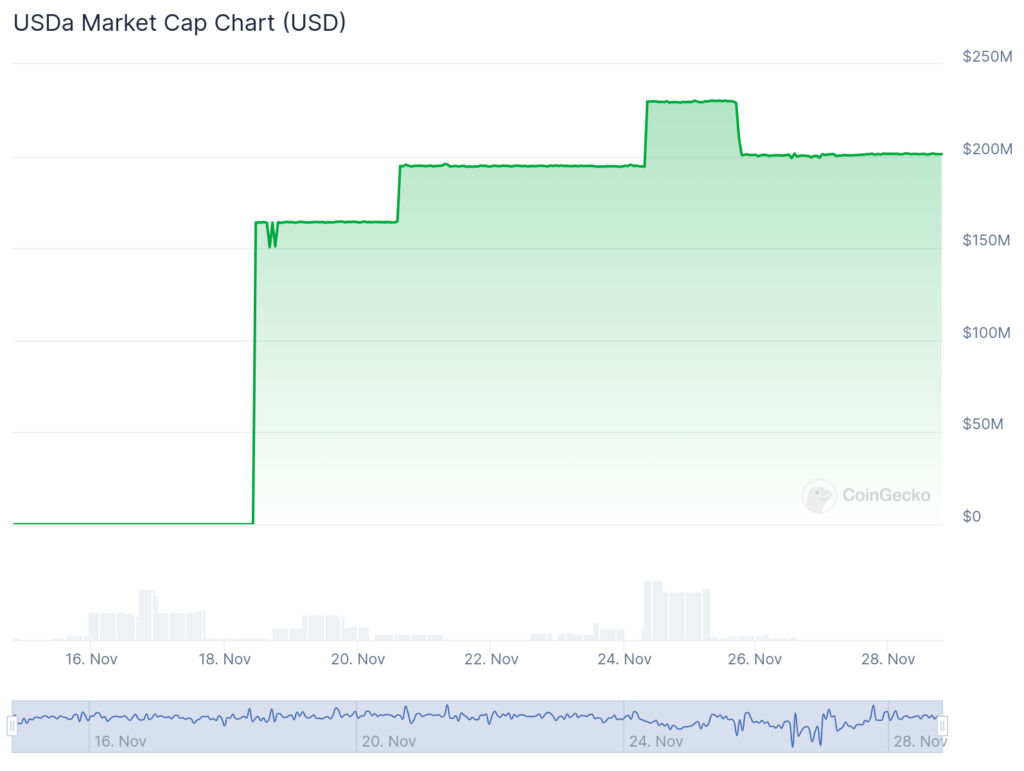
The cryptocurrency market is abuzz with excitement! Avalon Labs’ Bitcoin-backed stablecoin, USDa, reaches a staggering milestone just two weeks after its launch. It surpassed $200 million in supply, supported by $400 million in Bitcoin collateral! USDa’s meteoric rise underscores the growing demand for innovative financial instruments that bridge traditional cryptocurrency assets and modern financial systems.

A Game-Changer for Bitcoin Liquidity

USDa introduces a novel approach to stablecoin design by leveraging Bitcoin’s inherent value through over-collateralization. Each USDa token is backed by twice its value in Bitcoin. It ensures a robust and stable mechanism that safeguards against market volatility. This over-collateralized model enables Bitcoin holders to unlock liquidity without the need to sell their assets. The feature resonates strongly with both individual investors and institutional stakeholders.

Avalon Labs’ strategic focus on liquidity and financial inclusion places USDa at the center of a rapidly evolving ecosystem. By integrating Bitcoin liquidity into decentralized finance (DeFi) and centralized finance (CeFi) platforms, the stablecoin creates new opportunities for seamless transactions, trading, and investment, driving adoption across the crypto landscape.

The Numbers Behind the Hype

USDa’s rapid adoption reflects its success. Within just 14 days, the stablecoin’s supply exceeded $200 million, supported by $400 million in Bitcoin collateral. That’s a testament to the trust and enthusiasm of the crypto community. This remarkable growth positions USDa as a strong competitor in the stablecoin market, where achieving such traction is no small feat.

Source: CoinGecko

To further bolster its appeal, Avalon Labs has introduced lucrative incentives for early USDa adopters, including yields ranging from 20% to 50% and triple-point rewards. These benefits not only attract investors but also ensure a strong foundation for long-term stability and growth.

Secure, Transparent, and Reliable

Avalon Labs has partnered with industry-leading custodians such as Cobo and Coinbase Prime to provide institutional-grade security for Bitcoin collateral. These collaborations guarantee transparency and robust safeguards, addressing concerns around asset security—a critical factor in the stablecoin market.

This innovative approach has garnered significant attention, including recognition from the Binance BNB Incubation Alliance, which highlights Avalon Labs’ commitment to advancing blockchain-based financial solutions.

Implications for the Stablecoin Market

USDa’s success reflects a broader trend in the cryptocurrency market. There is an increasing demand for stable, asset-backed financial instruments that can integrate seamlessly into both traditional and digital finance ecosystems. Its rapid adoption suggests that market participants are eager for solutions that unlock the liquidity of major cryptocurrencies like Bitcoin without requiring liquidation.

USDa enables Bitcoin holders to deploy their assets productively and challenges the narrative that cryptocurrencies are mere stores of value or speculative investments. Instead, it positions Bitcoin as a key player in the broader financial system.

Avalon Labs’ USDa represents a significant innovation in the cryptocurrency space. It combines Bitcoin’s inherent value with the stability of a dollar-pegged asset. With its rapid growth, strong market demand, and robust over-collateralization model, USDa is set to reshape how liquidity is harnessed in the blockchain ecosystem. As the stablecoin continues to gain traction, it offers a glimpse into the future of financial systems where decentralized assets play a pivotal role.

Readers’ frequently asked questions

How does USDa maintain its stability compared to other stablecoins?

USDa’s stability is ensured through a robust overcollateralization mechanism. Each USDa token is backed by Bitcoin at a ratio of 2:1. For every USDa issued, there is twice its value in Bitcoin held as collateral. This substantial buffer protects the stablecoin from Bitcoin’s price volatility. Unlike algorithmic stablecoins, which rely on complex market dynamics, USDa’s overcollateralized model provides a transparent and straightforward method to guarantee its value remains pegged to the US dollar.

Can I use USDa for everyday transactions, and how does it fit into decentralized and centralized finance?

Yes, USDa can be used for everyday transactions within ecosystems that accept stablecoins. Its integration into decentralized finance (DeFi) platforms enables users to participate in activities like lending, borrowing, and staking. In centralized finance (CeFi), it offers a familiar and stable digital asset for trading and other financial operations. By unlocking Bitcoin’s liquidity, USDa makes it easier for users to leverage their Bitcoin holdings without needing to sell. It broadens the usability of both Bitcoin and stablecoins in financial applications.

What are the risks involved in using USDa, and how is my collateral protected?

While USDa’s over-collateralization minimizes volatility risks, it still depends on Bitcoin’s price stability. A significant drop in Bitcoin’s value could pose challenges, although the 2:1 collateral ratio provides a substantial safety net. To ensure collateral security, Avalon Labs collaborates with trusted custodians like Coinbase Prime and Cobo. They are industry leaders in safeguarding digital assets. These partnerships guarantee institutional-grade security, offering reassurance to users that their collateralized Bitcoin is protected from hacking or mismanagement. However, users should always evaluate the broader risks associated with cryptocurrency investments, including market fluctuations and regulatory changes.

What Is In It For You? Action Items You Might Want to Consider

Explore USDa as a Low-Risk Yield Opportunity

If you’re holding Bitcoin, consider utilizing USDa to earn competitive yields without selling your assets. With Avalon Labs offering attractive annual percentage yields (APY) ranging from 20% to 50%, this could be a strategic way to generate passive income while retaining exposure to Bitcoin’s potential long-term growth.

Leverage USDa for DeFi and CeFi Activities

Dive into decentralized finance (DeFi) and centralized finance (CeFi) platforms using USDa to maximize your trading and investment options. Whether it’s staking, lending, or participating in liquidity pools, USDa’s overcollateralized design makes it a stable and secure asset for navigating these financial ecosystems.

Monitor Bitcoin’s Price and USDa’s Growth Closely

As USDa’s value is tied to Bitcoin through over-collateralization, staying informed about Bitcoin’s market performance is essential. Keep an eye on USDa’s supply metrics and adoption in DeFi and CeFi platforms to identify emerging opportunities and evaluate its growing market potential. This can help you time your entries and exits effectively in this innovative stablecoin market.

- Advertisement -

FEATURED