Home Blog Page 148

Mark Uyeda: Trump’s Pick to End the ‘War on Crypto’?

Mark Uyeda is the frontrunner to become the next SEC Chair

As the United States undergoes a leadership transition with President-elect Donald Trump preparing to take office, one name stands out in the financial regulation arena: Mark Uyeda. Currently serving as a Commissioner at the U.S. Securities and Exchange Commission (SEC), Mark Uyeda is widely seen as the front-runner to replace outgoing SEC Chair Gary Gensler. His nomination signals a possible paradigm shift in U.S. crypto regulation, aligning with Trump’s promise to end what he terms the “war on crypto.”

A Departure from the Enforcement-Heavy Era

Uyeda has been a vocal critic of the SEC’s aggressive enforcement actions under Gensler, whose tenure was marked by a clampdown on cryptocurrency firms. While Gensler emphasized investor protection and regulatory oversight, his approach drew backlash for creating an environment many in the industry viewed as hostile to innovation. Uyeda’s potential ascension to the chairmanship is seen as a departure from this enforcement-centric model.

Instead, Uyeda advocates for a regulatory framework grounded in clarity and consistency. In public statements and speeches, he has called for precise definitions of what constitutes a security in the context of cryptocurrencies. He also emphasized the need for tailored regulations that do not stifle innovation.

Pragmatic Reform: Uyeda’s Three-Step Vision

Central to Uyeda’s appeal is his three-step plan for cryptocurrency regulation, which has been widely discussed in policy circles:

  1. Defining Digital Assets Clearly: Uyeda argues that regulatory ambiguity has created unnecessary challenges for blockchain projects. His plan seeks to establish clear parameters to differentiate cryptocurrencies under SEC jurisdiction from those classified as commodities or other asset types.
  2. Implementing Regulatory Sandboxes: Uyeda champions the idea of creating controlled environments where blockchain startups can innovate under regulatory supervision. This model, already used in some international markets, would allow crypto projects to test their technology while ensuring compliance.
  3. Inter-Agency Collaboration: Uyeda recognizes the overlapping responsibilities of regulatory bodies like the SEC and the Commodity Futures Trading Commission (CFTC). Therefore, he advocates for enhanced collaboration to create a cohesive approach to crypto regulation.

Industry Optimism vs. Investor Protection Concerns

Blockchain advocates and financial innovators have welcomed Uyeda’s potential appointment. His approach is seen as an opportunity to position the U.S. as a global leader in blockchain technology by fostering a more innovation-friendly regulatory environment. Industry leaders argue that his policies could reduce the exodus of blockchain projects to countries with clearer regulations.

However, Uyeda’s critics question whether his policies might tip the scales too far in favor of industry interests. Investor protection remains a cornerstone of SEC oversight. Some fear that Uyeda’s pro-crypto stance could create vulnerabilities in an already volatile market. Striking a balance between fostering innovation and ensuring market integrity will likely be his greatest challenge if confirmed as SEC Chair.

Trump’s Vision and Uyeda’s Role

Uyeda’s potential appointment aligns closely with Trump’s broader economic agenda, which emphasizes deregulation and fostering innovation in emerging technologies. Trump’s commitment to ending the “war on crypto” positions Uyeda as a key player in advancing this vision. While the details of Trump’s crypto strategy remain to be fully articulated, Uyeda’s leadership at the SEC would likely be a cornerstone of these efforts.

The Road Ahead

Mark Uyeda’s pragmatic approach to crypto regulation has ignited debate across the financial and political spectrum. Whether his policies can simultaneously satisfy the demands of innovation, investor protection, and market stability remains to be seen. As the crypto industry watches closely, Uyeda’s potential confirmation could mark a pivotal moment for U.S. leadership in blockchain and alternative assets.

His appointment would not only redefine the SEC’s approach to cryptocurrency but also reflect the evolving priorities of U.S. financial regulation in a rapidly changing digital economy.

Readers’ frequently asked questions

What exactly is a regulatory sandbox, and how would it work for cryptocurrencies?

A regulatory sandbox is a controlled environment where new technologies or financial products can be tested under close supervision by regulators. In the context of cryptocurrencies, it would allow blockchain startups to trial their platforms, tokens, or decentralized applications (dApps) without the immediate risk of violating regulations. For instance, a company developing a cryptocurrency-based payment system could test it with real users under specific guidelines set by the SEC. This would help regulators understand the technology and its implications. At the same time, it gives the company a chance to comply with requirements in a flexible manner. By fostering innovation in this way, regulatory sandboxes aim to strike a balance between protecting consumers and enabling technological progress.

Why does the SEC regulate some cryptocurrencies while others are not under its jurisdiction?

The SEC’s jurisdiction depends on whether a cryptocurrency is classified as a security under U.S. law. A security is an investment contract where people invest money with the expectation of profits primarily from the efforts of others. If a cryptocurrency falls into this category, it is subject to SEC regulations. For example, if a token is sold to fund a project with the promise of returns for buyers, it could be deemed a security. Other cryptocurrencies, like Bitcoin and Ethereum, are considered decentralized assets. They are usually classified as commodities, regulated by the Commodity Futures Trading Commission (CFTC) instead of the SEC. Mark Uyeda’s proposal to clarify these classifications aims to eliminate the confusion surrounding these distinctions.

How could Mark Uyeda’s leadership affect the average cryptocurrency investor?

If Mark Uyeda becomes SEC Chair and implements his proposed reforms, it could have several impacts on everyday cryptocurrency investors. First, clearer regulations could reduce uncertainty. They would make it easier for investors to understand which tokens are compliant and safer to invest in. Regulatory sandboxes could lead to the development of more innovative and reliable blockchain projects, potentially increasing the availability of legitimate investment opportunities. However, his pro-industry stance might also pose risks. If investor protections are not adequately enforced, it could expose individuals to poorly regulated or high-risk ventures. Investors would still need to conduct thorough research and remain cautious, especially in such a volatile market.

What Is In It For You? Action Items You Might Want to Consider

Stay Updated on Regulatory Developments

As Mark Uyeda emerges as the frontrunner for SEC Chair, his potential leadership could significantly reshape U.S. crypto regulations. Traders should follow updates on his nomination and policy proposals, especially his plans for regulatory clarity and sandboxes. Understanding these changes could help you anticipate market trends and make informed trading decisions.

Evaluate Tokens for Regulatory Risk

Given Uyeda’s focus on clearly defining which cryptocurrencies fall under SEC jurisdiction, it’s wise to reassess your portfolio for assets that might face increased scrutiny or benefit from clearer regulations. Consider prioritizing projects that demonstrate compliance or transparency, as these may perform better under a reformed regulatory environment.

Explore Innovation-Friendly Markets

If regulatory sandboxes become a reality, they could give rise to innovative blockchain projects and new trading opportunities. Keep an eye on emerging projects that participate in these environments. They might offer early-stage investment opportunities with lower regulatory risks compared to projects operating outside compliance.

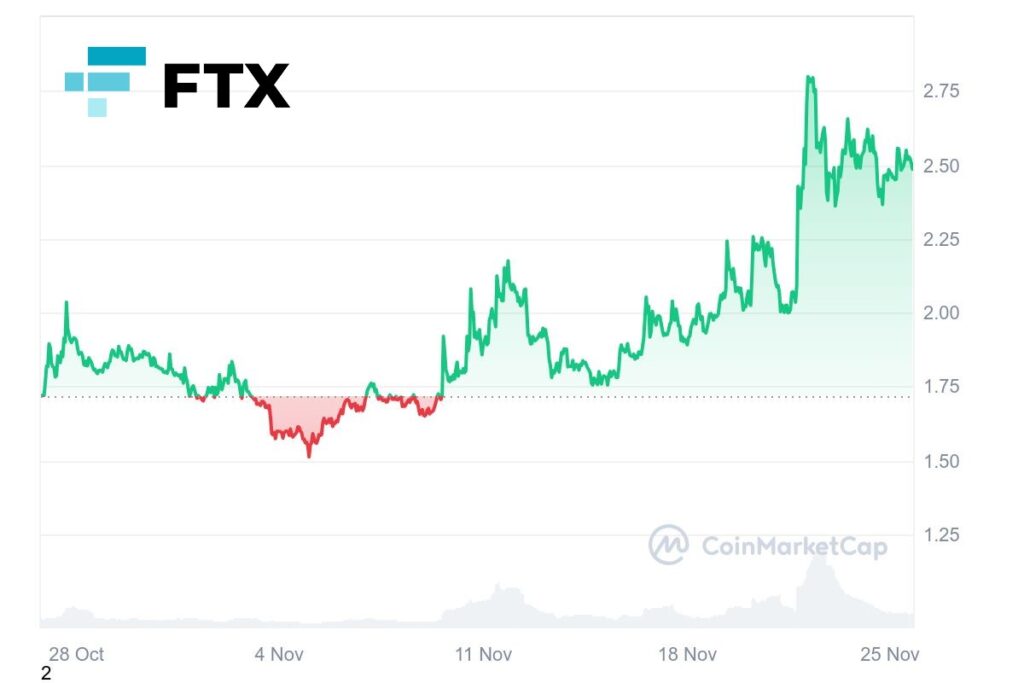
FTX’s Repayment Plan Sparks Optimism as Crypto Markets React to FTT Token Surge

FTT Token Soars 42% Amid FTX Repayment Plan Optimism

The cryptocurrency market has reacted with cautious optimism following the announcement of FTX’s repayment plan, slated to begin in early 2025. The FTT token, the native asset of the bankrupt exchange, has surged by 42% in recent days. It seems to signal a wave of renewed confidence among investors. As the company progresses in its efforts to repay creditors and customers, the industry is abuzz with discussions on whether this development represents a turning point for trust in cryptocurrency platforms or merely a temporary market reaction.

The Repayment Plan and Timeline

FTX’s Chapter 11 restructuring plan, approved in October 2024, is set to take effect by January 2025. Under the plan, the exchange has committed to distributing between $14.5 billion and $16.3 billion in recovered assets. Initial payouts to creditors and customers are expected to begin within 60 days of the plan’s effective date, targeting March 2025 as the starting point.

The plan prioritizes smaller claims, ensuring that 98% of customers with claims of $50,000 or less will be paid promptly. This move is expected to resolve most claims efficiently, providing relief to customers who have awaited repayment since FTX’s collapse in November 2022.

Market Reaction and the FTT Token Surge

News of the repayment plan has had an immediate impact on the FTT token. It saw a sharp 42% increase in value following the announcement. While FTT’s resurgence has sparked interest, it remains a speculative asset. Its long-term viability is tied to the eventual execution of the repayment plan and the broader recovery of FTX’s reputation.

Market analysts are divided on the significance of the token’s rally. Some view it as a sign of optimism among traders who believe in FTX’s potential to resolve its bankruptcy efficiently. Others caution that the surge could be a speculative bubble driven by short-term sentiment rather than fundamental recovery.

Restoring Trust in Cryptocurrency

FTX’s downfall in 2022, marked by allegations of fraud and mismanagement by its founder Sam Bankman-Fried, shook the cryptocurrency industry. Over nine million customers faced significant losses. Bankman-Fried’s conviction and subsequent 25-year prison sentence underscored the scale of the scandal. The repayment plan represents a critical step in addressing the financial damage inflicted on customers and creditors. However, questions remain about whether it will be sufficient to restore faith in the industry.

For FTX, executing the repayment plan without delays or complications is vital to re-establishing credibility. Additionally, the case has intensified regulatory scrutiny on the cryptocurrency sector. It prompted calls for stronger safeguards to protect investors and prevent similar collapses in the future.

While FTX’s repayment plan has brought a glimmer of hope to creditors and customers, its broader implications for the cryptocurrency market remain uncertain. The FTT token’s surge suggests a resurgence of investor confidence, but sustained trust in crypto platforms will depend on consistent delivery of promises and regulatory improvements. As the timeline progresses, all eyes will be on FTX to see if it can fulfill its commitments and set a precedent for accountability in the crypto world.

Readers’ frequently asked questions

What is the FTT token, and why is its price reacting to the repayment plan announcement?

The FTT token is the native cryptocurrency of the FTX exchange. It was originally designed to offer benefits to FTX users, such as trading fee discounts and staking rewards. After FTX’s collapse in 2022, the token lost much of its utility and value, becoming largely speculative. The recent price surge is tied to investor optimism surrounding FTX’s repayment plan. Market participants are betting that the successful execution of repayments could improve FTX’s standing or lead to renewed utility for the token in a potential restructuring of the exchange. However, the FTT token remains a speculative asset, and its value is driven more by sentiment than by fundamental use cases at this point.

How will FTX determine who gets repaid, and what do creditors need to do to receive their funds?

FTX has established a structured repayment process as part of its Chapter 11 reorganization plan. Creditors, including customers who held funds on the exchange, must submit claims through the FTX creditor portal. The process requires account holders to complete identity verification through Know Your Customer (KYC) protocols and provide necessary tax documentation. Once these steps are completed, the claims will be reviewed and matched against FTX’s records to determine eligibility. Customers with smaller claims (up to $50,000) are prioritized, with most expected to receive full or nearly full repayment within 60 days of the plan’s January 2025 effective date. For larger creditors, repayments may take longer and could be subject to additional scrutiny.

How much money has FTX recovered, and will it be enough to repay all creditors and customers?

FTX has reportedly recovered between $14.5 billion and $16.3 billion in assets. This amount is considered sufficient to cover the estimated $11 billion owed to non-government creditors. However, the exact distribution will depend on the final valuation of assets and liabilities. Customers with smaller claims (up to $50,000) are expected to receive their funds in full, but creditors with larger claims may see partial repayments depending on the available funds after initial distributions. The repayment process is designed to prioritize efficiency, aiming to resolve the majority of smaller claims quickly while addressing larger claims over a longer timeline.

What Is In It For You? Action Items You Might Want to Consider

Monitor FTT Token Trends

With the FTT token experiencing a significant surge in value following the repayment plan announcement, traders should keep a close eye on its price movements and trading volume. While the token’s rally might signal optimism, remember that FTT is still a speculative asset tied to FTX’s uncertain future. Consider setting alerts for key price levels or technical indicators to identify potential opportunities, but approach with caution due to its volatile nature.

Stay Updated on FTX’s Repayment Timeline

FTX’s repayment plan is set to roll out in early 2025, with significant implications for market sentiment. Traders should track updates on the progress of the plan, especially as the January 2025 implementation date approaches. Any delays or complications in the process could influence broader market trends and impact related assets. Bookmark reliable crypto news sources to stay ahead of developments.

Diversify to Manage Risk

While the FTT token might look attractive in the short term, it’s essential to avoid overexposure to a single asset, especially one linked to a bankrupt exchange. Use this opportunity to review your portfolio and ensure a healthy balance of assets across different cryptocurrencies, sectors, or even traditional investments. Diversification can help mitigate risks associated with market volatility and speculative trades.

Crypto vs. Tradition: Trump’s SEC Nominee Sparks Debate on Regulatory Future

Who will be the next SEC chair?

As Gary Gensler prepares to step down as SEC chair on January 20, 2025, the agency stands at a crossroads. Under Gensler, the SEC aggressively pursued cryptocurrency enforcement, applying existing securities laws to a burgeoning digital market. While these measures won praise for protecting investors, the crypto industry criticized them as stifling innovation and driving blockchain-based businesses offshore.

The stakes are high as President-elect Donald Trump’s administration prepares to name Gensler’s successor. Trump has vowed to end the “war on crypto,” signaling a potential shift in U.S. financial policy. His shortlist of candidates reflects a spectrum of perspectives – from pro-crypto reformers to traditional finance veterans – setting up a clash between innovation and stability. The decision will shape not only the SEC’s regulatory direction but also the future of the U.S. crypto industry.

The Contenders for SEC Chair: A Diverse Shortlist

Mark Uyeda

Mark Uyeda, currently an SEC Commissioner, is widely regarded as the frontrunner for the position. Uyeda criticized the enforcement-driven approach of Gensler’s tenure. He also has called for regulatory clarity to enable innovation in the crypto space. Advocating for a balance between fostering technological advancements and protecting investors, Uyeda’s track record resonates strongly with Trump’s pro-crypto agenda. He would be the candidate most likely to lead the SEC into a more crypto-friendly era.

Brian Brooks

Brian Brooks, the former Acting Comptroller of the Currency and former CEO of Binance.US, is another pro-crypto contender. Brooks has championed regulatory sandboxes and clear guidelines for digital assets. It earned him the moniker “Crypto Comptroller” during his tenure at the OCC. His appointment would signify a bold shift toward prioritizing blockchain innovation. Though, it could spark criticism from those advocating stricter oversight.

Richard Farley

Representing a more traditional approach, Richard Farley, a Wall Street attorney, brings decades of experience in financial law but has limited involvement in cryptocurrency regulation. Farley’s potential nomination appeals to those seeking stability and continuity, emphasizing cautious oversight over sweeping reforms. However, his perceived lack of engagement with the digital asset ecosystem could alienate stakeholders pushing for innovation.

Dan Gallagher

Former SEC Commissioner and current Chief Legal Officer at Robinhood, Dan Gallagher, was initially a strong contender. Known for his pragmatic approach to regulation, Gallagher has experience balancing market integrity with fostering growth. However, recent reports indicate he has withdrawn his candidacy, opting to remain with Robinhood.

Bob Stebbins

A former SEC General Counsel, Bob Stebbins is considered a more moderate candidate. While not as enforcement-heavy as Gensler, Stebbins has faced criticism from crypto leaders like Ripple CEO Brad Garlinghouse. They accuse him of maintaining a status quo that limits innovation. Stebbins could be a compromise candidate, bridging the gap between traditional and pro-crypto perspectives.

Goody Guillen

Goody Guillen is a less-discussed but notable candidate, whose regulatory experience and focus on private securities have gained attention. Guillen’s approach emphasizes alternative assets, including crypto, as vital contributors to the global economy. Though not as vocal in the crypto debate as Uyeda or Brooks, Guillen’s nomination would signal a balanced yet progressive shift.

A Critical Decision for the Crypto Industry

The SEC chair decision comes at a time of intense debate over the role of cryptocurrencies in the U.S. economy. Industry leaders have repeatedly criticized Gensler’s lack of clear guidelines, arguing that enforcement actions have driven innovation offshore to jurisdictions with more accommodating policies. A new leader with a pro-crypto stance, such as Uyeda or Brooks, could reverse this trend by fostering a more predictable regulatory environment, potentially making the U.S. a global leader in blockchain innovation.

However, concerns remain. Critics warn that a lenient regulatory approach could lead to increased risks for investors, especially in a volatile and often opaque market like cryptocurrency. Traditional finance advocates argue that strong safeguards must remain in place to protect the integrity of the broader financial system.

Ripple Effects Across the Market

The crypto industry has expressed optimism about a potential pivot under new leadership. Ripple CEO Brad Garlinghouse has been particularly vocal, praising candidates like Uyeda while criticizing those who might perpetuate Gensler’s enforcement-heavy legacy. Other industry leaders echoed this sentiment, viewing the transition as an opportunity to advocate for a more collaborative regulatory framework.

On the other hand, traditional financial institutions and regulators warn against overcorrecting. They emphasize the importance of maintaining robust investor protections, even as the industry evolves. This balance will be critical as the SEC’s next chair takes on the dual challenge of regulating an emerging technology and safeguarding financial stability.

>>> Scott Bessent – Crypto Advocate Nominated for Treasury Secretary

The SEC chair selection process reflects a broader ideological divide. Should U.S. financial regulators prioritize innovation to compete globally or proceed cautiously to protect investors and market integrity? As Trump’s administration weighs its options, the decision will not only influence the regulatory landscape but also signal the country’s stance on embracing blockchain and cryptocurrencies as integral components of the financial system.

Whether the SEC’s next leader prioritizes innovation or stability, the decision will have profound implications for the crypto market, traditional finance, and the U.S.’s position in the global financial hierarchy. The battle between crypto and tradition has begun, and the stakes couldn’t be higher.

Readers’ frequently asked questions

What does the SEC actually do, and why is its leadership important for cryptocurrencies?

The SEC, or the U.S. Securities and Exchange Commission, is the primary regulator of securities markets in the United States. Its role involves protecting investors, maintaining fair and efficient markets, and facilitating capital formation. The SEC’s decisions are crucial for cryptocurrencies because they determine whether specific digital assets are classified as securities. This classification directly impacts how these assets are regulated, traded, and offered to the public. For example, if a cryptocurrency is deemed a security, the companies offering it must comply with stringent registration and disclosure requirements. The SEC’s leadership sets the tone for how aggressively these rules are enforced. A pro-crypto chair could lead to clearer, more flexible regulations, whereas a more conservative leader might continue the current enforcement-heavy approach, which has been criticized for lacking clarity.

How could a pro-crypto SEC chair impact the cryptocurrency market and investors like me?

A pro-crypto SEC chair, such as Mark Uyeda or Brian Brooks, could bring several potential changes. First, they might push for clearer regulatory guidelines, making it easier for crypto companies to understand and comply with U.S. laws. This could attract more businesses to the U.S., fostering innovation and expanding the domestic blockchain ecosystem. For individual investors, a clearer regulatory framework might reduce uncertainty and instill greater confidence in the market. However, while a more lenient approach could lead to broader adoption and new investment opportunities, it might also increase risks if oversight becomes too lax, potentially exposing investors to fraud or unstable projects. The balance between encouraging innovation and protecting investors will be a key challenge for the next SEC chair.

Why are some candidates considered pro-crypto while others are seen as traditional finance-oriented?

Candidates like Mark Uyeda and Brian Brooks are labeled pro-crypto because they have openly advocated for regulatory clarity and policies that encourage innovation within the blockchain and cryptocurrency sectors. For instance, Brooks, as Acting Comptroller of the Currency, supported crypto-friendly initiatives, including the use of blockchain technology in banking. Uyeda has criticized enforcement-heavy approaches and called for clear rules that allow businesses to innovate without fear of arbitrary penalties.

In contrast, candidates like Richard Farley are seen as traditional finance-oriented because they come from backgrounds steeped in conventional financial markets and legal systems, with limited exposure to the unique dynamics of cryptocurrency. These candidates often prioritize investor protection and market stability, which sometimes translates into stricter oversight of emerging industries like crypto. Their approach might be more cautious, aiming to minimize risks to traditional financial systems while regulating digital assets.

What Is In It For You? Action Items You Might Want to Consider

Keep an Eye on Regulatory Announcements

Stay informed about developments in the SEC chair nomination process. A pro-crypto chair could lead to a shift in U.S. regulations, potentially opening up new opportunities for crypto businesses and traders. Monitor official announcements and policy changes closely, as these could directly impact the market environment and trading conditions for digital assets.

Diversify Your Portfolio with an Eye on Compliance

As the regulatory landscape evolves, it’s wise to focus on cryptocurrencies and projects with strong compliance records or clear frameworks for adhering to U.S. laws. Assets linked to companies prepared for a more transparent, rules-based environment could see a boost if the SEC adopts a pro-crypto stance. Diversifying your portfolio now can position you to benefit from these potential shifts.

Prepare for Market Volatility During the Transition

The SEC leadership change and ongoing regulatory debates might create uncertainty in the market. Use this period to refine your risk management strategies, setting stop-loss orders and maintaining liquidity to weather potential price swings. Volatility often brings trading opportunities, so staying agile and informed can help you capitalize on rapid market movements.

Debt, Deficits, and Digital Dollars: Can Scott Bessent Navigate Treasury’s Toughest Challenges?

Scott Bessent is nominated as Treasury Secretary.

The nomination of Scott Bessent as Treasury Secretary by President-elect Donald Trump has ignited debate among financial experts, policymakers, and cryptocurrency enthusiasts alike. As a seasoned hedge fund manager with a clear pro-crypto stance, Bessent brings both opportunities and challenges to the table. His appointment marks a pivotal moment for the intersection of traditional finance and emerging blockchain technology. This dynamic could reshape the U.S. economic landscape. Yet, as the nation grapples with soaring debt and fiscal constraints, the question remains: Can Bessent balance innovation with responsibility?

A Pro-Crypto Vision: Opportunity for Blockchain and Beyond

Bessent’s reputation as a forward-thinking financier stems from his advocacy for cryptocurrencies and blockchain technology. His nomination is widely regarded as a positive signal for the digital asset industry. Many anticipate regulatory clarity and innovation-friendly policies. Under his stewardship, the Treasury Department could push for frameworks that foster growth in decentralized finance (DeFi), digital payments, and blockchain applications, positioning the U.S. as a leader in the global crypto economy.

His experience managing large-scale investments, including his tenure with Soros Fund Management, suggests he understands the intricacies of market dynamics. Industry insiders see Bessent’s pro-crypto stance as a step toward bridging the gap between traditional banking systems and blockchain-driven financial models.

Fiscal Challenges: A Daunting Landscape

However, concerns over the nation’s fiscal health temper the optimism surrounding his nomination. The U.S. is navigating unprecedented levels of debt, with projections showing trillions in annual deficits in the coming years. Critics argue that while blockchain and cryptocurrencies hold transformative potential, they are not a panacea for systemic economic issues.

Economist Peter Schiff, a vocal critic of cryptocurrencies, has warned that Bessent’s focus on innovation may be overshadowed by the practical demands of managing mounting debt. The Treasury Secretary’s role in securing buyers for government debt and maintaining the dollar’s status as the world’s reserve currency will require a delicate balance. Geopolitical tensions and fluctuating market confidence complicate this task significantly.

Public Opinion: A Nation Divided

The reaction to Bessent’s nomination underscores a divide in public opinion. Cryptocurrency advocates hail his appointment as a progressive move. They argue it signals the administration’s openness to embracing digital assets as part of a modern economic strategy. Supporters believe Bessent’s leadership could reduce regulatory bottlenecks and create a more inclusive financial system.

Conversely, fiscal conservatives express skepticism. They highlight the risks of prioritizing crypto-friendly policies in an era of budgetary constraints. Could innovation come at the expense of fiscal discipline? They question whether Scott Bessent can address longstanding issues, such as tax reform and government spending while advancing his vision for digital finance.

Balancing Act: A Test of Leadership

Bessent’s tenure, if confirmed, will undoubtedly be a balancing act. On one hand, he has the opportunity to champion cryptocurrency and blockchain technologies, fostering innovation and competitiveness. On the other, he must confront the realities of fiscal policy, ensuring that short-term gains do not undermine long-term stability.

His success will hinge on his ability to reconcile these competing priorities, all while navigating a politically charged environment. Whether he can rise to the occasion remains to be seen. However, his nomination has already set the stage for one of the most consequential debates in modern financial history.

As the world watches, Scott Bessent’s stewardship of the Treasury will not only define his legacy but could also shape the trajectory of the U.S. economy for years to come.

Readers’ frequently asked questions

What role does the Treasury Secretary play in cryptocurrency regulation?

The U.S. Treasury Secretary has significant influence over the regulation of cryptocurrencies through their oversight of agencies like the Internal Revenue Service (IRS) and the Financial Crimes Enforcement Network (FinCEN). The Secretary helps shape policies on taxation, anti-money laundering (AML) measures, and financial stability related to digital assets. They also collaborate with Congress and other agencies to set the direction for how cryptocurrencies fit into the broader financial system. This includes determining whether cryptocurrencies are classified as assets, currencies, or securities, which impacts their use and taxation.

What challenges does the U.S. debt present for cryptocurrency adoption?

The growing U.S. debt creates a complex environment for integrating cryptocurrencies into the financial system. High debt levels may require the Treasury to focus on attracting buyers for government securities and stabilizing the dollar as the world’s reserve currency. Introducing or prioritizing new cryptocurrency policies during this fiscal strain could face pushback if seen as a distraction from addressing the debt. Additionally, large-scale adoption of digital currencies might be limited if they are perceived as competing with traditional financial mechanisms critical to debt financing.

How does blockchain technology relate to government fiscal policies?

Blockchain technology can provide transparency and efficiency in fiscal policies by enabling secure, traceable transactions. Governments could use blockchain to improve tax collection, reduce fraud, and streamline welfare payments. However, its integration into fiscal systems is still in experimental stages and largely depends on supportive regulations and technological readiness. As Treasury Secretary, Bessent’s role would include evaluating how such technologies could fit into or improve current fiscal operations without disrupting existing systems.

What Is In It For You? Action Items You Might Want to Consider

Stay Alert for Policy Announcements

With Scott Bessent’s pro-crypto stance, the Treasury could introduce regulations or guidelines directly impacting how cryptocurrencies are traded, taxed, or held. Keep an eye on updates from the U.S. Treasury and related regulatory agencies like the SEC or IRS. These announcements might clarify tax reporting, security classifications, or DeFi operations – critical information for making informed trading decisions.

Diversify Your Portfolio in Anticipation of Market Shifts

Bessent’s potential policies could influence market sentiment, particularly for U.S.-based crypto assets and blockchain projects. Consider diversifying into established cryptocurrencies, such as Bitcoin and Ethereum, while exploring regulated U.S.-based stablecoins or tokens tied to blockchain projects that could benefit from a favorable regulatory environment. This strategy may help you stay resilient to market volatility driven by policy shifts.

Prepare for Changes in Tax Reporting Requirements

Given Bessent’s probable focus on clearer crypto regulations, changes to tax reporting requirements are likely. Start organizing your trading records now, ensuring all transactions are accurately documented. Using tax software tailored to cryptocurrency or consulting with a crypto-savvy tax professional can save you headaches later. Being prepared will put you ahead of the curve if new rules or deadlines are introduced.

China’s CBDC Pioneer Ousted: Yao Qian Faces Corruption Scandal Involving Cryptocurrencies

China's Digital Yuan Chief Expelled Over Corruption

Yao Qian, once celebrated as a trailblazer in China’s digital finance revolution, has been expelled from the Communist Party of China (CPC) following allegations of corruption. The former head of the People’s Bank of China’s (PBOC) Central Bank Digital Currency (CBDC) initiative, Yao is accused of accepting bribes during his tenure. Reportedly these include cryptocurrencies and other luxury incentives. His dramatic fall from grace has cast a shadow on the digital yuan project. It also raised broader concerns about governance and ethical oversight within the blockchain and digital finance sectors.

The Rise and Fall of Yao Qian

Yao Qian was a central figure in the development of Digital Yuan. China’s flagship project aimed to establish the country as a global leader in Central Bank Digital Currencies. Advocating for blockchain adoption and the tokenization of fiat currencies, Yao’s work was instrumental in laying the foundation for the e-CNY. It is now in its pilot phase across multiple regions in China.

However, allegations of misconduct have now overshadowed his achievements. Investigations by Chinese authorities revealed that Yao had accepted significant bribes during his tenure. These bribes reportedly came in the form of digital currencies, expensive gifts, and exclusive hospitality. The incident reflects how the new financial ecosystem can be exploited for personal gain. Yao’s actions, described as a “grave violation of discipline” by the CPC, led to his expulsion and the prospect of criminal prosecution.

Implications for China’s Digital Yuan and Strategic Goals

The scandal comes at a critical time for China’s CBDC project, central to the country’s ambitions to reshape global finance. The digital yuan is seen as a tool to reduce reliance on the U.S. dollar, enhance cross-border payments, and provide greater financial inclusion domestically. Yao’s corruption case, however, risks undermining these efforts by raising questions about the integrity of leadership within the project.

The allegations against Yao also bring into focus the challenges of managing emerging technologies. The use of cryptocurrencies as bribes highlights the difficulties regulators face in controlling illicit activities within a digital economy. This incident could prompt tighter scrutiny of the blockchain ecosystem in China. That could stifle innovation at a time when global competition in this space is fierce.

Systemic Vulnerabilities in Blockchain Governance

The Yao Qian scandal underscores systemic vulnerabilities in blockchain governance. While blockchain is often lauded for its transparency and security, the case reveals how leadership and oversight failures can enable misuse of power. In this instance, the lack of robust safeguards within the institutional framework governing the CBDC project allowed Yao to exploit his position.

Critics argue that this incident demonstrates the need for more rigorous regulatory frameworks, not just in China but globally. As governments and central banks increasingly adopt blockchain-based systems, ensuring accountability and ethical conduct among leaders will be paramount to maintaining public trust.

Looking Ahead: Lessons and Repercussions

Yao Qian’s fall is both a cautionary tale and a pivotal moment for digital finance governance. For China, the incident presents an opportunity to strengthen its oversight mechanisms and reaffirm its commitment to ethical governance in digital innovation. However, it also poses challenges to maintaining its leadership position in the global blockchain and CBDC race.

For the broader blockchain industry, the scandal serves as a reminder of the risks inherent in merging traditional governance structures with cutting-edge technology. As digital currencies become mainstream, their governance frameworks must evolve to address the complexities of this rapidly changing landscape.

In the wake of this controversy, the question remains: can China’s digital yuan project recover its credibility? Will this setback lead to stronger safeguards for emerging technologies? Only time will tell.

Readers’ frequently asked questions

What exactly is the digital yuan, and how does it differ from cryptocurrencies like Bitcoin?

The digital yuan, also known as the e-CNY, is a Central Bank Digital Currency (CBDC) issued and controlled by the People’s Bank of China (PBOC). Unlike decentralized cryptocurrencies such as Bitcoin or Ethereum, operating on public blockchains independent of any central authority, the digital yuan is a state-controlled digital version of China’s currency. Its primary purpose is to facilitate faster, more secure transactions and to modernize China’s payment systems.

Additionally, the digital yuan is designed to provide the government with greater control over monetary policy and financial transactions. Unlike Bitcoin, which is pseudonymous and operates on a permissionless blockchain, the e-CNY operates on a permissioned ledger. That allows the PBOC to monitor and manage its usage. This centralized control distinguishes it from cryptocurrencies, which emphasize decentralization and user autonomy.

How are cryptocurrencies used in bribery cases, and why is this significant in Yao Qian’s case?

Cryptocurrencies can be used in bribery cases because they allow for peer-to-peer transactions without the need for intermediaries. That makes it easier to transfer funds discreetly. In Yao Qian’s case, the allegations suggest that he accepted bribes in the form of cryptocurrencies. He took advantage of their digital nature to potentially obscure the origin and destination of the funds.

However, it’s important to note that while cryptocurrencies can offer a degree of anonymity, most blockchain transactions are publicly recorded. This means that authorities with the right tools can trace illicit transfers back to their source. The significance in Yao’s case lies in the apparent misuse of a financial innovation he once championed. This highlights the importance of monitoring and regulating not just traditional financial systems but also emerging technologies like cryptocurrencies.

Does Yao Qian’s expulsion mean that China’s digital yuan project is in jeopardy?

No, Yao Qian’s expulsion does not mean that China’s digital yuan project is in jeopardy. The project is much larger than any single individual and is a strategic priority for the Chinese government. While Yao played an instrumental role in its early development, the initiative has since moved forward under the stewardship of other officials and institutions.

China’s commitment to the digital yuan remains steadfast. It seeks to modernize its financial system, reduce reliance on physical cash, and potentially challenge the dominance of the U.S. dollar in global trade. However, this scandal may prompt stricter oversight and governance within the project. That may either delay its progress slightly or improve its transparency and integrity in the long term. The infrastructure and pilot programs for the e-CNY are already well-established, ensuring the project’s continuity despite this setback.

What Is In It For You? Action Items You Might Want to Consider

Reassess Exposure to Chinese Blockchain Projects

The Yao Qian corruption case highlights potential vulnerabilities in the governance of China’s blockchain initiatives. As a trader, consider re-evaluating your exposure to Chinese blockchain and CBDC-related projects. While the digital yuan remains a strategic priority, this incident could signal increased regulatory scrutiny or possible disruptions in the sector. Stay alert for updates that might impact the long-term viability or credibility of these projects.

Monitor Regulatory Developments Around CBDCs and Cryptocurrencies

This scandal underscores the growing focus on governance and accountability in the blockchain space. Traders should pay close attention to how China—and other nations—respond to such incidents with new policies or regulations. Shifts in regulatory frameworks could significantly affect market sentiment and the valuation of cryptocurrencies, particularly those tied to state-led initiatives or public-private partnerships.

Diversify Your Portfolio to Mitigate Regional Risk

Given the uncertainty stemming from Yao Qian’s case, diversifying your crypto portfolio can help mitigate potential risks. Consider allocating assets across blockchain projects and cryptocurrencies in regions with more transparent governance or less regulatory volatility. This approach can help protect your investments from unforeseen developments in any one jurisdiction or market.

- Advertisement -

FEATURED