Home Blog Page 150

MiCA-Compliant Stablecoins Launch: A New Chapter for Regulated Crypto in Europe
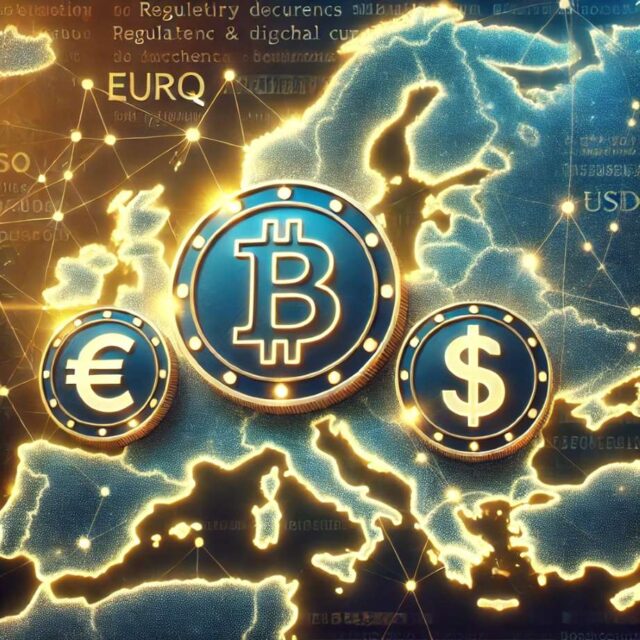
MiCA stablecoins EURQ and USDQ launch, marking a new era of regulated crypto in Europe with compliance, transparency, and innovation.

In a landmark move aligning with the European Union’s Markets in Crypto-Assets Regulation (MiCA), Dutch fintech firm Quantoz Payments has unveiled two fully fiat-backed stablecoins, EURQ and USDQ. Backed by industry heavyweights Tether, Kraken, and Fabric Ventures, the launch represents a pivotal shift in Europe’s digital payment landscape. It blends regulatory compliance with technological innovation. These stablecoins pegged to the euro and U.S. dollar respectively, aim to address the growing demand for secure, transparent, and inclusive digital financial instruments.

A Turning Point in Regulatory Compliance

MiCA, set to take effect in December 2024, introduces a comprehensive regulatory framework for cryptocurrencies within the European Union. It is particularly focusing on stablecoins. These rules demand rigorous compliance standards, including full fiat backing, financial transparency, and enhanced consumer protection measures. By proactively aligning with MiCA, Quantoz positions EURQ and USDQ as trailblazers in regulated digital assets. They are designed to instill confidence among regulators, financial institutions, and consumers alike.

Unlike many existing stablecoins, which have faced scrutiny over transparency and compliance, EURQ and USDQ stand out as fully backed by fiat currencies and liquid financial instruments. They ensure stability and adherence to the highest regulatory standards, addressing one of the major concerns surrounding digital assets in traditional finance.

Backing by Industry Giants

Marking a strategic alignment between established crypto players and innovative fintechs, Tether, Kraken, and Fabric Ventures support the launch with significant investments. Tether, known for its global stablecoin dominance, provides key technological support through its Hadron platform. Hadron facilitates tokenizing assets such as equities, bonds, and real estate. This collaboration underscores Tether’s pivot toward embracing regulated financial ecosystems, a notable evolution given its past regulatory challenges.

Transformative Potential for Payments and Financial Inclusion

The introduction of MiCA-compliant stablecoins could fundamentally transform the European payments landscape. Stablecoins like EURQ and USDQ offer a seamless alternative for cross-border transactions. They reduce the dependency on traditional banking infrastructure while ensuring compliance with stringent financial laws. For individuals and businesses operating within the European Economic Area, these stablecoins promise faster, cheaper, and more transparent transactions.

Moreover, the launch addresses a critical need for financial inclusion. By providing a stable and regulated digital currency, EURQ and USDQ could empower underserved populations and smaller enterprises to participate in the digital economy, fostering economic growth and innovation.

Market Implications in Europe

The debut of MiCA-compliant stablecoins is likely to have profound implications for the broader European cryptocurrency market. By setting a precedent for regulatory adherence, Quantoz’s initiative may encourage other market participants to prioritize compliance, potentially driving increased adoption of blockchain technology in traditional financial systems.

Additionally, the stablecoins align with the EU’s broader goals of maintaining monetary stability and fostering a competitive digital economy. MiCA regulations limit the use of non-euro stablecoins within the bloc. Hence, EURQ and USDQ are strategically positioned to capture market share, particularly in sectors like e-commerce, remittances, and decentralized finance (DeFi).

The launch of EURQ and USDQ is more than just a milestone for Quantoz Payments; it is a significant step forward for the European cryptocurrency ecosystem. By combining regulatory compliance with technological innovation, these stablecoins pave the way for a new era of secure and inclusive digital payments. As MiCA comes into full effect, the role of compliant stablecoins will likely expand. They will reshape the financial landscape and demonstrate the transformative potential of blockchain technology in a regulated environment.

Readers’ frequently asked questions

What exactly are stablecoins, and why are they important?

Stablecoins are digital currencies pegged to a stable asset, such as fiat currencies like the euro or U.S. dollar. Unlike cryptocurrencies such as Bitcoin or Ethereum, which can be highly volatile, stablecoins maintain a consistent value. That makes them ideal for everyday transactions, remittances, and savings. In the case of EURQ and USDQ, these stablecoins are fully backed by reserves of fiat currency and liquid assets, ensuring their value remains steady. Their importance lies in bridging the gap between traditional finance and digital assets. They offer the benefits of blockchain technology – speed, transparency, and cost-efficiency – without the price fluctuations typical of many cryptocurrencies.

How does MiCA regulation affect the crypto market in Europe?

The Markets in Crypto-Assets Regulation (MiCA) is a comprehensive framework set by the European Union to govern digital assets. It focuses on ensuring consumer protection, market integrity, and financial stability within the crypto industry. For stablecoins, MiCA introduces strict rules regarding full fiat backing and transparency. Further, the issuers must operate under licensed frameworks. This regulation is crucial because it provides legal clarity for both companies and consumers. It paves the way for broader adoption of cryptocurrencies in a safer and more controlled environment. By launching MiCA-compliant stablecoins, projects like Quantoz’s EURQ and USDQ aim to meet these standards and set an example for the industry.

What makes EURQ and USDQ different from other stablecoins like Tether (USDT) or USD Coin (USDC)?

While Tether (USDT) and USD Coin (USDC) are widely used stablecoins, EURQ and USDQ stand out because they are specifically designed to comply with the EU’s MiCA regulations. This compliance ensures they meet stringent requirements for transparency and fiat backing, which some existing stablecoins have struggled to achieve. Additionally, EURQ and USDQ are backed by fiat currencies and liquid financial instruments that adhere to regulatory standards. They offer a level of assurance that aligns with the EU’s legal and financial ecosystem. This makes them particularly appealing to businesses and consumers operating within the European Economic Area.

What Is In It For You? Action Items You Might Want to Consider

Explore Opportunities in MiCA-Compliant Assets

With the launch of MiCA-compliant stablecoins like EURQ and USDQ, consider how these assets could fit into your trading strategy. Their stability and full fiat backing make them a reliable option for hedging against volatility in the broader crypto market. Additionally, their regulatory compliance ensures transparency and security, which can be especially appealing for risk-averse investors or traders operating in the European Economic Area.

Leverage Stablecoins for Cross-Border Transactions

If you frequently deal with cross-border payments or remittances, EURQ and USDQ could be game-changers for your operations. These stablecoins are designed to minimize transaction costs and settlement times, making them a practical alternative to traditional banking methods. Incorporate them into your trading or business workflows to reduce friction and enhance financial efficiency.

Stay Ahead of Regulatory Trends

The introduction of MiCA-compliant stablecoins signals a larger shift in how the crypto market is evolving under regulatory scrutiny. Traders should monitor how EURQ and USDQ perform and consider the implications of MiCA on other digital assets. Staying informed about regulatory-compliant cryptocurrencies can help you identify emerging opportunities and adjust your portfolio to align with changing market conditions.


Bitfinex Hackers Sentenced: Justice Served, But Was It Enough?

Bitfinex Hack Sentencing: Lenient Punishment for One of Crypto’s Biggest Heists?

In a landmark case for cryptocurrency crime, Ilya Lichtenstein and Heather Morgan, the masterminds behind the 2016 Bitfinex hack, have been sentenced to prison. Lichtenstein, who orchestrated the theft of 120,000 Bitcoin from the exchange, received a five-year sentence. Heather Morgan, who aided in laundering the stolen funds, was handed an 18-month prison term. At the time of the theft, the stolen Bitcoin was valued at $71 million. Still, with cryptocurrency’s meteoric rise, its value peaked at nearly $11 billion, making it one of the largest heists in financial history.

The successful recovery of over 96% of the stolen Bitcoin by U.S. authorities has been hailed as a significant achievement, showcasing advancements in blockchain analytics and inter-agency collaboration. However, despite the case’s groundbreaking nature, the sentencing has sparked debate within the cryptocurrency community. Critics argue that the penalties are disproportionately lenient compared to the scale of the crime and the ripple effects it caused within the crypto ecosystem.

The Crime and Its Aftermath

The 2016 Bitfinex hack was a wake-up call for the nascent cryptocurrency industry. Exploiting vulnerabilities in the exchange’s security systems, Lichtenstein initiated unauthorized transactions to siphon Bitcoin into wallets under his control. Over the years, the stolen funds were laundered through a sophisticated web of pseudonymous transactions, shell companies, and darknet markets.

Heather Morgan, known for her eccentric “Razzlekhan” rap persona, played a key role in laundering the funds, blending their activities into seemingly legitimate ventures. The couple managed to evade detection for years until their arrest in February 2022. Investigators traced their on-chain activity, unraveling one of the most complex crypto laundering schemes to date.

Sentencing Under Scrutiny

While their cooperation with law enforcement in recovering the stolen funds and assisting other investigations influenced their sentences, many observers viewed the penalties as inadequate. The sentences seem lenient, especially Morgan’s 18 months, considering a crime that disrupted one of the largest cryptocurrency exchanges and impacted thousands of users. Critics contend that such rulings could set a worrying precedent. They might fail to deter future bad actors in the digital asset space.

Proponents of the sentences argue that their collaboration with authorities and recovery of the stolen funds significantly mitigated the harm. Furthermore, the case’s resolution underscores the crypto industry’s increasing ability to hold perpetrators accountable, despite the pseudonymous nature of blockchain transactions.

Broader Implications for the Crypto Industry

Beyond the sentencing debate, the Bitfinex hack serves as a stark reminder of the vulnerabilities inherent in early crypto platforms. It highlights the importance of robust security measures, regulatory oversight, and industry standards to protect user funds. The recovery effort underscores how far blockchain analytics and inter-agency coordination have come in tracking illicit activities – a promising sign for the industry’s future.

However, the case also exposes the slow evolution of legal frameworks to address crypto crimes. As the industry grows, ensuring that penalties reflect the severity of financial crimes will be critical in maintaining trust and deterring bad actors.

The sentencing of Ilya Lichtenstein and Heather Morgan closes a significant chapter in cryptocurrency crime history. But, it leaves a lingering question: was justice truly served? The recovery of stolen funds and the unraveling of their scheme mark significant milestones. However, the lenient sentences may undermine confidence in the system’s ability to adequately punish and deter large-scale crypto crimes. For the crypto community, this case is a call to action – not only to strengthen security and regulatory frameworks but also to demand accountability that matches the scale of harm inflicted.

Readers’ frequently asked questions

What exactly is Bitcoin, and why is it so valuable?

Bitcoin is a form of digital currency, often referred to as cryptocurrency, that operates on a decentralized network called blockchain. Unlike traditional currencies issued by governments, Bitcoin is maintained by a distributed network of computers, which verify and record transactions transparently on the blockchain. Its value comes from its scarcity, as there will only ever be 21 million Bitcoin. Additionally, its growing acceptance as both a store of value and a medium of exchange contributes to its worth. People often compare Bitcoin to digital gold because it is seen as an alternative asset that can hedge against inflation. In the case of the Bitfinex hack, the stolen Bitcoin became even more valuable over time as the cryptocurrency market grew, making this theft one of the largest financial crimes ever committed.

How did hackers manage to steal Bitcoin from Bitfinex?

The 2016 Bitfinex hack exploited vulnerabilities in the exchange’s security systems, specifically its use of multi-signature wallets, which required multiple digital “keys” to authorize transactions. The hackers found a way to bypass these security measures. They gained unauthorized access to the private keys needed to withdraw Bitcoin from users’ accounts. Once the hackers had control, they moved the Bitcoin into their own wallets, effectively stealing the funds. This event exposed critical weaknesses in the way early cryptocurrency exchanges secured user funds, leading to industry-wide improvements in security practices like cold storage (keeping assets offline) and more advanced authentication systems.

If Bitcoin transactions are anonymous, how did authorities catch the hackers?

While Bitcoin transactions are often described as anonymous, they are actually pseudonymous. This means that each transaction is tied to a unique address on the blockchain, which is publicly visible. Law enforcement used advanced blockchain analysis tools to trace the movement of the stolen Bitcoin across wallets over several years. They noticed patterns in the transactions and eventually linked the wallets to real-world identities, specifically Ilya Lichtenstein and Heather Morgan. This connection was made through their interactions with regulated cryptocurrency exchanges and other slip-ups. This case demonstrates how blockchain technology, despite being used in illicit activities, can also provide a trail that skilled investigators can follow to uncover the identities of bad actors.

What Is In It For You? Action Items You Might Want to Consider

Prioritize Security Over Convenience

After the Bitfinex hack, it’s clear that even trusted platforms can be vulnerable. Always use exchanges with robust security features like multi-signature wallets and cold storage for the majority of your holdings. For added protection, consider moving your funds to a personal hardware wallet, where you control the private keys.

Monitor Regulatory Developments

The sentencing of Lichtenstein and Morgan highlights the evolving landscape of crypto enforcement. Stay informed about changes in regulations and how authorities are tackling cryptocurrency crimes. Understanding these shifts can help you anticipate potential impacts on your trading strategies or the platforms you use.

Learn to Read Blockchain Activity

The authorities’ success in tracing stolen Bitcoin shows how valuable blockchain transparency can be. Familiarize yourself with blockchain explorers and analytics tools to monitor wallet activities or identify suspicious patterns. This skill can help you better understand market dynamics and make more informed trading decisions.

McDonald’s and Doodles Unite: NFTs and Coffee Cups Blend for the Holiday Season

McDonald’s Doodles NFT holiday campaign blends festive coffee cups with digital collectibles

McDonald’s is taking a bold step into the blockchain space by teaming up with Doodles, the popular Ethereum-based NFT collection, to launch its festive “GM Spread Joy” campaign. From November 18, customers in the U.S. can indulge in McCafé beverages while collecting vibrant holiday cups designed by Doodles and accessing exclusive digital collectibles via the McDonald’s app. This partnership signals a new wave of NFT adoption, as global brands increasingly embrace blockchain technology to engage younger, tech-savvy audiences.

As the holiday season approaches, McDonald’s is blending tradition with cutting-edge technology. Even a simple cup of coffee can be a gateway to the digital world. Through a partnership with Doodles, one of Ethereum’s most recognized NFT collections, McDonald’s “GM Spread Joy” campaign introduces a series of limited-edition holiday-themed McCafé cups. Adorned with Doodles’ signature bright, playful designs, these cups offer more than festive cheer. They serve as entry points to exclusive digital rewards and collectibles.

Consumers can access these digital perks through the McDonald’s app, which integrates blockchain elements seamlessly into the user experience. This marks a significant moment for NFTs, as they transition from niche digital assets to tools for engaging with a broader, consumer-oriented audience.

The Marketing Power of NFTs

This collaboration highlights a strategic pivot by McDonald’s to cater to Gen Z and millennial consumers, who are increasingly drawn to digital-first experiences and decentralized technologies like blockchain. By partnering with Doodles, McDonald’s not only taps into the vibrant NFT community. It also leverages the cultural cachet of Web3 innovations to enhance its brand image.

The campaign’s impact on the NFT market has been swift and tangible. Following the announcement, Doodles’ trading volume surged by 500%. The collection’s floor price rose by 33% within 24 hours. These numbers underscore the mutual benefits of such partnerships: McDonald’s gains a foothold in the Web3 space, while Doodles strengthens its market presence and cultural relevance.

Redefining Consumer Engagement

The “GM Spread Joy” campaign isn’t just about cups or NFTs. It’s a case study of how blockchain technology is reshaping brand-consumer interactions. By offering physical merchandise alongside digital rewards, McDonald’s bridges the gap between the physical and digital realms. It creates a cohesive and immersive marketing strategy.

This approach also points to a broader trend among established brands. With consumers increasingly comfortable navigating digital ecosystems, integrating NFTs and blockchain into traditional marketing efforts is no longer experimental. It’s essential! McDonald’s move aligns with efforts by other global companies exploring blockchain’s potential to foster loyalty and build communities around their brands.

A Glimpse into the Future of Marketing

The McDonald’s-Doodles partnership signals more than just a seasonal campaign. It represents a shift in the way brands communicate with their audiences. NFTs, once viewed primarily as speculative assets, are now emerging as versatile tools for storytelling, engagement, and branding.

As McDonald’s joins the roster of companies embracing blockchain, it opens the door for broader NFT adoption in everyday consumer experiences. Whether it’s coffee cups, collectibles, or co-branded merchandise, the message is clear: NFTs are no longer just for crypto enthusiasts. They’re becoming part of the mainstream.

Readers’ frequently asked questions

How can someone who is not familiar with NFTs participate in the “GM Spread Joy” campaign?

The “GM Spread Joy” campaign is designed to be accessible even for those unfamiliar with NFTs or blockchain technology. McDonald’s has simplified the process by integrating digital rewards into its existing mobile app. That eliminates the need for specialized knowledge about cryptocurrency wallets or NFT platforms. When customers purchase McCafé beverages and access the app, they can claim their digital rewards effortlessly. Thus, the campaign is user-friendly for both blockchain enthusiasts and newcomers.

Why is McDonald’s partnering with an NFT brand like Doodles instead of creating its own NFTs?

Collaborating with an established NFT brand like Doodles allows McDonald’s to tap into an existing, vibrant community of NFT enthusiasts while leveraging the credibility and popularity of the Doodles collection. This partnership reduces the risks and learning curve of launching a proprietary NFT project and ensures immediate traction within the blockchain space. Doodles’ colorful, optimistic artwork aligns with McDonald’s brand ethos, creating a natural synergy that enhances the campaign’s appeal and impact.

What value do these digital collectibles offer to consumers beyond novelty?

The digital collectibles in the “GM Spread Joy” campaign provide more than just aesthetic value. They act as digital mementos tied to a specific holiday experience. They blend the nostalgia of McDonald’s with the cutting-edge appeal of NFTs. Furthermore, these collectibles could potentially gain value over time as NFTs become more mainstream and desirable. For collectors, the limited-edition nature of these items adds exclusivity. For casual consumers, they offer a fun, interactive way to engage with the McDonald’s brand in the digital age.

What Is In It For You? Action Items You Might Want to Consider

Monitor the NFT Market for Opportunities

The McDonald’s and Doodles collaboration has already sparked a surge in Doodles’ trading volume and floor price. Consider tracking the performance of similar NFT collections or partnerships involving major brands. They often generate market excitement and price momentum. Staying ahead of these trends could open doors to profitable trading opportunities in the NFT space.

Evaluate the Broader Impact on Ethereum’s Ecosystem

As Doodles operates on the Ethereum blockchain, this campaign underscores Ethereum’s continued role as the preferred platform for high-profile NFT initiatives. Traders might want to keep an eye on Ethereum’s network activity and gas fees. Increased NFT adoption by global brands could drive demand for ETH. Strategically positioning within Ethereum or its Layer-2 solutions could be a forward-thinking move.

Consider Diversifying into Brand-Backed NFTs

With McDonald’s entering the NFT space, it’s clear that mainstream companies are beginning to view blockchain technology as a serious marketing tool. Traders could explore NFTs tied to well-known brands, as these often carry broader market appeal and a sense of stability. Such NFTs might serve as a hedge in a portfolio, combining potential growth with lower risk due to the backing of established entities.

Crypto Market Hits Historic $3 Trillion Mark Amid Bitcoin’s Record Surge to $93K

The cryptocurrency market surpasses $3 trillion as Bitcoin hits $93K, signaling a transformative shift in global finance and investment trends.

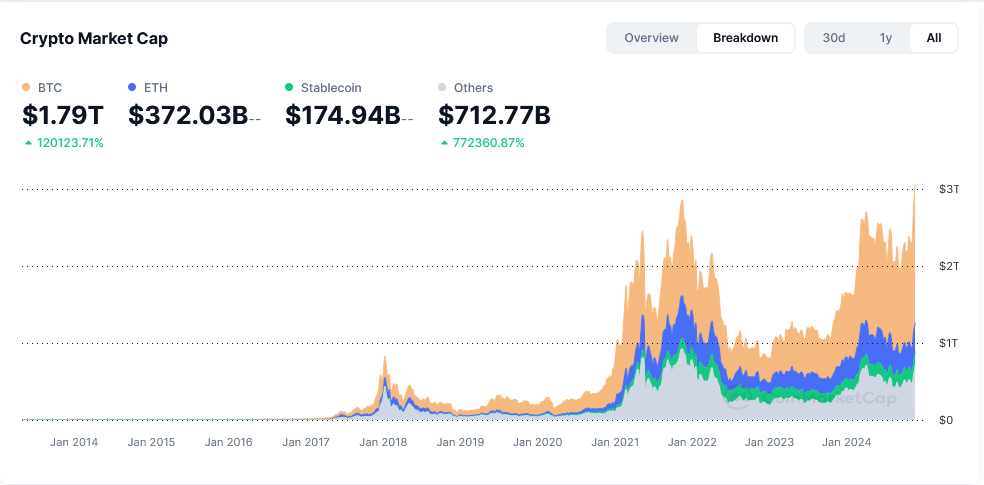
The cryptocurrency market has officially entered uncharted territory. It surpassed $3 trillion in total market capitalization for the first time, according to data from CoinGecko. This historic milestone has been driven largely by Bitcoin’s meteoric rise to an all-time high of $93,000. Also, Ethereum and other altcoins contributed significantly to the market’s explosive growth. The achievement marks a pivotal moment in the evolution of digital currencies. It signals their growing influence in the global financial ecosystem.

A Closer Look at the $3 Trillion Milestone

Crossing the $3 trillion threshold solidifies cryptocurrency’s place as a major financial asset class. Bitcoin remains the dominant player, accounting for nearly half of the total market capitalization. Ethereum, the second-largest cryptocurrency, has also seen significant gains, driven by its use in decentralized finance (DeFi) platforms and non-fungible tokens (NFTs).

Source: coinmarketcap.com

Altcoins like Solana, Cardano, and Binance Coin have played a supporting role. They reflect a diversified market that has moved beyond Bitcoin’s initial promise of digital cash to encompass smart contracts, decentralized applications, and even digital art. These developments have accelerated adoption among institutional investors and mainstream audiences alike.

Notably, this valuation now exceeds the GDPs of countries like Canada, Brazil, and Italy, emphasizing the scale and rapid growth of the cryptocurrency market. The global financial system can no longer ignore digital assets, as their market cap rivals the economies of G7 nations.

Political Shifts and Economic Policies Fueling the Boom

The cryptocurrency market’s latest surge comes against the backdrop of significant political and economic developments. Key among these is the recent election of Donald Trump as President of the United States. Trump’s presidency has been closely associated with pro-business policies. His administration is widely expected to favor a more lenient regulatory approach to cryptocurrencies. Investors are betting on the possibility of relaxed oversight, which could encourage further institutional adoption.

Complementing the political tailwinds is a shift in monetary policy by the U.S. Federal Reserve. Faced with global economic uncertainty and sluggish growth, the Fed has adopted a dovish stance, hinting at potential interest rate cuts. Historically, such monetary easing has driven investors toward alternative assets like cryptocurrencies. They perceive such assets as a hedge against inflation and fiat currency devaluation.

This combination of political optimism and economic incentives has created a perfect storm for the cryptocurrency market, drawing in new capital and bolstering investor confidence.

The Role of High-Profile Endorsements

Elon Musk’s influence in the cryptocurrency market remains a recurring theme. Known for his outspoken support of digital currencies, Musk recently endorsed Bitcoin, reigniting enthusiasm among his millions of followers and the broader market. His past endorsements of Dogecoin and Bitcoin have had a measurable impact on their valuations. Clearly, this latest nod comes at a critical juncture for the market.

Musk’s involvement highlights the broader trend of influential figures and institutions backing digital assets. Companies like Tesla, Square, and MicroStrategy have already incorporated Bitcoin into their balance sheets. They signal their belief in its long-term value. Such endorsements have legitimized cryptocurrencies and encouraged other corporations and retail investors to participate in the market.

Broader Implications: Beyond Speculation

While the cryptocurrency market has often been criticized for its speculative nature, the $3 trillion milestone underscores its expanding utility and acceptance. DeFi applications are reshaping traditional financial systems by offering decentralized lending, borrowing, and trading platforms. Meanwhile, NFTs have introduced blockchain technology to the art, entertainment, and gaming industries, creating entirely new revenue streams.

Moreover, central banks worldwide are taking notice. Many are exploring the potential of central bank digital currencies (CBDCs) as a response to the growing popularity of cryptocurrencies. This further cements digital assets’ relevance in the global financial conversation.

Challenges on the Horizon

Despite the euphoria, not everyone is convinced that the market’s growth is sustainable. Critics warn of a potential bubble, citing the volatile nature of cryptocurrencies and the speculative behavior of many retail investors. Regulatory uncertainties also loom large, particularly as governments and central banks grapple with how to oversee this burgeoning sector without stifling innovation.

Additionally, environmental concerns persist. Bitcoin mining, in particular, has been criticized for its high energy consumption. That prompted some companies and investors to favor more environmentally sustainable blockchains like Ethereum 2.0 and Solana.

A Market at a Crossroads

As the cryptocurrency market continues to evolve, it stands at a crossroads. On one hand, the $3 trillion milestone represents a significant achievement, reflecting increased adoption, innovation, and legitimacy. On the other hand, the market must navigate challenges like regulatory scrutiny, environmental impact, and potential corrections.

What’s clear is that cryptocurrencies are no longer a niche interest. They have become a major force in the financial world, influencing everything from investment strategies to geopolitical discussions. Whether this growth will continue unchecked or face significant headwinds remains to be seen. But for now, the cryptocurrency market has firmly established itself as a key player in the global economy.

Readers’ frequently asked questions

What specific role did institutional investors play in driving the cryptocurrency market to this milestone?

Institutional investors have played a transformative role in legitimizing and driving the cryptocurrency market’s growth. Unlike retail investors, who often engage in speculative trading, institutional players such as hedge funds, pension funds, and publicly traded companies have brought significant capital and stability to the market. Their interest in cryptocurrencies stems from their utility as a hedge against inflation, diversification of portfolios, and increasing integration into global financial systems. Companies like MicroStrategy, Tesla, and Square have allocated portions of their balance sheets to Bitcoin. They signal confidence in its long-term value. Additionally, investment funds have launched crypto-focused products, such as exchange-traded funds (ETFs). That makes it easier for traditional investors to gain exposure to digital assets. This influx of institutional capital has provided the market with liquidity and credibility, which, in turn, has attracted even more participants.

How does the cryptocurrency market’s growth compare to other historical financial milestones?

The cryptocurrency market’s $3 trillion valuation is not just a numerical milestone; it represents a fundamental shift in financial paradigms. Comparisons to the GDPs of nations like Italy or Canada highlight the scale of this growth. The implications, however, go beyond economics. Historically, transformative financial innovations – such as the rise of stock markets or the proliferation of internet-based companies – took decades to reach similar levels of adoption and valuation. Cryptocurrencies, in contrast, have achieved this in just over a decade since Bitcoin’s inception. This rapid ascent is unprecedented and reflective of the technology-driven era we live in. Information spreads quickly and adoption cycles are compressed. However, the speed of this growth also raises questions about stability and resilience. These are issues that older, more established financial systems have had time to address over decades or centuries.

How sustainable is the current cryptocurrency market growth, and what risks could derail its momentum?

The sustainability of the cryptocurrency market’s growth hinges on several factors, including adoption rates, regulatory developments, technological advancements, and macroeconomic conditions. While the $3 trillion milestone suggests a strong upward trajectory, the market’s inherent volatility and dependence on external influences pose significant risks. One key challenge is regulatory uncertainty; governments worldwide are still grappling with how to regulate cryptocurrencies without stifling innovation. Sudden or restrictive regulatory changes in major markets, such as the United States or the European Union, could lead to significant downturns.

Another risk is the reliance on speculative investments. While institutional interest provides some stability, a substantial portion of the market is still driven by retail investors seeking short-term gains. This speculative behavior can exacerbate volatility and increase the likelihood of sharp corrections.

Additionally, environmental concerns, particularly regarding Bitcoin’s energy consumption, could affect its long-term viability as more investors prioritize sustainability. The shift to more eco-friendly blockchain technologies, such as Ethereum’s transition to proof-of-stake, is a step in the right direction, but broader adoption of sustainable practices will be crucial for maintaining growth.

Ultimately, while the cryptocurrency market has demonstrated resilience and adaptability, its sustainability depends on balancing innovation with regulation, investor education, and environmental responsibility.

What Is In It For You? Action Items You Might Want to Consider

Reassess Your Portfolio Allocation

With Bitcoin reaching $93,000 and the cryptocurrency market crossing the $3 trillion mark, it’s a good time to evaluate your portfolio. Consider whether your current exposure aligns with your risk tolerance and investment goals. If you’re over-leveraged in speculative assets, think about diversifying into more established cryptocurrencies like Bitcoin or Ethereum. These continue to attract institutional interest and show long-term growth potential.

Stay Alert to Regulatory Signals

The political and economic backdrop is shifting. Donald Trump’s presidency and the Federal Reserve’s policy adjustments will likely influence the market. Keep an eye on regulatory announcements or policy changes that could impact market sentiment. Being proactive in understanding how these developments affect specific cryptocurrencies or sectors like DeFi can help you make informed trades.

Capitalize on Market Trends but Plan for Volatility

The $3 trillion milestone highlights the growing adoption of digital assets, but remember that the market is still highly volatile. Use tools like stop-loss orders to protect gains during sudden market corrections. Additionally, explore emerging opportunities in decentralized applications, NFTs, or eco-friendly cryptocurrencies like Ethereum 2.0, which could benefit from the current focus on sustainability. Balancing bold moves with a risk management strategy is key in such dynamic market conditions.

WazirX Hack Fallout: Key Suspect Arrested in $230M Crypto Heist

WazirX breach - key suspect arrested

The cryptocurrency world has been shaken once again. New developments emerged in the investigation of the $230 million breach of WazirX, one of India’s leading crypto exchanges. A recent arrest marks a significant breakthrough, with authorities detaining SK Masud Alam, a suspect accused of creating fraudulent accounts allegedly central to the breach. This cyberattack, one of the largest in India’s history, has exposed vulnerabilities in WazirX’s security systems and sparked broader discussions on crypto security and exchange accountability.

The Crime Unveiled

In July 2024, WazirX suffered a major security breach when attackers infiltrated the exchange’s hot wallets. They transferred approximately $230 million in digital assets. The breach reportedly involved sophisticated methods, including using a fake account created under the alias “Souvik Mondal.” This account, allegedly sold via Telegram to another individual, was instrumental in facilitating unauthorized access to the platform. Investigators have since linked Alam to this fraudulent account, suggesting he played a crucial role in enabling the hack.

The Delhi Police’s Intelligence Fusion and Strategic Operations (IFSO) unit, leading the investigation, has uncovered a trail of digital footprints pointing to Alam’s involvement. Beyond the technical breach, the case has highlighted potential lapses in WazirX’s Know Your Customer (KYC) protocols. That raises concerns over the effectiveness of these measures across the industry.

Security Gaps and Legal Challenges

The hack has also drawn scrutiny toward Liminal Custody, the third-party service provider responsible for managing WazirX’s multi-signature wallets. According to a chargesheet filed by Delhi Police, Liminal has allegedly failed to cooperate fully with the investigation. They are withholding critical logs and data. Liminal, however, denies these allegations, asserting that it has provided all necessary assistance and remains committed to transparency.

For affected users, the consequences have been dire. A moratorium on withdrawals remains in place, leaving many without access to their funds. In response, several users are considering a class-action lawsuit in Singapore, seeking compensation for their losses. The fallout underscores the far-reaching implications of inadequate security measures within crypto exchanges.

WazirX’s Response and the Future

In the wake of the breach, WazirX announced plans to transition from a centralized exchange to a decentralized model. By decentralizing operations, the exchange aims to reduce vulnerabilities and provide users with greater control over their funds. While this move has been praised as a step forward, it also raises questions about whether such measures can sufficiently address the underlying issues that led to the breach.

Broader Implications for Crypto Security

The WazirX hack serves as a stark reminder of the challenges facing the cryptocurrency industry. From inadequate KYC protocols to disputes between exchanges and their custodial providers, the incident highlights systemic issues that require urgent attention. For regulators, the case reinforces the need for stricter oversight and clearer guidelines to protect users and bolster confidence in the market.

As investigations continue, the WazirX hack will likely shape discussions on security and regulation in the crypto space. The arrest of SK Masud Alam is a step toward justice, but the broader lessons for the industry remain clear: without robust security measures and regulatory compliance, the promise of blockchain technology risks being undermined by its vulnerabilities.

Readers’ frequently asked questions

What specific vulnerabilities in WazirX’s security system allowed the hack to occur?

The vulnerabilities stemmed from gaps in WazirX’s Know Your Customer (KYC) processes, which allowed the creation of fraudulent accounts. These accounts were allegedly sold via Telegram, bypassing mechanisms meant to ensure user identity verification. Once these accounts were operational, they were used to access WazirX’s hot wallets. Hot wallets are inherently more vulnerable due to their connection to the internet. However, the breach also raised questions about whether proper safeguards, such as multi-factor authentication and transaction monitoring, were in place. The inability to thwart the attack even after unauthorized access was detected points to possible lapses in WazirX’s real-time monitoring and response protocols.

What is the significance of WazirX’s transition to a decentralized exchange, and how might it prevent future breaches?

The decision to shift to a decentralized model reflects WazirX’s effort to reduce central points of failure. In a decentralized exchange (DEX), users retain control over their private keys and funds. That minimizes the risks associated with centralized storage like hot wallets. This model also distributes data and operational processes across multiple nodes, making it harder for hackers to exploit a single vulnerability. However, while decentralization reduces certain risks, it does not eliminate all threats. Users must still safeguard their private keys, and decentralized platforms may face challenges with scalability, liquidity, and regulatory scrutiny.

What lessons can other cryptocurrency exchanges learn from the WazirX hack?

The WazirX hack underscores the critical need for robust security measures, including rigorous KYC protocols, advanced fraud detection systems, and transparent collaboration with third-party custodial services. Exchanges should implement end-to-end encryption, multi-signature wallets, and frequent audits of their security frameworks. Additionally, the incident highlights the importance of user education. Customers must understand how to recognize phishing attempts and secure their accounts. Regulatory alignment is another key takeaway. Exchanges must work closely with authorities to establish standards that protect users while fostering trust in the ecosystem.

What Is In It For You? Action Items You Might Want to Consider

Diversify Your Asset Storage Beyond Centralized Exchanges

Consider moving a significant portion of your crypto assets to more secure storage solutions, such as hardware wallets or decentralized wallets. Centralized exchanges, while convenient, can be vulnerable to hacks, as seen in the WazirX breach. By diversifying your storage options, you reduce the risk of losing access to your funds in case of a security incident.

Scrutinize the Security Features of Your Chosen Exchange

Before entrusting an exchange with your funds, investigate its security protocols. Look for features like multi-signature wallets, two-factor authentication, and robust KYC/AML policies. If an exchange lacks transparency about its security measures or custodial arrangements, it might not be worth the risk.

Stay Informed About Legal and Operational Changes in the Exchanges You Use

Follow updates and announcements from your preferred exchanges, especially regarding regulatory compliance, security upgrades, or operational shifts like WazirX’s move to decentralization. These changes can directly impact how you trade and store your assets, so staying informed ensures you can adapt proactively to protect your investments.

- Advertisement -

FEATURED