Home Blog Page 240

Bitcoin ATM Fraud in Canada, Crypto Company Supporting The Machine Found Innocent
Charlottetown, Canada. A woman receives a phone call, allegedly from the Canada Revenue Agency (CRA), as the scammers say, asking her to transfer a huge amount of money. The woman thinks she needs to pay taxes. She has recently immigrated to North America and considers it normal to pay for being there. The lady even talks to her ‘accounting agency’, which also advises her to pay. The sum is $62,500 Canadian Dollars, which equals to $47,500 USD. All her savings are gone.

The telephone scam, reported by CBC Canada, took place this September. Since then the anonymous victim of the raiders was fighting with the company, which supports the crypto ATM at a restaurant in Charlottetown.

It’s really hard. I need that money back,

The woman explained to the Canadian news portal, while crying, and added:

I want other people to know what happened to me, so it doesn’t happen to them.

She tried to get her money back by appealing the crypto start-up Instacoin which owns the machines. The thing is that her cash was still in the ATM, where she converted Canadian dollars to Bitcoins and transferred them to the scammers.

Both sides involved in this case are completely sympathetic to the woman, said the judge, responsible for the case, Nancy Orr, while announcing the court decision.

It’s up to the Bitcoin purchaser to know what they’re doing.

The ATM provider Instacoin stated they understand her pain, but they did not put her under distress. What the firm does, is only to convert currencies, fiat to cryptos and the opposite, and to executes the transactions. Unlike the normal bank wires, cryptocurrency transfers are instant, anonymous and irreversible.

Crypto ATMs are expanding rapidly worldwide, as CrispyBull recently reported. Only in Canada, there are now 676 machines, according to Coinatmradar. Just for the month of September, 28 new Bitcoin ATMs were launched in the country.

 

$24 Million Crypto Fraud Suspect Arrested in Thailand

Prinya Jaravijit, a Thai citizen was arrested on the Suvarnabhumi Airport in Bangkok on Friday, 12th of October, according to the local news journal the Bangkok Post. Prinya is the main suspect in a huge cryptocurrency scam with Bitcoins worth $24 million. He was detained on the airport, coming from South Korea on his way of the United States. The suspect was residing overseas for two months when the Thai Foreign Ministry ordered his return to avoid charges until October 8th. Prinya did not come back to his homeland at this time range and now faces serious accusations.

The scheme includes Thai stocks and gamble crypto tokens, Dragon coins (DRG). Prinya is alleged to defraud a Finnish millionaire Aarni Otava Saarima and his business partner who invested Bitcoins in Thai companies, thinking they are buying market stocks and DRG tokens.

The story became public and widely overspoken in Thailand because it probably involves seven people in total, including Prinya’s family members. Among them is the Thai soap opera star, Jiratpisit “Boom” Jaravijit, Prinya’s younger brother.

Suspects will be accused of money laundering and an investment scam. They allegedly made the victims believe they invest in Dragon coins, bringing them to a casino where the Finnish businessman and his collaborator transferred Bitcoins to the Thai family but never saw any returns.

Two other members of the family, the investor Prasit Srisuwan and the businessman Chakrit Ahmad, have reached an agreement with the Finnish investor.

The soap opera star Jiratpisit “Boom” and his sister Supitcha were sentenced for money laundering but released on a bail for 2 million Thai bahts, Bangkok Post reports.

Ethereum-based SpankChain Got Hacked, Hacker Returns Stolen Tokens

SpankChain is an adult entertainment startup which operates on the Ethereum platform. On Saturday, the company announced it was hacked and digital assets for $38,000 USD was stolen. The next days, it became clear that more $4,000 USD were missing. The money covered Ethereum and their own Initial Coin Offering (ICO), called BOOTY.

Today, SpankChain announced the hacker contacted them, they even talked over the phone, and he returned stolen assets. For the favor, the company rewarded the developer with $9,000 USD – $5,000 as a pure reward and $4,000 for the frozen tokens that SpankChain had to buy back. Also, the startup refunded the 5.5 Ethereum the hacker used to enter their system.

The sum is still far smaller than the Ethereum-supported adult entertainment firm had to pay for protection. SpankChain disclosed that they had to spend $50,000 USD from their budget for safety testing on the protocol. The hack certainly saved them some.

Additionally, SpankChain said they would initiate an airdrop of $9,300 USD to compensate their users, which did not happen.

However, that current attack finished with quite a happy end. But specialists warn that there are too many Ethereum-based tokens with smart contracts out there, vulnerable to hack breaches.

For a full presentation of the adult entertainment company and an explanation of what happened exactly, watch the interview with the SpankChain CEO Ameen Soleimani:

https://www.youtube.com/watch?v=BXC2_7i-7LQ

Passports in Venezuela Will Be Now Paid Only with Petros

Venezuela’s financial crisis reaches an astronomical dimension. Hyperinflation rate flies to enormous levels and is predicted by the International Monetary Fund to surge up to 1,000,000% by the end of 2018, according to Reuters’ report. Consumer prices in the country kept elevating to the overwhelming raise with 488,865%, the news portal informs.

President Nicolas Maduro proclaimed a new economic strategy in late 2017, launching a national oil-backed cryptocurrency Petro. It was supposed to go live in months, but the event was scheduled for November 5th, according to the last TV statement the country leader made.

Now, the vice president of Venezuela, Delcy Rodrigez, declared a governmental decision: all passport fees will be paid only in Petro. The Venezuelan news journal El Universal informs about the payment change, a single passport will cost two Petros, which equals 7,200 Bolivars. The sum is unbearable for the average citizen of the country since it amounts to four minimal monthly wages. The shift makes it impossible for people to leave the republic as it prevents them from civil legitimacy. Bloomberg reports that even flight carriers have stepped back from the country. It is even harder for Venezuelan emigrants – if abroad, they would have to pay $200 USD to issue a new passport and $100 USD to extend a valid document.

According to the last estimated data by the United Nations, 5,000 Venezuelans fly over the country every day. More than 2 million have already left and reside as economic refugees in the neighboring countries mainly, but also in the United States, Brazil, and Spain. A real humanitarian crisis whirls in Latin America – Brazil faces extreme levels of crime and corruption, and Argentina struggles to recover financially, to name a few.

The governmental cryptocurrency Petro will be used also to buy oil with it, became clear earlier this year. The crypto strategy does not come without controversies. Digital assets assessment might be a solution by many experts, but the technology is hard to use by common people. It is dangerous to even use a smartphone on the streets, citizens say because you might get robbed or killed at any point.

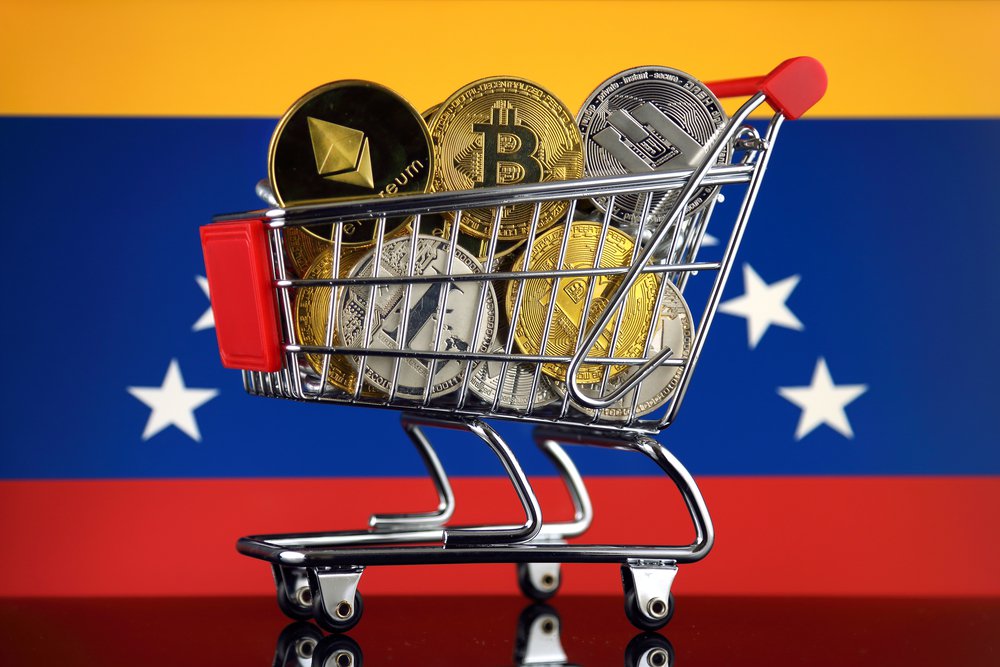
Crypto fans critics also go to Petro’s White pages which seem to be too close to the Dash’s, another popular altcoin in Venezuela, after the Bitcoin. The Dash community even marks the Latin-America country as its second biggest market.

Meanwhile, the country is stricken by protests about Fernando Alban’s death. The Venezuelan dissident was from the opposition party and blames go to Maduro’s political team. The UN, the U.S., and Spain urge international powers for a fair, internal investigation in a battle for human rights, Time reports.

Tron Announces New Updates in The Protocol

Tron’s CEO Justin Sun talked on 29th of September 2018 in a global live stream about the future of the coin.

Tron is very ambitious project run by young developers, and aims to surpass the Ethereum soon. In fact, according to the passionate CEO, Tron has already more addresses than EOS and increased its unique addresses with many more than Ethereum for the first 95 days.

Tron now launched its latest upgrade, version 3.1, and more than 90% of the nodes in the networked updated their systems.

By the end of the year, Tron plans significant updates. Next one is scheduled for November 15th and another upgrade is expected for late December.

- Advertisement -

FEATURED