Home Blog Page 243

5 Blockchain Key Terms You Should Know
The recent surge in blockchain is akin to a revolution, poised to impact not just digital and financial services but our daily lives. Often likened to the internet revolution of the 1990s, it demands our serious attention. Despite its popularity, blockchain remains not fully grasped. For those preferring a couch-friendly approach, I’ve compiled essential blockchain key terms, eliminating the need for endless Google searches. Consider this your guide – thank me later.

1. Blockchain

The blockchain is a kind of distributed ledger that records basically everything with value. I will go to ledger later but for now, to put it simply, it is a way to make processes faster as it sends blocks of information from one to another in a chain network. The transactions are recorded there chronologically and are made public. It is decentralized, and everyone can participate (with the right tools) – there is no central institution, no main control.

Don Tapscott and his son Alex, the authors of the infamous book “The Blockchain Revolution” say that:

The blockchain is an incorruptible digital ledger of economic transactions that can be programmed to record not just financial transactions but virtually everything of value.

That is the real innovation. On one hand, it removes the human factor of mistakes, machine errors, and frauds. It is safer due to the validation system and it is transparent. On the other, everything could be digitalized which makes it easier to trade, record and in general, organizes a whole new world’s order.

2. Ledger

In the old times, a ledger was a journal where all financial processes were written. Money goes in, money goes out, the ledger is a journal where the summary of all these are inscribed by date and time. Same with the digital one, it records transactions, value and monetary balance of one or more accounts. Normally, the ledger is private, a company/ bank/ financial institution keeps one for its own records and tracks the accounting. With the blockchain though, the ledger is public. That means that everyone can go to the prior website and see what transactions have been made, by whom (just an account, not a name), when, where. It saves some trouble.

A picture of an old legder
Image from Wikipedia.org.

3. Node

A node is the reply of the ledger in the blockchain system. In other words, this is every computer that runs in the configuration. It could be also a system or a device that is connected to the system. It helps the transactions to be kept tracked and to show their sources. Not so overwhelming to understand, ha?

4. Mining

Mining refers to the process of ‘creating’ the cryptocurrency. Basically, it is a solving of a mathematical equation by which transactions are approved and added to a certain blockchain. It is made with a computer hardware, some very sophisticated high-tech gadgets and lots of electricity. To put it other words, it is the verification process of public records and their addition to the ledger.

5. Open source

In the world of cryptocurrency, it is very common to talk about open source software. That is one which everyone can modify and enhance. The open source software is designed to be publicly accessible and community oriented. It is not controlled by a single center but instead used widely for collaborations, exchange projects, shared developments.

And here you are, ready to dive in the vast blockchain world! There are, of course, many more terms and notions to be leaned so expect our next series for blockchain information and interesting fact. Also, make sure to visit our Blockchain News section to catch up with the latest events.

Blockchain Revolution in France

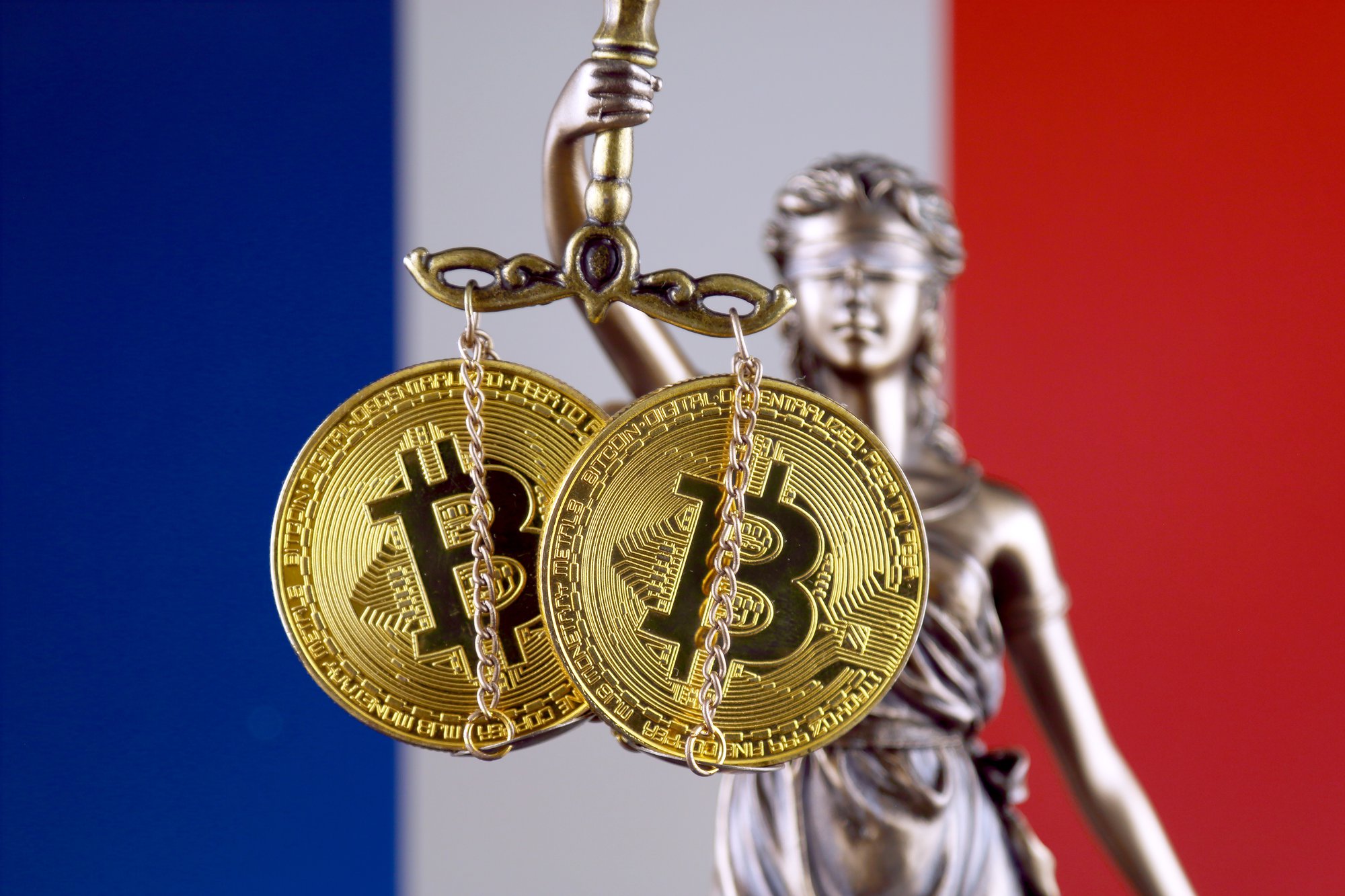
The technological, innovative and investment ambition of Emmanuel Macron’s presidency keeps evolving in the country. From the very beginning of his inauguration, the leader clearly stated his initiative to attract contemporary developments in the country and to make it a global technological pioneer. France’s political road is not about to miss the ‘blockchain revolution’, the financial minister Bruno Le Maire blasted some time ago and added that:

France has every interest in becoming the first major financial center to propose an ad hoc legislative framework that will allow companies initiating an ICO to demonstrate their seriousness to potential investors.

Today a new step in the crypto-friendly French environment was taken with the acceptance of the so called ‘Article 26’. The document draft was published on the French Market Regulator’s (Autorité des marchés financiers) website on 22 of February 2018. After big public discussions on how to regulate and reduce all possible threats in this uncertain area, today the Commission announced that new ICO regulation is accepted. It concerns the newly launched ICO’s and strives to make their birth easier and less bureaucratic. At the same time, a committee of financial experts is acquired to analyze and review new applications. The step is predicted to help small and medium businesses and to pump country’s economy.

The ICO legal framework is accompanied by additional documents, advised by the AMF, such as a guide of good practices, commandment for the ICO’s to be considered legally as financial equities, and an adequate legislation. There is a place specifically for the rights of tokens’ inciters, rules of their declaration and approval, the identity and competences of ICO’s founders. The aim is for transparency and safety in the coin offerings’ launches. These are two important issues regarding the market’s specifics.

We are trying without a doubt to prefigure the future, but today we do not offer any real warranty to the stakeholders,

Said the ex-vice president of Bank of France, Jean-Pierre Landau in his report on the cryptocurrencies from 4th of July this year. The danger comes from the high volatility rate of the cryptocurrencies and especially to the new-born tokens. But it is important for the industry to keep the dynamics alive, underlined François-Xavier Thoorens, president of the Ark System, founder of Ark, the most important French cryptocurrency at the moment. For the protection of investors, the framework introduces an “ICO visa system”. The businesses that wish to launch an ICO would have to apply for a visa, submitting their white paper to the committee which conducts a detailed review of their company identity. Eligible applicants are only French companies. That is a part of the persistent French policy to keep investments in the country and basically to control the blockchain flow with national offerings.

There are still more regulations and annexes to be added to the Article, but the crypto-friendly atmosphere is on in the French financial world and the ICO’s are totally given a green light.

Silk Road Update: Davis Pleads Not Guilty

The Silk Road case is like an action film in the real life. Originally founded in February 2011, the marketplace was the first and according to some, the worst example of a dark web criminal net. It was run by libertarians and regulation criticizers with pseudonyms like "Dread Pirate Roberts" and “Libertas”. The interest to the case by all cryptocurrency fans is evoked by the fact that, despite its criminal use, the system was based on a blockchain technology, with a decentralized orientation and aimed to no third-party mediators with faster transactions. Very much like the cryptocurrencies’ scheme itself, it was maintained simultaneously by various sources, avoiding centralized regulation, public and governmental institutions. And last, but not least, all payments were conducted in bitcoins, although it was not very expensive back then.

But, of course, it did not end up well. It got stuffed with drug dealers, gun sellers, and underground criminal traders. It was shut by a sustained DDoS attack in 2013 and consequently, taken down by the DEA and investigated by the FBI. Its main founder was claimed to be Ross Ulbricht who operated with the nickname DPR (Dread Pirate Roberts). He was arrested in San Francisco in 2013 and charged on money laundering, computer hacking, conspiracy to traffic narcotics, and attempting to have six people killed. Despite the fact, that there were no people actually murdered, he was evicted from ordering the killings online and was about to pay $730,000 to someone else to commit them. The FBI seized 144,000 bitcoins from his house, worth $28.5 million at the time and additional 144,342 bitcoins were found in his computer, estimated to roughly $87 million. In 2018 the court dismissed the hire-for-murder charges and they cannot be re-filed. Anyhow, Ulbricht was sentenced for life plus 40 years of no possibility of parole.

Now his claimed-to-be associate Gary Davis goes under a trial for the Silk Road case, according to The Times. The Irishman declared innocence the other day and on 20th of September, the prosecutors and defense attorney are expected to file pre-trial submissions. Davis, operating under the alias “Libertas” was accused in assisting Ulbricht on the dark web platform in dealing drugs for more than $200 million. He pleaded guilty to the Supreme Court in New York for all three charges of conspiracy to distribute narcotics, conspiracy to commit computer hacking and conspiracy to commit money laundering. Davis says he had not conducted any of the pointed criminal acts and according to his statements, he is a victim of a false identity issue – he did not know how his ID card was scanned and why it was found on Ulbricht’s computer.

Davis was just recently extradited to the United States after the Irish Supreme Court approved the maneuver in June this year. He is alleged by the investigators to be a Ross Ulbricht partner, responsible for customer care support and a listing of drugs on the website, for which he was paid $1,500 per week. However, he now faces a harsh sentence if found guilty by the court.

The Silk Road case is found by many as a rebellious example which was led by libertarian ideology. There opinions that it is much safer to shop online than on the streets where it is known many attacks and criminal acts happen. During his eviction, Ross Ulbricht received a vast support by anarchists, anti-establishment activists, and crypto enthusiasts.

In 2015 a documentary film about the affair was made by Alex Winter, called ‘Deep Web’.

The following video tells the Silk road incredible story:

https://www.youtube.com/watch?v=6SK6rFf0CmY

Top 10 Basics of Crypto Trading

So, here you are, sitting in front of your computer, staring at the screen, excited about all that crypto buzz going on lately. No matter why you decided to go trading, to change your life, earn some fresh cash or high up your adrenaline levels, there are basic things you definitely must know. Do not, in any case, skip this step, or you would suffer for life. But do not worry, bros, we are here to help!

1. Familiarize yourself with the technology

I assume you would like to trade Bitcoin or Ethereum – the two most popular cryptocurrencies right now. By the way, Altcoin trading is also on the rise, see Altcoin news and info here (link). The first thing you need to do is to read some. Yeah, man, I know, it sounds boring. But you should at least know what the fuss around this crypto thing is.

In short, it is digital cash that uses a mathematical algorithm, supported by a blockchain technology. Go to our Cryptoledge section and check out the Bitcoin, Ethereum, Altcoin, and blockchain info. See what people are talking in the Services section.

2. Choose a coin

Now, when you know what it is all about, make a certain decision. As I said, the best choice for a beginner is an established electronic coin. Risk rates are lower and if you got screwed, you would not be the only one. Which means it is not so likely to happen. Again, read some and do your careful research. Not so difficult step, though.

3. Follow the news

You mastered the basics, words like ‘blockchain’ and a ‘digital asset’ do not sound like out-of-space baffling terms, you get confident. Now, reach out to news portals and see how it is going. Yes, in trading it is all about timing, timing, timing. Check out the trends, what innovations are coming out, who says what.

4. Choose an exchange

You are getting a crypto god! Yes, you know those smart boys somewhere around the globe mine electro cash for us and you want to go with the flow. Be careful here, though. There are many scammers out there. For a qualitative research, use heuristic data and analytics. Watch out for some important characteristics of the exchange: is its reputation good, do they have a nice verification process, do they offer high security. Have in mind high liquidity, it is crucial. It means to be able to get your cash back fast and without a thousand blanks to fill.

5. Define a strategy

So, you are all set up and ready to go. But how do you want to perform? Are you going to be a day-trader or a night-one? How much time you can spend online – every day, once per week, once per month? Do you want to just buy and sell or to speculate on the price? How much you can invest? Ask yourself all these questions and put a limit on it. Do not stake more than you are ready to lose. Be smart and watch your charts.

6. Storage

This money cannot be touched, bro. They are purely digital, i.e. each crypto coin is basically a long programming code. There are two ways of storing these – online or offline. Online storage is called ‘hot storage’ and it is made usually on a wallet or on an exchange platform straightly (the latter not very recommended by specialists). ‘Cold storage’, on the other hand, is made on devices not connected to the Internet. These could be flash sticks, memory cards, etc. Of course, the second option sound more secure, but if you want to get your coins in circulation, you have to bring them to the web.

7. Choose a wallet

Another vital step. If you have just decided to keep your assets alive, you must find the most reliable wallet service. Go with the big here. Do not trust any small and new-born websites we do not know anything about. The most popular wallet service is provided by Coinbase. For Ethereum, the community offers a wallet straight on their website. Check all options to transfer your funds – are you moving cryptos from your computer to their platform or when buying from a seller you go directly on a wallet? Note that some exchanges lock their wallets, which means that you can trade only on site and you cannot move or withdraw any coins out.

8. Try a demo

Before doing anything substantial, test your trading out. Your exchange should have that option (if not, run away from it). Go trial and see how it is going. If you see you suck at it, keep your cryptos for a while and come after you learned the basics. Do not put a pressure on it, if you have a good storage option to keep your funds safe, they are nowhere to go. You can always start to trade them or just sell them out.

9. Do not take financial advice

So, the things are like that: if you have something millions to invest, you can hire a Wolf-of-the-Wallstreet kind of a broker to operate with your assets for a commission. But with cryptos does not go this way – you have to play along. This is not an official currency yet, remember, it is controlled by the State, not dependable to the global economy, natural disasters, etc. No one is an expert yet. Not your cousin, not your neighbor, not the vlogger you follow that looks such smarty pants.

10. Hear the buzz

In the world economy things go like that: someone introduces something on the market; people go and think “oh, yeah, that’ll do” because it seems valuable, because Trump just got elected and everything sucks, because it has a future – no matter why they start to believe in it and buy; when many people buy something its price goes up (it is called a market demand). So, to put it straight, what people say matters. Do follow the trends, follow social media, blogs, and opinions. You will see yourself that when everyone rushes towards something, it really becomes a thing!

And finally, have fun, alright?! Life’s too short to be miserable and crypto inventions are all about being positive and enjoy the novelties!

Trending: Celebrities in crypto

10 Celebrities Into Cryptos

Cryptocurrency is getting so mainstream lately that even huge Hollywood, music and TV stars go into it. Here, we have gathered a list of real celebrities, who publicly and for real endorsed the blockchain technology. And they really seem to believe in that!

1. Kim Kardashian


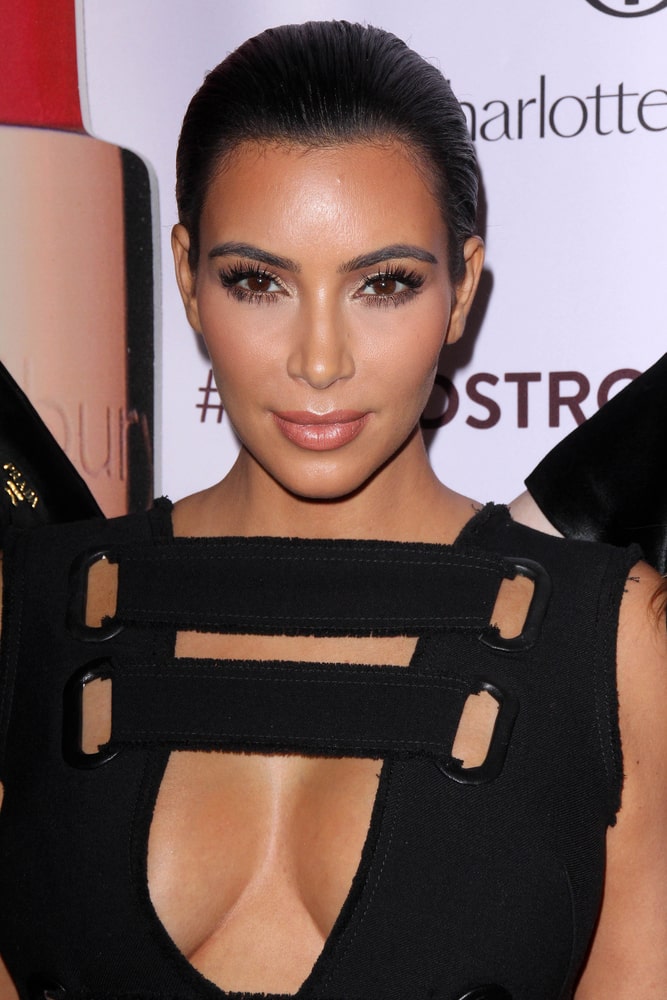
Kim Kardashian is probably one of the biggest TV stars in the States right now. Everyone talks about Kim, everyone likes Kim, everyone wants to be like Kim. Recently, she received a present from a friend. On the First Annual Charity Poker Tournament in Los Angeles, CA, Matthew Roszak, the investor, entrepreneur, and educator gave Kardashian a gift of 1 Bitcoin on a physical wallet.

“We moved onto Bitcoin!”, wrote later the star on her Instagram profile, which is followed by 114 million people.


2. 50 Cents


The rapper announced that he would accept payments in Bitcoin for his album ‘Animal Ambition’ in 2014. And he really did. He sold a few albums and collected 700 Bitcoins but at the time, the token was not very expensive. Imagine his profit in December 2017 when BTC hit almost $20,000 – it was roughly $14 million!


3. Lionel Messi


The football star seems to be really fond of the blockchain! Messi has become an official supporter of Sirin Labs, blockchain-based smartphones and laptops. Since his public commitment, millions of people went crypto. Influencers do matter.


4. Ashton Kutcher


The Hollywood star might be best known for his film and TV performances but he is also a smart investor, a long-time lover of technology and a fond supporter of the blockchain. Kutcher tweeted about Ethereum as early as 2014 (a year before its initial launch in 2015) and since then he continues to develop his love into the crypto business. He also invested in Bitbay, a Bitcoin processing software and a cryptocurrency exchange. Ashton Kutcher is a co-founder of the firm Smart Ventures, eSports betting digital platform. Consider what a vast inspiration he is for his millions of followers!


5. Katy Perry


In November 2017 Katy Perry decided to go crypto, too. She announced she would meet Warren Buffet for a piece of financial advice. We do not know if they really met or not, but the star started to really get hooked to cryptocurrencies. By saying that ‘Bitcoin is a thing’ to posting various supportive statements, Perry seems to be super into it. She even decorated her nails with the symbols of different coins. If this is not crypto adorable, I do not know what is!

https://www.instagram.com/p/BeXchJzFkhJ/


6. Mike Tyson

The fighter strikes seriously the crypto world. He is certainly not another blockchain fan, posting opinions on social media, but a real businessman. In 2015 he signed a contract with Bitcoin Direct to add his image to their Bitcoin ATMs (which would make a transaction in “less time than Tyson did a knock out’’). Tyson related publicly to the Bitcoin, saying that he would even launch his own Bitcoin digital wallet, where people would store their digital assets and enjoy his presence simultaneously. We are still waiting for that one, though!


7. Jamie Foxx


Not a surprise for the Oscar-winning comedian who advertised a backpack with built-in speakers some time ago. A technology lover, he would not miss the crypto buzz, too. In 2017 he stated his support to the ICO of Cobinhood, a cryptocurrency exchange with zero fees. Cobinhood raised $10 million after that. Good job, Jamie!


8. Melanie B


Mel B was so cool back then with the Spice Girls and she is still hot. Smartly enough, the singer was one of the first music starts to feel the cryptocurrency trend. She supported the Bitcoin officially, as early as in 2013, allowing her fans to purchase tracks and albums with the coin. So sweet of her, isn’t it?


9. Paris Hilton


The famous It-girl tweeted for a new coin called LydianCoin some time ago. Consequently, the coin never launched and was even involved in a domestic abuse scandal. The star stayed quiet about the cryptocurrency trend ever since and seems to lose her interest. Her father, on the other hand, Richard Hilton auction a house and allowed participants to bid in Bitcoins.


10. The Game


This is my all time fav. The rapper, also known as The Game, owns a marijuana dispensary in California and is very much involved in the medical cannabis industry. Obviously, the blockchain technology can serve even in the marijuana field. In 2017 The Game announced on Twitter he is meeting a crypto specialist to discuss how to contribute for the pot decentralization. He said he would even launch a grass ICO, too. Cool, ha?!

- Advertisement -

FEATURED