Home Blog Page 69

Kraken Files for a $20B IPO While Insisting It’s “Not Racing to the Door”
Kraken co-CEO Arjun Sethi said last week that the company is “not racing to the door” when it comes to going public. The message was one of discipline: Kraken will wait for the right moment, choose timing deliberately, and prioritize clients over headlines. But only a week later, Kraken‘s IPO filing quietly entered the SEC docket. The exchange submitted a confidential S-1, entering the pipeline for a potential early-2026 listing shortly after raising $800 million at a $20 billion valuation.

Though it might seem contradictory, it’s a strategic move. A confidential S-1 filing doesn’t commit Kraken to a date. It simply gives the company a place in line during a moment when Washington is unusually aligned with crypto. Kraken is projecting patience publicly, but its actions show preparation for a narrow political and regulatory window that may not stay open for long.

What a Confidential S-1 Really Means

Filing a draft S-1 through the JOBS Act process is a quiet, flexible move. A filing for an IPO at this stage does not mean a Kraken listing is imminent. Instead, it starts the SEC review process, which typically requires months of back-and-forth comment cycles. During this time, companies can revise financials, update risk disclosures, amend valuation language, and adjust to market conditions. And they get to do so without any of it becoming public.

For Kraken, this approach aligns precisely with Sethi’s language about prudence. The confidential route allows the exchange to move early while appearing measured. If markets remain unstable or regulatory clarity shifts, Kraken can pause. If conditions improve, it can accelerate. Optionality is the whole point.

Arjun Sethi, co-CEO of Kraken crypto exchange

We don’t race to the door as quickly as possible

Arjun Sethi, Kraken co-CEO

The $800M Raise That Set the Stage

Kraken’s filing came immediately after completing an $800M funding round, one of the largest private raises in the industry this year. The dual-tranche structure brought in a heavyweight lineup of institutional investors: Citadel Securities, Jane Street, DRW, Oppenheimer AIM, Tribe Capital, and others. The round solidified a $20 billion valuation, just as Kraken stepped into the IPO process.

This is the type of funding base that precedes a crypto exchange IPO. Institutional investors expect governance standards, financial transparency, and readiness to access public markets. Filing soon after the round is standard procedure. It allows Kraken to incorporate updated financials into its S-1 and present a coherent capital structure to the SEC.

Washington’s Political Window: The Real Timing Signal

However, the most important backdrop to the filing isn’t the market. Washington is. The U.S. currently has the most pro-crypto policy environment in years. New market structure legislation is expected, and stablecoin rules have advanced through the GENIUS Act’s stablecoin framework. For the first time since 2021, major crypto companies see a path toward predictable, functional US crypto regulation.

This alignment may be temporary. With the 2026 midterms approaching, the political climate could shift. Investors and policy analysts describe this period as a 2026 IPO window: a moment when digital-asset companies can enter U.S. markets under clearer rules, with a supportive administration, and without the regulatory hostility of previous cycles.

Kraken’s move fits this context perfectly. Filing now ensures the company is ready if the policy environment remains favorable. At the same time, it is not obligated to proceed if conditions change.

The Market Backdrop: Volatility Returns

Strikingly, Kraken prepared its IPO filing during rising market turbulence. Bitcoin slipped back under $90,000 as Bitcoin price volatility returned, while spot ETF markets saw significant ETF outflows. Conditions like these would normally discourage a listing. But the SEC review process, not short-term price action, dictates IPO timing. Companies file during downturns so they can list during recoveries.

Kraken’s timing shows awareness that markets can shift within months. Filing now gives it the ability to go public when volatility cools or capital flows return.

Kraken’s Revenue Story: A Platform Beyond Crypto Trading

A key difference between Kraken today and in earlier cycles is diversification. The exchange now offers more than 400 crypto assets, access to U.S. stocks and ETFs for global users, and a fast-growing tokenized stock product, XStocks. Sethi highlighted that XStocks has already surpassed $10 billion in transactional volume, becoming one of the company’s strongest onboarding channels into the U.S. capital ecosystem.

This evolution positions Kraken as a global multi-asset platform, not just a trading venue. Tokenized equities, fiat access layers, and unified liquidity systems allow the company to reach consumers who previously had limited access to global financial markets. These developments support the narrative investors look for ahead of an IPO: diversification, durability, and the ability to generate revenue outside pure crypto cycles.

Regulatory Positioning: One State Short of National Coverage

Kraken operates in all U.S. states except New York, and Sethi expressed optimism that new market structure rules would trigger a surge of innovation. This stance aligns tightly with U.S. policymakers’ current push for regulatory clarity in digital asset markets. If these rules take shape before the election cycle tightens, companies like Kraken gain a rare window for a U.S. listing.

The political momentum matters. It determines how investors price risk, how regulators evaluate filings, and how public markets perceive crypto infrastructure companies. Filing early allows Kraken to benefit from stability that may not last.

Reconciling “We’re Not Racing” With the Filing

The tension between Sethi’s comments and the timing of the Kraken IPO filing is not a contradiction. It is just standard IPO communication. CEOs consistently show patience to avoid appearing opportunistic or desperate. They reassure clients, manage valuation expectations, and keep market psychology grounded.

Internally, however, companies prepare early. Filing quietly preserves optionality, especially during a favorable political climate. Kraken wants readiness, not urgency.

What Happens Next: The Road Toward 2026

With the IPO filing submitted, Kraken now enters the SEC comment cycle. The process can include multiple amendments, updated financial reporting, and internal governance adjustments. If conditions align, a listing could be viable during the 2026 IPO window, when U.S. regulatory clarity and market sentiment may be most favorable.

External factors will shape the timeline: ETF flows, crypto market recovery, macro-economic volatility, and developments in US listing requirements. Kraken has positioned itself to adapt to any of these outcomes.

Kraken insists it is not rushing. And publicly, that remains true. But the confidential filing shows a company that understands the importance of timing. The political climate, regulatory clarity, and institutional investor backing create a moment that may not repeat anytime soon. Kraken is not committing to an IPO. It is preparing for the possibility.

The calm tone is intentional. The timing is strategic.

Readers’ frequently asked questions

Does Kraken need regulatory approval from all U.S. states before it can go public?

No. A company can list on a U.S. stock exchange even if its services aren’t available in every state. IPO eligibility is determined by federal securities law, not state-level licensing. Kraken can proceed with an IPO even while remaining unavailable in New York.

Does filing a confidential S-1 require Kraken to choose an exchange like Nasdaq or NYSE now?

No. Companies are not required to select a stock exchange at the confidential filing stage. The choice between Nasdaq and NYSE is usually finalized later in the process, often closer to the public S-1 release, when the company’s underwriters and internal team evaluate liquidity needs and market positioning.

Will Kraken’s tokenized stock product (XStocks) be available to U.S. investors after an IPO?

An IPO does not change the regulatory status of XStocks. The product is unavailable in the United States because it relies on tokenized exposure to equities, which U.S. securities rules currently restrict. Unless regulations change, an IPO will not make XStocks accessible to U.S. users.

What is in it for you? Action items you might want to consider

Track SEC comment-cycle updates for Kraken’s filing

Investors and analysts can monitor when the confidential S-1 transitions to a public version, which is the strongest signal that Kraken is moving toward an actual listing window.

Watch for U.S. legislative movement on market-structure rules

Changes to federal crypto regulation, particularly around stablecoins and market structure, will materially influence Kraken’s IPO timing and valuation environment.

Evaluate the impact of Kraken’s diversification on potential equity value

Kraken’s expansion into tokenized equities, U.S. stock access for global users, and multi-asset trading may affect long-term revenue projections and how public markets value the business.


Kraken (KRAK.PVT) co-CEO Arjun Sethi speaks to Julie Hyman at Yahoo Finance Invest.
The ECB Is Preparing for the Wrong Stablecoin Crisis

TL;DR

  • The ECB fears a stablecoin run could disrupt bond markets and its monetary-policy path.
  • But past depegs show runs start in crypto leverage unwinds, not payment failures.
  • Europe’s exposure comes from USD stablecoin dominance and gaps MiCA I didn’t close.
  • MiCA II targets these structural risks, but the ECB is still modeling the wrong crisis trigger.

The ECB’s stablecoin warning is dominating crypto, macro, and regulatory headlines. Olaf Sleijpen, a Dutch central bank governor and member of the ECB’s Governing Council, argued that a major run on dollar stablecoins could force the ECB to rethink its ECB monetary policy path. His point was direct: if large stablecoin issuers suddenly face mass redemptions, they may need to liquidate short-term U.S. Treasuries fast. Such a move could severely disrupt global bond markets and spill directly into the eurozone.

This narrative has been repeated across most media coverage. Yet, it misses a critical point. The kind of systemic stablecoin event Europe fears has actually never come from payment failures or consumer distrust. Historically, what triggers stablecoin runs is the same pattern every time: a crypto leverage unwind during sharp market stress. The ECB is preparing for a payments crisis, but the fuse sits inside high-velocity crypto markets where liquidity shifts in seconds, not in retail checkout lines.

Focusing on the wrong catalyst risks designing safeguards around the wrong problem.

What the ECB Is Actually Warning About

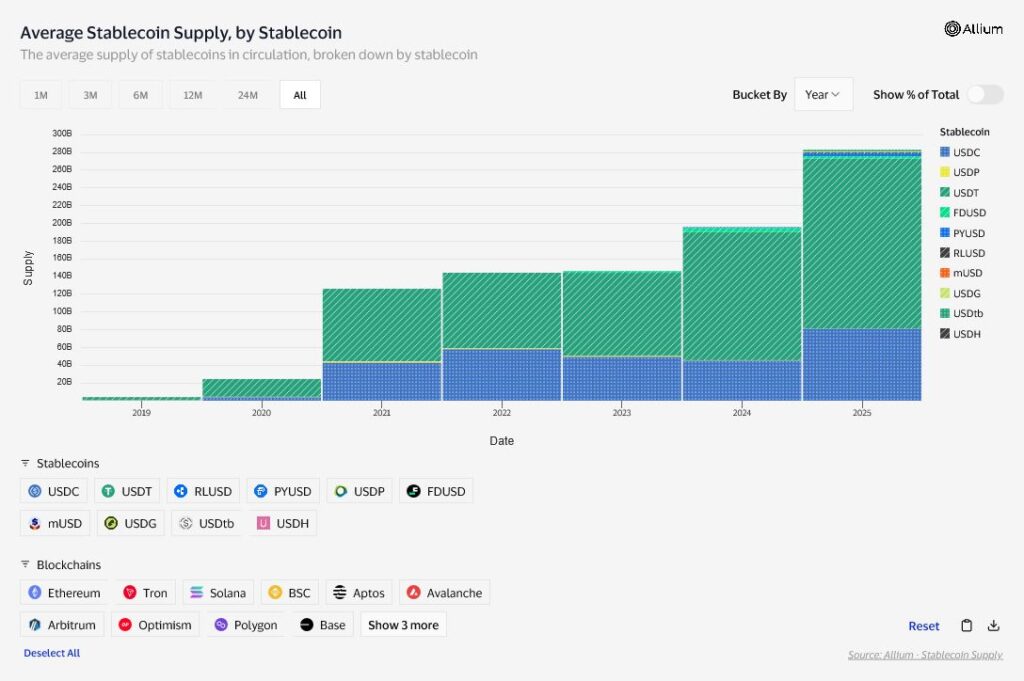
The global stablecoin market has surpassed $300 billion, driven mostly by USDT and USDC and overwhelmingly denominated in U.S. dollars. European regulators highlight three core risks:

  1. Large-scale redemptions could force issuers to liquidate U.S. Treasuries at scale.
    That kind of a sudden sell-off can push yields higher, disrupt funding markets, and destabilize sovereign debt markets.
  2. Spillovers into European financial conditions.
    A surge in Treasury yields would increase government borrowing costs in Europe, affecting everything from bank funding costs to inflation projections.
  3. Dollar stablecoin dominance.
    Because Europe has no large euro-denominated alternatives, the region remains exposed to a foreign monetary system running on crypto rails.

Together, these issues form an EU financial stability risk. A major stablecoin run could shake the Eurozone even if the issuers sit outside its jurisdiction. It is the core reason policymakers highlight weaknesses in MiCA stablecoin rules, especially for tokens issued both inside and outside the EU simultaneously.

But all of this raises one question: why would a stablecoin run start at all?

Source: visaonchainanalytics.com

The Blind Spot: Stablecoin Runs Come From Crypto Crashes, Not Payments

Looking back, over the past five years, every major stablecoin stress event has come from crypto-market volatility. None were caused by payment failures or merchant distrust. This matters because the ECB’s entire scenario analysis could be built around the wrong assumption.

Case 1: Terra/UST (2022)

The collapse emerged from a leveraged DeFi unwind, not from payment use. Arbitrage loops failed, liquidity vanished, and the depeg accelerated instantly.

Case 2: USDC Depeg (2023)

USDC lost its peg after exposure to Silicon Valley Bank. This was a traditional banking shock that spilled into crypto markets. Payments confidence had nothing to do with it.

Case 3: USDT Volatility (multiple episodes)

USDT comes under pressure during sharp BTC or ETH downturns. Traders unwind leverage, sell collateral, or rotate liquidity between exchanges.

None of these events involved consumer payments at all. In practice, stablecoins serve as:

  • collateral in DeFi
  • settlement tools for exchanges
  • liquidity for trading
  • instruments for arbitrage

This reveals the real root of stablecoin run risk: crypto-native leverage, fast liquidity cycles, and cross-exchange flows.

When crypto markets fall 15–25% in a single day, a pattern seen during stress, traders exit stablecoins rapidly. Exchanges drain liquidity and DeFi protocols trigger automated liquidations. Panic spreads fast. This is where the danger of a stablecoin liquidity crisis emerges.

Critically, these are the situations where issuers must sell Treasuries to meet redemptions. That is the stablecoin redemption shock the ECB describes, but it begins in crypto markets, not payments.

Why Crypto-Liquidity Runs Matter More Than Payment Redemptions

If a consumer-facing stablecoin used for everyday purchases loses trust, redemptions happen slowly. Users act cautiously. It resembles a traditional payment run: measured, observable, and constrained. One could almost call it predictable.

Crypto markets act differently. During downturns, redemptions happen in seconds, not days, because stablecoins are the primary exit route for traders unwinding risks. This leads to:

  • fast and large-scale sales of reserve assets
  • liquidity drains across platforms
  • collateral calls in DeFi
  • sudden withdrawal surges when exchanges show stress

The ECB’s model assumes a payments-driven spike in redemptions. Real-world stablecoin behavior shows something else. The mechanics of crypto market contagion are far more violent than any payments-based fear scenario.

The ECB’s Model Doesn’t Match Real-World Stablecoin Usage

Europe is modeling the wrong risk channel for three reasons.

1. Stablecoins are not widely used for retail payments in Europe

Merchant adoption is low. Payment use is limited. A consumer-driven run is unlikely.

2. Stablecoin velocity comes from trading, not payments

Stablecoins move between exchanges, DeFi platforms, and trading desks. The speed and scale of these flows exceed anything seen in consumer systems.

3. Monetary sovereignty concerns are real, but misdiagnosed

The ECB focuses on payments. The real vulnerability is the lack of euro-based liquidity. EU dependence on USD stablecoins amplifies every shock.

This is where dollar stablecoin dominance becomes central. Europe has only a modest euro-stablecoin market, while dollar tokens exceed $300 billion. The imbalance is structural, not cyclical.

Where the ECB’s Concerns Are Valid

To be clear, the ECB’s concerns are not unfounded, and they are rightly worried about rapid Treasury sales. A massive Treasury liquidation could influence how stablecoins affect bond markets, tightening financial conditions in Europe through no fault of the ECB’s own actions.

Real vulnerabilities exist:

  • reliance on dollar liquidity
  • opaque cross-border issuance
  • gaps in MiCA for multi-jurisdictional structures
  • no large euro-stablecoin alternative
  • limited real-time reserve transparency

These justify the ECB’s emphasis on EU financial stability risk and the need for better crisis planning. But the focus must shift toward real-world triggers, not hypothetical payment failures.

MiCA II: Europe’s Attempt to Close the Gap

Europe is already moving toward reforms through the MiCA II consultations now underway. MiCA II aims to correct cross-jurisdictional weaknesses left unresolved by MiCA I. It targets inconsistent redemption rights, mismatched reserve oversight, and liquidity rules that fail to cover tokens issued outside the EU. The framework seeks unified standards that reflect how stablecoins actually move across borders. For once, the regulatory lens is pointed at the right structural risks.

What the ECB Should Actually Stress-Test

Europe cannot prevent a Treasury fire-sale unless it models the right scenarios. Stress tests need to reflect crypto-market structure, not retail payments. This is the gap the latest ECB stablecoin warning attempts to highlight, but the underlying assumptions still miss where the real pressure builds.

The ECB should model:

  • DeFi liquidation cascades
  • liquidity drains across exchanges
  • a major exchange bankruptcy
  • BTC/ETH crashes triggering mass stablecoin exits
  • Treasury-market stress during crypto volatility

Not:

  • merchant adoption declines
  • consumer payments distrust
  • slow retail-driven redemptions

The systemic risk originates inside crypto liquidity cycles, not European checkout systems.

What’s at Stake for Europe

If Europe keeps treating stablecoins primarily as a payments issue, it will fail to prepare for a plausible crisis: a market-driven rush out of crypto leverage. That is the scenario that can trigger a fast, destabilizing run.

A future ECB stablecoin warning will carry more weight when it is tied to the real pressure points:

  • crypto leverage structures
  • reserve management practices
  • contagion from exchange failures
  • cross-border redemption flows
  • structural reliance on dollar tokens

As long as the EU regulates payments more than liquidity, it will remain exposed to shocks formed elsewhere.

Conclusion

The ECB is right to fear a large stablecoin run. A disorderly redemption wave could shake global bond markets and reshape ECB monetary policy. But the next crisis will not stem from consumers losing trust at checkout counters. It will come, as past events show, from inside crypto markets, where leverage, automated liquidations, and fast liquidity cycles can drain reserves in minutes.

Until regulators acknowledge that the real trigger is crypto leverage unwind, not payments, Europe will keep preparing for the wrong crisis.

Why Did Bitcoin Drop Below $95K This Week? What’s Really Going On?

Estimated reading time: 3 minutes

TL;DR

  • Bitcoin fell below $95K due to high interest rates, shifting Fed expectations, and reduced liquidity after the U.S. shutdown.
  • Institutional selling and ETF outflows added pressure, while global uncertainty pushed investors toward safer assets.
  • Key levels to watch: $94K–$92K support and $100K resistance.

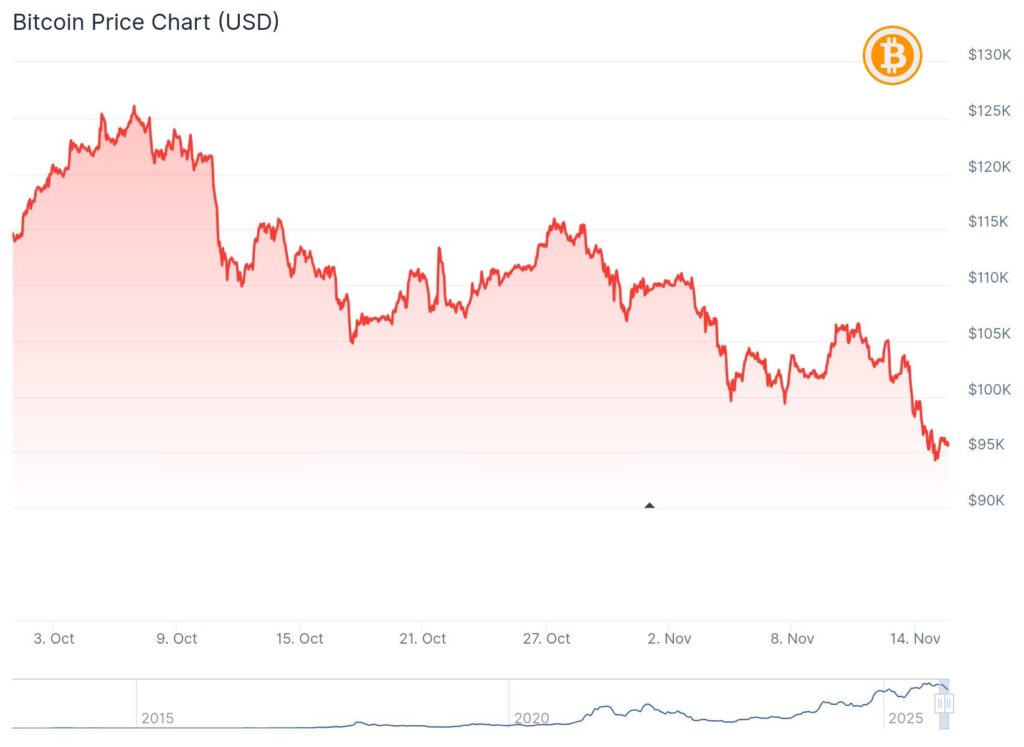
Bitcoin’s price fell below $95,000 this week, marking its lowest level in six months and raising fresh concerns among investors. Many people are asking the same question: why is Bitcoin falling? This article explains the key factors behind the Bitcoin price drop in November 2025 in clear, simple terms.

What Happened to Bitcoin’s Price?

Bitcoin has lost around 9% over the past week. Earlier this month, it briefly climbed above $100,000, but the momentum didn’t last. The price slipped back toward the $94,000–$95,000 range, reflecting a wider pullback across riskier assets. Tech stocks, altcoins, and other speculative investments have also been under pressure, showing that this move is part of a broader recent selloff rather than a Bitcoin-only event.

Source: CoinGecko

The Federal Reserve’s Role

A major driver of the drop is the shift in expectations around U.S. interest rates. The Federal Reserve controls borrowing costs, and when rates stay high, it becomes more expensive for both consumers and businesses to access credit. That typically reduces appetite for high-risk assets like Bitcoin.

Just weeks ago, many investors expected the Fed to cut rates in December. Now, the odds look closer to 50/50. This uncertainty has cooled demand across the crypto market. The change highlights the Federal Reserve impact on Bitcoin: when interest-rate cuts seem unlikely, prices often weaken.

How the U.S. Government Shutdown Played a Role

The recent 43-day U.S. government shutdown also contributed to market pressure. Even though the government surprisingly ran a temporary fiscal surplus during the shutdown, it reduced the flow of money through the economy. With less liquidity available, there were simply fewer buyers in the market. That lack of cash made assets like Bitcoin more vulnerable to downward moves.

Now that the government has reopened, analysts expect liquidity to improve, which could help stabilize prices in the coming weeks.

Institutional Selling and ETF Outflows

Large investors have also been taking profits or selling to cover other losses, adding to the decline. These moves have a bigger impact because institutional trades often involve large amounts of Bitcoin. In addition, some U.S. crypto ETFs saw outflows in November as investors pulled money out, further increasing selling pressure on Bitcoin.

Global Uncertainty Isn’t Helping

Broader concerns about slow economic growth in China and ongoing geopolitical tensions have made investors more cautious. When global conditions feel shaky, people tend to move away from riskier assets and into safer options like gold, dollars, or government bonds.

What Does This Mean for Bitcoin Investors?

The Bitcoin price drop in November 2025 doesn’t necessarily signal the start of a long bear market. It may be a short-term reaction to rate expectations, liquidity issues, and market nerves. Key levels to watch are $94,000–$92,000 on the downside and $100,000 as the next major barrier.

For some investors, dips like these are a chance to buy. For others, they are a reminder of how sensitive Bitcoin is to shifts in economic conditions. Either way, understanding the main reasons behind Bitcoin’s recent selloff helps put the move into perspective.

Tether Commodity Lending Is Quietly Reshaping Global Trade Finance

Estimated reading time: 8 minutes

TL;DR

  • Tether is shifting from earning interest on U.S. Treasuries to financing real-world commodity trades as rates fall and banks retreat from trade finance.
  • The strategy centers on Tether commodity lending, a fast-growing portfolio of short-term, collateralized loans to metals, oil, and agricultural traders.
  • Tether has already deployed about $1.5 billion into commodity credit and aims for a $5 billion liquidity pool by 2026.
  • The company is also investing across supply chains (including gold, oil, and a major agriculture acquisition), turning USDT into a settlement and liquidity tool for real-world trades.
  • Regulators are increasingly concerned about transparency, systemic risk, and the fact that Tether is effectively acting as a global, cross-border shadow bank without traditional supervision.

Tether has dominated the crypto markets for years with USDT, the world’s most widely used stablecoin. But its ambitions are now moving far beyond being the default source of dollar liquidity for traders and exchanges. As interest rates fall and the traditional banking system pulls back from financing global trade, the company is stepping into an unexpected role: a major provider of real-world commodity credit.

What began as opportunistic deployment of excess profits has evolved into a strategic shift toward Tether commodity lending, a model that combines over-collateralized loans, global supply-chain exposure, and crypto-native settlement rails. It’s a move that positions Tether as a key source of finance for metals, oil, and agricultural firms; and one that brings a new set of systemic questions.

The End of the Easy-Money Era

For much of 2023–2025, Tether’s business model looked almost effortless. With USDT reserves invested heavily in short-dated U.S. Treasuries, the company earned billions from high interest rates. But as the Federal Reserve begins to cut rates, that era is fading. Lower yields translate to shrinking income on the assets that once generated the bulk of Tether’s profits.

At the same time, banks are facing tighter compliance requirements, higher capital charges, and stricter anti-money-laundering controls. Many have reduced their exposure to trade finance, especially in emerging markets. As a result, funding gaps emerged in sectors like metals, minerals, agriculture, and energy. In these areas working capital is essential and credit cycles move fast.

To preserve profitability and diversify away from rate-dependent income, Tether has turned to new forms of lending backed by commodities. This shift redefines how the company uses its reserves and signals a broader transformation in how stablecoins interface with the real economy.

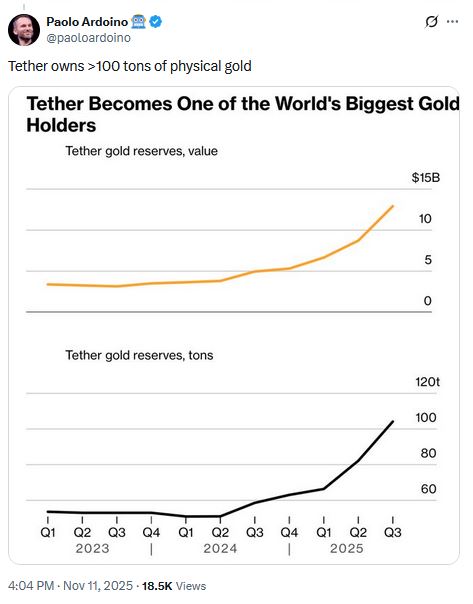
https://twitter.com/paoloardoino/status/1983455972636111011

How Tether Became a Shadow Commodities Bank

Tether has now quietly lent about $1.5 billion to commodity traders, as reported by Bloomberg, often in short-term structures secured by inventory or receivables. The company aims to scale this to a $5 billion commodities liquidity pool by 2026. The loans are typically extended to mid-tier trading firms that struggle to secure financing from banks, either due to compliance friction or elevated risk profiles.

A central part of this strategy is Tether commodity lending. The short-duration credits are denominated in USDT or USD, and are backed by liquid assets and structured to rotate quickly. Borrowers receive funds faster than with traditional lenders and can settle trades on-chain, reducing delays and lowering costs.

This is also where the company’s stablecoin footprint becomes strategically important. As Tether extends more credit, USDT becomes increasingly embedded in commodity transactions. Firms use the stablecoin for working capital, settlement, and even cross-border transfers where traditional banking rails slow them down. The rise of Tether’s commodity lending operations therefore reinforces USDT’s role as a global liquidity instrument.

For commodity traders that operate in regions underserved by banks, Tether has become an alternative source of credit. It acts as a non-bank institution willing to finance trades others avoid.

Building a Commodity Empire: Gold, Oil, and Agriculture

Gold: From Reserve Asset to Supply-Chain Strategy

Tether’s gold strategy goes far beyond holding bullion as part of its reserves. The company reportedly manages about $8.7 billion in gold stored in Swiss vaults and has taken positions in mining and royalty companies, including a meaningful stake in Elemental Altus Royalties. This deeper involvement broadens Tether’s exposure to the full value chain, complementing its gold-backed token XAUT and providing a hedge against volatility in other markets.

These moves show how Tether’s lending in the commodity sector is increasingly tied to assets it also owns or influences. The more Tether integrates with gold infrastructure, the more strategic flexibility it gains across lending, reserves, and tokenization.

Oil: A Pilot That Signals a Larger Play

One of Tether’s first and most significant steps was financing a $45 million crude oil trade for a major Middle Eastern producer back in October of 2024. While modest compared to global oil flows, the deal served as a real-world proof of concept for Tether oil trade financing. It demonstrated that a stablecoin issuer can facilitate deals typically reserved for banks, and it showed how USDT can operate as a settlement and liquidity tool in an industry dominated by traditional finance.

This approach positions Tether as a flexible, fast-moving lender at a time when banks have become more cautious about energy-sector exposures.

Agriculture: A Strategic Move Into Food and Fuel

Tether’s reported 70% acquisition of Adecoagro, a major Latin American producer of rice, sugar, and ethanol, signals another expansion. Through this Adecoagro acquisition, Tether gains exposure to food production, biofuels, and farmland assets. It also opens new channels where commodity lending can integrate directly with a producer’s operations, tightening the relationship between USDT and physical supply chains.

Seen together, gold, oil, and agriculture signal a clear shift: Tether is assembling a broad commodity-financing ecosystem that ties lending, reserves, and real-world assets into one strategy.

Why Regulators Are Paying Attention

A Non-Bank Acting Like a Bank

Traditional trade finance is dominated by banks subject to capital rules, stress tests, and extensive oversight. Tether, by contrast, faces none of these requirements. Yet through its expanding commodity lending operations, it is effectively providing the same type of credit, at scale and across borders.

This raises questions for regulators about systemic importance, supervision, and the role stablecoins should play in global credit markets.

Opacity and Concentration Risk

Tether discloses very limited details about its commodity loan book. Hence, the exact collateral, borrower profiles, and default protections remain largely undisclosed. As Tether commodity lending grows, the lack of transparency becomes more material. Unlike banks, Tether is not obligated to report risk concentrations, stress scenarios, or exposures to sanctioned regions.

Spillover Risks Across Markets

Commodity markets are subject to abrupt shocks: geopolitical events, sanctions, shipping disruptions, or price collapses. If Tether faces losses on commodity-backed loans, the impact could ripple into USDT, a stablecoin that underpins much of the crypto market’s liquidity. This intertwining of digital asset markets with real-world credit cycles creates interconnected risks regulators have only begun to confront.

What This Means for USDT and Global Markets

If Tether successfully scales its commodity-finance portfolio, USDT could become more entrenched in global trade. The company would gain new revenue streams less dependent on monetary policy, and commodity-producing countries might adopt USDT more widely for settlement.

But the strategy carries equal downside. The more deeply Tether embeds itself in commodity markets, the more sensitive it becomes to global economic shocks. Its role as a commodity-focused lender may challenge regulators already concerned about stablecoin risks. Consequently, it could prompt closer scrutiny from financial authorities in the U.S., EU, and emerging markets.

For the crypto industry, the expansion could boost liquidity. However, for the broader financial system, it raises difficult questions about oversight and stability.

Conclusion — A Turning Point for Tether and Global Trade Finance

Tether is evolving from a stablecoin issuer into a global commodities credit provider, reshaping how metals, oil, and agricultural trades secure funding. Its approach blends fast settlements, alternative liquidity channels, and a growing footprint across supply chains. But as Tether’s commodity lending becomes more influential, the regulatory spotlight sharpens.

The world’s most widely used stablecoin now plays a role once limited to banks. And until regulators decide how to classify and supervise this new model, Tether’s expansion will continue to challenge the boundaries between crypto markets and the real-world economy.

Readers’ frequently asked questions

Tether typically uses short-term, over-collateralized structures where the underlying commodity — such as metals, oil, or agricultural goods — serves as collateral. In many cases, receivables from the trade or inventory held by the borrower are used as security. The specific terms vary by transaction and counterparties.

Which types of companies are eligible to borrow from Tether’s commodity lending program?

Borrowers are generally mid-tier commodity trading firms or producers that face restricted access to bank credit due to compliance constraints or slower approval cycles. These firms must provide collateral and meet Tether’s due-diligence and risk-assessment standards, which include documentation of assets, trade flows, and repayment sources.

Does Tether disclose where the financed commodity trades are settled — in USDT or in fiat currency?

Tether allows settlement in both USDT and U.S. dollars, depending on the counterparties involved and jurisdictional requirements. Some trades settle entirely in USDT to speed up cross-border transfers, while others use fiat for final clearance if required by local banking rules.

What Is In It For You? Action items you might want to consider

Monitor Tether’s disclosures around commodity loan collateral and repayment structures

Tether’s reporting on the size, duration, and collateralization of its commodity loans remains limited. Tracking new attestations, quarterly reports, or auditor notes can help users assess changes in risk exposure.

Track whether USDT adoption increases among commodity producers and mid-tier trading firms

If more commodity-sector companies begin using USDT for settlement or working capital, it may signal deeper real-world integration for the stablecoin beyond crypto markets.

Follow regulatory statements or consultations focused on stablecoins and non-bank credit providers

Global regulators are already examining how large stablecoins interact with traditional financial systems. Any guidance or rulemaking could affect Tether’s commodity-finance expansion and the broader market.

SEC’s Token Reset: Atkins Says Most Tokens Aren’t Securities — But Clarity Isn’t Here Yet

TL;DR

  • SEC Chair Paul Atkins introduced a four-tier token taxonomy under Project Crypto, stating that most tokens are not securities and that investment contracts “don’t last forever.”
  • The framework signals a major doctrinal shift, but nothing changes legally yet: enforcement continues, exchanges still follow current rules, and Congress has not finished the market-structure legislation needed to make the taxonomy binding.

SEC Chair Paul Atkins has drawn a sharp line under the Gensler era, declaring that most crypto tokens trading today are not securities and that investment contracts “don’t last forever.” But even as the SEC’s Project Crypto unveils a four-tier token taxonomy, the path to legal certainty remains long. Congress is divided, rule making is pending, and enforcement remains the SEC’s primary language.

Why Atkins’ Statement Matters Now

For years, the SEC blurred fundraising contracts with the tokens that emerged from them. This created a de facto view that almost everything was a security. Projects that launched through private placements or token sales found themselves under a permanent cloud, regardless of how decentralized their networks later became. Exchanges struggled to list assets without risking action, and teams faced uncertainty even when their tokens functioned as utilities or commodities.

Now Atkins is signaling the first clear break from that approach. He is shifting the SEC away from treating crypto as a monolith and toward acknowledging that decentralization, use-case, and economic reality matter.

Project Crypto: The SEC’s Four-Tier Token Taxonomy

The centerpiece of Atkins’ announcement is a structured model for categorizing tokens under Project Crypto. The SEC’s new token taxonomy would distinguish economic functions rather than marketing labels.

1. Digital Commodities / Network Tokens

These are native assets that support decentralized systems. They work as medium-of-exchange or network fuel rather than investor claims. Because of this, they resemble commodities and could fit within a broader digital commodities framework instead of securities rules.

2. Digital Collectibles

Next are NFTs and similar assets tied to art, identity, or non-fungible utility. They are not automatically exempt from scrutiny, but their primary use lies outside financial speculation. Even so, marketing practices remain relevant to their treatment.

3. Digital Tools / Utility Tokens

These tokens provide access, governance, or protocol functions. Their regulatory status depends heavily on decentralization and how the tokens are used in practice. Here, economic reality remains central when applying the investment contract test.

4. Tokenized Securities

Finally, tokenized stocks, bonds, fund shares, and revenue-sharing instruments sit in this category. The fact that they are tokenized does not alter their nature. These remain subject to securities oversight, and platforms listing such assets must follow full SEC rules.

Together, the four buckets offer the first structured token taxonomy four-tier model coming from the SEC itself, though the framework is descriptive rather than binding.

The Doctrinal Shift: “Investment Contracts Don’t Last Forever”

Atkins emphasized a point long debated but never formally articulated by the Commission: the security is often the contract, not the underlying asset. He used the classic Howey orange-grove example to show that once the managerial effort fades and the network stands on its own, the asset tied to the offering may no longer satisfy the investment contract test.

This is a meaningful shift. It opens the door for decentralized network tokens to “graduate” from securities treatment as their ecosystems mature. It also separates capital formation from the long-term life of the token. As a result, it addresses years of frustration with open-ended securities exposure.

What This Changes — and What It Doesn’t

Despite the announcements, much of the legal environment remains unchanged.

What changes now

  • The SEC is aligning more visibly with economic reality.
  • Market participants now have a conceptual basis to distinguish tokens from the contracts that launched them.
  • The SEC’s tone on crypto oversight is shifting toward structure instead of pure enforcement.

What does not change

  • The crypto securities classification of any token remains fact-specific.
  • No safe harbor, exemption, or codified criteria exist yet.
  • Exchanges still bear listing risk without clear federal rules.
  • Token teams may still face enforcement if they make investment-style promises or rely heavily on managerial promotion.

Where uncertainty persists

  • The criteria for decentralization remain undefined.
  • Transitional pathways for maturing networks are still theoretical.
  • Much depends on how the SEC codifies the principles announced under digital asset regulation.

Congress and the Missing Market-Structure Backbone

Atkins’ framework implicitly depends on future legislation. Without a federal market-structure statute, any shift toward CFTC jurisdiction in areas involving CFTC vs SEC crypto roles remains incomplete. The House has already passed the Digital Asset Market Clarity Act of 2025, its main crypto market structure bill. Also, the Senate received it in September and sent it to the Banking, Housing, and Urban Affairs Committee for review. In parallel, the Senate Agriculture Committee has released a bipartisan discussion draft that builds on the House bill and would further define how digital commodities and tokenized securities fit into U.S. digital asset regulation. However, none of these proposals has cleared the full Senate yet, so the SEC’s Project Crypto still operates alongside an unfinished legislative process.

Enforcement Isn’t Going Away

Atkins was explicit that the SEC will continue pursuing fraud and misconduct. Rules may evolve, but anti-fraud provisions apply regardless of taxonomy category. Tokenized assets designed to mimic securities, including many tokenized securities, will stay within the SEC’s perimeter with no ambiguity.

For exchanges and issuers, this means the new message is not leniency. Instead, it is structure.

What to Watch Next

A few developments could signal how quickly the taxonomy turns into actionable regulation:

  • Whether the SEC issues formal rule making references tied to the token taxonomy.
  • Any CFTC statements clarifying digital commodities supervision.
  • Congressional movement on the market-structure bill.
  • How U.S. exchanges interpret the categories in their listing reviews.
  • Whether large-cap tokens attempt to show “maturity” under the doctrine.

Conclusion: A Real Reset — But Not a Regulatory Green Light

Atkins may have delivered the sharpest philosophical pivot on U.S. crypto since 2017, but the actual ground rules have not been written yet. The SEC has moved from treating tokens as permanent securities to recognizing that networks and economic functions evolve. Yet without legislation or rule making, the taxonomy remains a conceptual framework rather than a legal shield.

It is a real reset, just not the regulatory clarity the industry is hoping for.

Readers’ frequently asked questions

What exactly is included in the Digital Asset Market Clarity Act that passed the House?

The Digital Asset Market Clarity Act of 2025 defines “digital commodities,” formalizes when a crypto asset is regulated by the CFTC versus the SEC, and sets registration requirements for digital commodity exchanges. It also directs the SEC to distinguish between digital commodities and tokenized securities based on economic function rather than token form.

Which Senate committees are currently handling crypto market-structure legislation?

Two Senate committees are involved. The Banking, Housing, and Urban Affairs Committee is reviewing the House-passed market-structure bill. The Senate Agriculture Committee has issued a bipartisan discussion draft that focuses on digital commodities and the CFTC’s role. Both committees are working in parallel on different parts of the regulatory framework.

Does the SEC’s proposed token taxonomy affect how exchanges must register today?

No. The SEC’s four-tier token taxonomy is only a policy framework at this stage. Exchanges must continue to follow existing federal and state rules, including securities laws where applicable, until formal rulemaking or congressional action provides new registration pathways.

What is in it for you? Action items you might want to consider

Review how your project’s token fits into the four practical categories used by policymakers

Even though the SEC’s token taxonomy is not yet binding, teams should map their token’s current function (commodity, collectible, tool, or security) to anticipate future compliance steps.

Monitor developments in both Senate committees handling digital asset legislation

The Banking Committee and the Agriculture Committee are working on different parts of market-structure rules. Staying updated will help projects anticipate which regulatory regime may apply.

Reassess exchange listing frameworks under existing law

Since the SEC’s token taxonomy has not yet changed registration requirements, platforms should continue to review tokens under current securities and commodities rules and prepare documentation that reflects economic function, decentralization, and issuer activity.

- Advertisement -

FEATURED