Home Blog Page 94

Crypto Meets Crisis Relief: Binance Sends Aid to Flooded Taiwan

Illustration of a flooded rural area in Southern Taiwan with BNB coins descending by parachute, symbolizing Binance’s crypto airdrop for disaster relief.

In yet another deployment of blockchain for real-world crisis response, Binance Charity has announced an airdrop for Taiwan. It will assist victims of the recent floods in Southern Taiwan with up to $1.2 million in BNB aid. Known for stepping in during past emergencies, from the Turkey-Syria earthquake to the Pakistan floods, Binance is once again using crypto tools to deliver fast, transparent financial relief. In many disaster zones, traditional systems often fall short. This latest effort highlights the advantages of blockchain-driven aid.

Southern Taiwan Struggles After Record Rainfall

Torrential rains in early August left parts of Southern Taiwan submerged, damaging homes, infrastructure, and cutting off access to essential services. Thousands have been displaced, and local authorities continue to assess the full scope of the devastation. As the region reels from the impact, Binance has stepped in with an initiative that blends financial aid and digital innovation.

How the Binance Taiwan Airdrop Works

Under the umbrella of Binance emergency assistance, over 10,000 verified Binance users in the affected areas will receive tiered BNB airdrops. The amount each user receives depends on two factors:

  • Completion of KYC Level 1 and Proof of Address (POA) by August 10, 2025
  • Activity levels and account status

The distribution will begin on August 12, with funds arriving directly in users’ Binance wallets. This BNB flood aid approach provides immediate liquidity and ensures that assistance is traceable and resistant to misappropriation, a common concern in traditional aid channels.

Blockchain as a Relief Infrastructure

This isn’t Binance Charity’s first foray into crypto in humanitarian aid. The organization has previously deployed similar relief models in response to the 2023 Turkey-Syria earthquake, Pakistan floods, and even during the COVID-19 pandemic. The Binance airdrop in Taiwan continues this trend. It showcases how blockchain can address real-world crises and disaster relief in record time.

Unlike conventional aid, which can be slowed by bureaucracy or intermediaries, crypto-based assistance is nearly instant and borderless. By leveraging verified user data, Binance has created a streamlined pipeline from donor to recipient. This model circumvents many of the logistical bottlenecks that plague legacy systems.

Limitations and Ethical Considerations

Despite its innovation, the model isn’t without flaws. Eligibility requires users to have been pre-verified through Binance’s centralized KYC process and to hold a Binance account. Those without digital access, or who were not registered on time, are left out. While efficient, the approach may exclude marginalized populations most in need. This paradox highlights the growing tension between crypto’s openness and its dependency on centralized platforms.

A Model for the Future?

With Binance’s Taiwan airdrop, crypto steps further into the role of global first responder. This initiative reinforces the narrative that blockchain isn’t just about speculation. It’s also about scalable, programmable solutions for the public good. Whether this model will become a new standard for disaster relief remains to be seen. For over 10,000 flood-affected Taiwanese, however, the promise of crypto aid is already very real.

Readers’ frequently asked questions

Who is eligible for the Binance Taiwan airdrop?

To qualify, users must have completed Binance’s KYC Level 1 verification and submitted valid proof of address (POA) by August 10, 2025. Only users residing in the designated flood-affected regions of Southern Taiwan are eligible.

How much will each user receive?

The airdrop amount varies based on the user’s verification level and Binance account activity. Binance has not disclosed exact figures per user but notes the total allocation will not exceed $1.2 million in BNB across more than 10,000 recipients.

When will the BNB airdrop be distributed?

Eligible users can expect to receive their BNB directly into their Binance wallets starting August 12, 2025. No action is required if verification was completed before the August 10 cutoff.

What Is In It For You? Action items you might want to consider

Check your Binance verification status

If you’re a Binance user based in Southern Taiwan, confirm whether you completed KYC Level 1 and proof of address on your account before August 10, 2025. Only verified users are eligible for the airdrop.

Monitor your wallet for the airdrop

The BNB will be distributed starting August 12, 2025. Make sure to monitor your Binance wallet for incoming funds if you meet the eligibility criteria.

Evaluate blockchain aid as a new standard

Humanitarian workers, NGOs, and policymakers should watch how Binance’s emergency airdrop model unfolds. It could offer a replicable framework for crypto-enabled crisis response worldwide.

Crypto Kiosks Tied to Cartels, Scams in $3.9B Laundering Surge, Says FinCEN

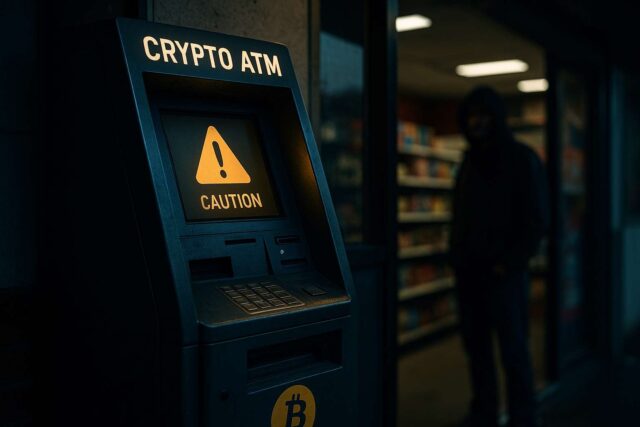
Photo-realistic illustration of a Bitcoin-enabled crypto ATM in a dimly lit store displaying a caution warning, with a shadowy figure watching from the background, symbolizing crypto ATM fraud risk.

A new FinCEN alert, issued in August 2025, has put the spotlight on the growing abuse of crypto ATMs in fraud and money laundering operations across the United States. According to the agency, more than $3.9 billion in suspicious transactions flowed through these kiosks between 2020 and 2024. These machines, also known as Bitcoin ATMs or CVC kiosks, are now being linked to large-scale ATM fraud.

FinCEN Alert: Why the Agency Is Sounding the Alarm

FinCEN, the U.S. Treasury’s financial crime unit, alerts on a sharp rise in illicit activity involving Convertible Virtual Currency (CVC) kiosks. These machines allow customers to deposit cash in exchange for digital assets like Bitcoin and were designed to increase access to crypto. However, the latest FinCEN warning suggests crypto ATMs have become tools for criminal exploitation and fraud.

The advisory directs banks, credit unions, and money service businesses (MSBs) to apply stricter scrutiny when servicing crypto ATM operators. This is especially critical when those operators are unaffiliated with major exchanges.

Criminal Syndicates and Scams Targeting the Vulnerable

According to FinCEN, they identified transnational crime syndicates and drug cartels increasingly using Bitcoin kiosk scams. These groups launder illicit cash through the kiosks by directing victims to deposit funds into preassigned crypto wallets.

Scams targeting elderly individuals and non-native English speakers have become widespread. Common tactics include impersonating officials, manipulating online relationships, or posing as tech support. In each case, the victim is told to withdraw cash and convert it into crypto at a local ATM.

This mix of money laundering tactics and social engineering has alarmed compliance teams across the banking industry.

Crypto ATM Regulations and Red Flags Financial Institutions Must Monitor

FinCEN highlights that banking partners are not vetting crypto ATM operators thoroughly enough. The lack of cryptocurrency compliance, especially with KYC and transaction monitoring, creates a high risk of abuse.

Red flags listed in the advisory include:

  • Use of third-party intermediaries
  • Structuring transactions just below reporting thresholds
  • Unusual clustering of ATMs with high-volume activity

The alert also urges financial institutions to examine relevant FinCEN reports for suspicious activity trends. It is important that institutions understand who owns and operates the crypto kiosks they serve.

The emergence of crypto ATM fraud as a systemic crime risk raises concerns because money laundering networks successfully exploit the fragmented oversight.

What Financial Institutions Need to Do Now

FinCEN reminds regulated institutions of their obligations under the Bank Secrecy Act. That includes implementing financial institution due diligence tailored to the risks posed by crypto kiosks. Extra scrutiny is expected for kiosk operators, particularly when business models appear opaque or inconsistent with known industry practices.

FinCEN also encourages institutions to review their suspicious activity reporting systems. This ensures that trends involving kiosk-based fraud aren’t overlooked.

A Regulatory Flashpoint for the Crypto Ecosystem

This alert is not just about kiosks. It reflects a broader concern about the weakest links in the crypto ecosystem. With billions in money laundering activity tied to these semi-anonymous crypto terminals, policymakers are likely to push for tighter crypto ATM regulations.

At the same time, enforcement pressure will rise on institutions that fail to respond. Crypto ATMs sit at the crossroads of cash and digital value. This hybrid nature challenges AML frameworks designed for one or the other—but not both.

Conclusion: Crypto ATMs in the Crosshairs

The FinCEN alert marks a turning point in how regulators view crypto kiosks. These machines are no longer niche tools. They are now central to fraud schemes and money laundering operations. Institutions that look the other way could face enforcement actions, or worse, complicity in a multi-billion-dollar wave of crypto ATM fraud.

Closing compliance gaps and tightening oversight may still contain the growing risk of crypto ATM fraud before the next billion is lost.

Readers’ frequently asked questions

What kind of licenses are required to operate a crypto ATM in the U.S.?

Crypto ATM operators are typically required to register as Money Services Businesses (MSBs) with FinCEN and comply with applicable state-level money transmitter licensing laws. The exact requirements vary by state, and failure to obtain the correct licensing can result in enforcement actions.

Are financial institutions legally responsible if a kiosk operator they serve engages in fraud?

While financial institutions are not automatically liable for a client’s misconduct, they may face regulatory penalties if they fail to conduct proper due diligence or ignore red flags. Under the Bank Secrecy Act, institutions must monitor for suspicious activity and file SARs when necessary.

Can victims of crypto ATM scams recover their funds?

In most cases, funds sent through crypto ATMs are not recoverable due to the irreversible nature of blockchain transactions. Victims should report incidents immediately to local law enforcement, the FBI’s Internet Crime Complaint Center (IC3), and the ATM operator if possible.

What Is In It For You? Action items you might want to consider

Review your institution’s exposure to crypto ATM operators

If you work in banking, compliance, or fintech, audit your customer base for any links to independent crypto ATM networks. Reassess risk models and customer due diligence frameworks, especially for kiosk operators not affiliated with licensed exchanges.

Understand your local state’s crypto ATM laws

Crypto ATM regulations in the U.S. vary widely by state. Lawyers, policy analysts, and fintech founders should track state-level licensing and reporting requirements to identify potential enforcement gaps or business opportunities.

Warn customers about common scam tactics

Financial advisors, ATM operators, and community banks should proactively inform customers, especially elderly or non-English speakers, about red flags, e.g., government impersonation or romantic fraud, asking them to withdraw cash and use crypto kiosks.

Coinbase’s Base Network Suffers Outage — What Happened and Why It Matters

Photo-realistic image of a modern network operations center showing a large central monitor with the message “Sequencer Offline” and blockchain graphics, illustrating the Base network outage affecting Coinbase’s Layer 2.

Coinbase’s Layer 2 blockchain, Base, experienced its first major disruption on August 4, 2025. The Base network outage halted block production for nearly 30 minutes. It raised concerns about reliability and centralization in blockchain infrastructure. While operations resumed without any user impact, the incident offered a revealing glimpse into how these next-generation systems work; and what can go wrong.

What Is Base and Why Should You Care?

Base is a Layer 2 blockchain, a network built on top of Ethereum. It helps make transactions faster and cheaper. Developed by Coinbase, Base aims to bring more people into crypto by improving scalability while staying connected to Ethereum’s security model.

For users, it means lower fees and quicker trades. For developers, it offers a faster platform to build decentralized apps. But like all tech, it’s not immune to glitches.

What Went Wrong?

At around 5:36 PM UTC on August 4, the Base network suddenly stopped producing blocks. The Base block production halted for nearly 30 minutes, leaving transactions temporarily paused until the issue was resolved.

The cause? A bug known as an unsafe head delay. It sounds complex, but here’s the gist: Base relies on a system called a sequencer to organize and process transactions. When the sequencer hit this bug, it froze. Like a traffic light stuck on red, everything behind it came to a halt.

Base outage explained: a critical sequencing bug paused transaction flow across the network. No funds were lost, but the incident revealed how much Base still depends on a single operator.

What’s a Sequencer, and Why Is It a Problem?

In a Layer 2 system like Base, the sequencer is responsible for bundling transactions and passing them on to Ethereum. Coinbase currently runs this sequencer alone.

This setup has benefits, such as speed, efficiency, and low cost, but also poses risks. When there’s just one sequencer, there’s a central point of failure. That’s exactly what happened here: the bug affected the centralized sequencer, and without a backup, the entire network paused.

How Did Coinbase Respond?

To their credit, Base’s developers responded quickly. The team acknowledged the outage publicly and confirmed that no Base user funds were lost. A fix for the unsafe head delay bug is in the works. Base is now operating normally again.

Transparency helped calm concerns. But the event highlighted a need for more resilient infrastructure.

Why This Base Outage Matters

This was the first Base downtime since its launch in August 2023. While it didn’t cause any financial damage, it raised serious questions about Layer 2 reliability.

Blockchains are supposed to be decentralized and unstoppable. But when systems like Base rely on a centralized sequencer, they become vulnerable to single points of failure, whether due to bugs or outages.

For a network backed by one of the biggest names in crypto, that’s a concern.

What’s Next for Base?

Coinbase has stated it’s working on decentralizing Base’s infrastructure. That would eventually involve multiple sequencers to prevent future disruptions. In the meantime, the network continues to grow in usage and adoption.

This Base recovery shows that even promising blockchain projects are still maturing. Events like this one often push teams toward better design.

Should You Be Worried?

If you’re a user or developer on Base, the short answer is no. Your funds are safe, and the network is stable. Nonetheless, the Base network outage is a timely reminder that even the most trusted platforms in crypto still face growing pains.

For the broader crypto industry, it’s a call to take decentralization more seriously. Not just as a principle, but as a safeguard.

Readers’ frequently asked questions

Did the outage affect wallet access or decentralized apps built on Base?

Most wallets and dApps remained accessible, but transaction processing was paused during the Base outage. Some apps may have displayed delays or error messages until the sequencer was restored.

How is Base’s sequencer different from Ethereum’s transaction system?

Ethereum relies on a decentralized network of miners or validators to process transactions. In contrast, Base currently uses a single centralized sequencer operated by Coinbase. This makes Base faster, but more vulnerable to temporary failures.

Can this kind of outage happen again?

Yes, until Base decentralizes its infrastructure or introduces a backup system, outages caused by bugs or failures in the sequencer are still possible. Coinbase has acknowledged this and is working on technical improvements.

What Is In It For You? Action items you might want to consider

Check dApp status on Base if you experienced failed transactions

If you used any apps on Base during the outage window, verify that your transactions were processed or refunded. Most projects post status updates on X or Discord when disruptions occur.

Monitor Coinbase’s updates on Base decentralization efforts

The outage exposed reliance on a single sequencer. Developers and infrastructure watchers should track Coinbase’s roadmap for multi-sequencer support or fallback mechanisms.

Educate yourself on Layer 2 sequencer risks

Before building or investing in a Layer 2 project, understand how sequencers work and whether the network has decentralized fail-safes. Centralized sequencers can introduce downtime and censorship risks.

Credix DeFi Protocol Exploited for $2.6M, Platform Taken Offline

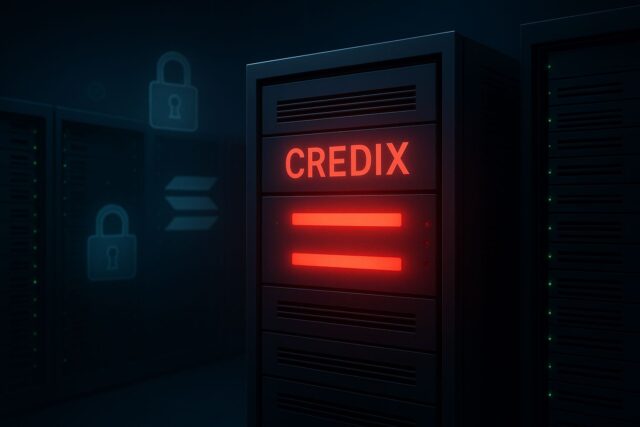
A dimly lit server room with a glowing red “CREDIX” server showing warning lights, symbolizing a DeFi hack. Faint Solana logos and digital padlocks appear in the background, highlighting smart contract vulnerability.

Solana-based DeFi platform CrediX has been taken offline after suffering a $2.64 million exploit. The incident targeted vulnerabilities in its smart contract infrastructure. It is part of a broader $4.5 million wave of attacks shaking confidence in decentralized finance protocols in 2025.

What Happened

CrediX is a DeFi protocol that specializes in real-world asset lending. It fell victim to a smart contract vulnerability that allowed attackers to manipulate the management of collateral. Technical details are still under investigation, but early reports indicate the attacker exploited a flaw in the logic related to loan issuance and redemption.

The CrediX hack caused $2.64 million in confirmed losses. It was the single largest target in this latest group of DeFi attacks. The breach happened on the Solana blockchain, which is popular among DeFi protocols due to its speed and low transaction costs.

Immediate Response

After detecting the exploit, CrediX suspended all borrowing and lending activity. The platform was taken offline to prevent further damage and allow time for investigation. On social media, the team said they are “conducting a full investigation” and working with external security experts to audit the protocol’s smart contracts.

There is no recovery plan yet. The pause highlights the fragility of DeFi systems when they are under attack.

Wider Impact

The CrediX exploit is part of a broader set of attacks that resulted in more than $4.5 million in damage. CrediX suffered the largest loss. The event has shaken confidence in the Solana DeFi ecosystem and added to investor concerns over security.

This incident joins a growing list of protocol breaches in 2025. Together, they suggest a rise in coordinated attacks on DeFi infrastructure.

Security Context

The 2025 DeFi exploit trend is gaining momentum. Attackers are now targeting protocols that handle tokenized assets and off-chain collateral. The CrediX hack shows how vulnerable DeFi systems can be. This is especially true for platforms focused on real-world asset lending, where on-chain logic controls real capital flows.

Even with increased audits and testing, smart contract vulnerabilities continue to be a weak point. That’s especially the case for newer projects scaling fast across ecosystems like Solana.

What Comes Next

The CrediX team has not released a post-mortem or timeline for recovery. It’s unclear if any user funds can be restored. The protocol may not resume operations soon.

For now, users are awaiting updates. The incident is a reminder that DeFi protocols must prioritize security design. One overlooked flaw can bring down an entire platform.

CrediX’s future remains uncertain. But one thing is clear: in DeFi, a single exploit can turn growth into a crisis overnight.

Blockchain Life 2025

"Skyline of Dubai bussines downtown at sunset with sun, United Arab Emirates. Dubai will once more host Blockchain Life, Dubai’s Largest Web3 and Crypto Event.

Blockchain Life 2025 returns this October for its 15th anniversary. The two-day event, which will be held at the Festival Arena, will bring together over 15,000 attendees working across the crypto and blockchain space for insightful discussions on the growth and future of blockchain and Web3. Expect in-depth explorations of blockchain infrastructure, trading strategies, mining innovations, regulations, tokenization, and more.

What Makes Blockchain Life 2025 a Must-Attend?

Blockchain Life 2025 Dubai promises to be the most ambitious edition yet for several reasons, including the diverse crowd and bold agendas.

  • Insightful Discussions on the Industry

The agenda covers a wide range of topics: blockchain infrastructure, innovative mining tech, tokenization, DeFi, regulation, and Web3. Attendees will get to hear from industry leaders and participate in these discussions.

  • Real-World Tactics for Market Highs

Over 200 speakers will take to the stage, including investors, developers, founders, entrepreneurs, traders, and service providers. Hear from people who have navigated multiple market cycles and made significant gains. Learn when to buy, exit, and what trends to watch as we approach the next bull run peak.

  • Front-Row Access to Leaders within the Crypto Space

With over 60% of attendees being founders, Blockchain Life 2025 Dubai offers rare proximity to decision-makers driving real impact.

  • A Global Crowd

Meet, learn, and connect with people from different economies. Blockchain Life 2025 Dubai brings together attendees from Europe, Asia, North America, Africa, South America, and Australia.

  • Expo Hall

Over 200 companies are showcasing everything from ASIC miners to DeFi protocols, layer-2 scaling technologies, NFT platforms, and AI-powered trading tools.

  • Side Events and Afterparty

A chance to participate in multiple side events. Blockchain Life Week 2025(24 Oct–2 Nov) includes workshops, VIP dinners, hackathons, and a grand afterparty.

  • Dubai Advantage

Dubai provides an ecosystem built for crypto growth, making it one of the top destinations globally to launch, invest, and scale in Web3. Strategic government policies, access to international capital, and zero-tax incentives have attracted some of the world’s most ambitious blockchain companies. Blockchain Life 2025 puts you right at the center of all this.

Venue and Registration

Blockchain Life 2025 Dubai will be held at the Festival Arena on 28 to 29 October 2025. Tickets are available in four tiers: Standard, Business, VIP, and Whale. For more information on ticket pricing, speakers, and venue details, visit their official website.  

Blockchain Life 2025 is about substance. Two days of conversations that will shape the future of blockchain and Web3. Whether you are an investor, entrepreneur, developer, builder, or curious trader, this is an event you can’t afford to miss.       

- Advertisement -

FEATURED