Home Blog Page 95

JPMorgan and Coinbase Link Up to Bring Crypto Access to 80M Chase Customers by 2026
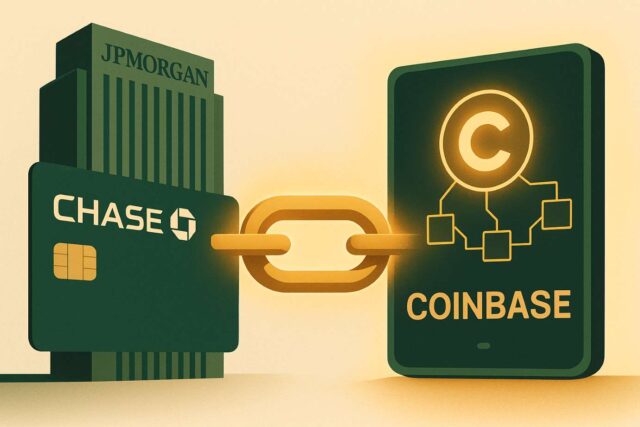
Illustration of JPMorgan Chase bank card linked to a Coinbase crypto wallet via a glowing digital chain, symbolizing the JPMorgan Coinbase partnership and direct bank-to-crypto integration, using green and gold tones.

JPMorgan and Coinbase are teaming up to make crypto more accessible to everyday bank customers. The two giants, one from Wall Street, the other from Silicon Valley, are launching a direct integration to enable 80 million Chase users to connect their bank accounts to Coinbase. The goal is to make it easier to buy crypto with Chase, use credit card rewards to obtain USDC, and manage digital assets without relying on third-party apps. It’s a big step toward bringing crypto into the mainstream banking experience.

Crypto Without the Extra Steps

Right now, moving money from a bank to a crypto exchange often involves clunky workarounds. Logging into aggregators like Plaid or manually transferring funds. This new JPMorgan Coinbase partnership will cut out the middlemen. Chase customers will be able to link their bank accounts and credit cards directly to their Coinbase wallets. That means fewer hoops to jump through when buying crypto. Besides, it also eliminates the risk of entrusting third-party services with sensitive banking data.

Customers will also be able to buy crypto with Chase debit or credit cards, making the process fast and familiar. And for those who prefer stablecoins, there’s a new perk: Chase credit card holders will soon be able to earn crypto rewards in USDC, turning traditional card perks into digital dollars.

This Coinbase bank integration is more than a convenience feature. It represents a structural shift in how crypto becomes part of mainstream financial services. By embedding wallet access and purchase mechanisms directly into the banking stack, JPMorgan and Coinbase are streamlining user experience while maintaining the rigor of traditional compliance standards.

Bank-Grade Security, Crypto-Level Access

JPMorgan isn’t just dipping its toes into crypto. This integration is built from the ground up with bank-grade crypto compliance in mind. Unlike most fintechs that rely on open APIs and data-sharing platforms, JPMorgan is building these rails in-house. They don’t compromise on the tight security and full regulatory alignment.

That’s a big deal. It shows that one of the most established financial institutions in the U.S. is ready to treat digital assets as part of the banking ecosystem. It’s not something separate or fringe. Keeping everything under the bank’s compliance umbrella, this bank-to-crypto integration could become a blueprint for how other institutions enter the space.

What’s in It for Coinbase and JPMorgan

For Coinbase, this partnership is a huge win. Instead of relying solely on crypto-savvy early adopters, it now gets embedded access to JPMorgan’s vast customer base. That makes onboarding easier and potentially gives Coinbase a first-mover advantage when it comes to regulated, mainstream crypto access.

JPMorgan, on the other hand, stays ahead of the fintech curve. Offering features like Coinbase credit card crypto purchases, and Coinbase stablecoin rewards appeals to younger, digital-native consumers. At the same time, it opens new revenue streams. Reducing dependence on third-party tools like Plaid awards better control over the user experience.

Rolling Out in Phases

The rollout won’t happen all at once. JPMorgan and Coinbase say pilot programs will begin in late 2025, focusing on converting reward points into USDC first. After that, they’ll introduce direct wallet integrations and crypto purchases with Chase cards throughout 2026. The phased approach gives both companies time to refine the experience and ensure it meets regulatory standards.

What This Means for the Industry

The JPMorgan Coinbase partnership sends a strong message: crypto is no longer just a playground for startups. When one of the biggest U.S. banks builds a direct bridge to a major crypto exchange, it’s a sure signal that digital assets are becoming part of the financial mainstream.

This move could pressure other banks and fintechs to follow suit, or risk falling behind. It also raises questions about the future of aggregator platforms. Banks bringing crypto access in-house diminishes their role.

Closing Thoughts

Is this the beginning of a new phase in digital finance? One where Crypto is no longer treated as a separate system, but simply as part of everyday banking? Through this partnership, JPMorgan and Coinbase are making it easier, safer, and more intuitive to move between dollars and crypto by linking Chase accounts directly to Coinbase.

The real test will come in 2026. But if this rollout goes as planned, JPMorgan and Coinbase might not just be streamlining crypto access. They could be redefining what it means to bank in the digital age.

Readers’ frequently asked questions

Will I need a new Coinbase account if I already use Chase?

No. Existing Coinbase users can link their Chase accounts once the integration goes live. New users will still need to create a Coinbase account to access crypto services.

Can I convert Chase credit card points into other cryptocurrencies besides USDC?

Initially, reward point conversions will be limited to USDC. Coinbase may allow users to swap USDC into other cryptocurrencies, but Chase points will not directly convert into Bitcoin or Ethereum at launch.

Will using this integration affect my bank fees or credit card terms?

JPMorgan has not announced any fee changes tied to the integration. Standard Coinbase trading fees will still apply when buying or selling crypto through the platform.

What Is In It For You? Action items you might want to consider

If you’re a Chase customer already using Coinbase, watch for announcements in late 2025 or early 2026 and connect your accounts to streamline your crypto access.

Evaluate the benefits of USDC rewards over traditional point systems

With the option to redeem credit card rewards in USDC, consider whether a stablecoin-based rewards system aligns better with your financial goals or crypto strategy.

Monitor whether other banks or fintechs follow JPMorgan’s lead

This integration may trigger similar moves across the industry. If you’re using other financial services, keep an eye out for competitive offerings or crypto-enabled products.
eToro’s Tokenized Leap Into the Future – Will We See an eToro Blockchain Soon?

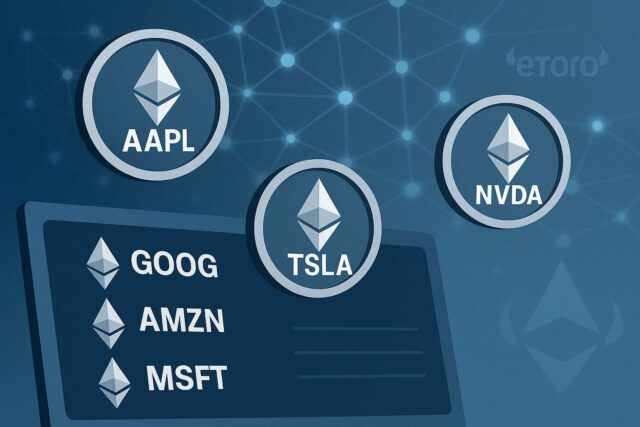
Illustration of tokenized U.S. stocks as Ethereum-style coins labeled AAPL, TSLA, NVDA, GOOG, and AMZN, floating over a blockchain network with eToro branding, symbolizing eToro's move into 24/5 trading and blockchain infrastructure.

Online trading platform eToro is taking a major step toward decentralized finance by launching tokenized versions of 100 top U.S.-listed stocks, like Apple, Tesla, and Nvidia, on the Ethereum blockchain. These tokenized stocks, issued as ERC-20 tokens, are now available for 24/5 trading via the eToroX platform. That’s a radical departure from traditional market hours and centralized custody.

But the bigger story might be what comes next. CEO Yoni Assia recently confirmed that eToro is actively exploring the development of its own blockchain infrastructure, possibly an Ethereum Layer 2 (L2) or a bespoke solution. According to Assia, discussions are already underway with “multiple ecosystems.”

Tokenized Stocks, Now on Ethereum

At the center of eToro’s latest innovation is the ability for global users to trade tokenized versions of real equities continuously from Monday to Friday. These ERC-20 stocks are fully backed by the corresponding underlying shares. They can be traded around the clock, eliminating traditional market closure barriers.

The eToroX platform, licensed in Gibraltar, is hosting this first phase of the rollout. U.S. users are excluded for now, but international investors can gain exposure to tokenized equities on-chain, with support from decentralized price oracles and third-party custody options.

From Broker to Blockchain Builder?

While eToro is known for its user-friendly brokerage and copy-trading tools, Assia’s remarks suggest a broader pivot. By potentially launching an eToro blockchain, the company could transition from a trading intermediary to an infrastructure provider.

There are compelling reasons to consider this move. A custom blockchain could give eToro better control over:

  • Scalability and transaction fees (vs. relying solely on Ethereum mainnet)
  • Cross-asset interoperability, especially with stablecoins and crypto-native tokens
  • Regulatory flexibility, particularly for tokenized asset trading under emerging regimes

If realized, such a move would place eToro in direct competition with projects building tokenized asset infrastructure, such as Synthetix, Avalanche Subnets, or Polymesh.

Why Tokenized Equities Matter Now

This isn’t just a tech demo. Tokenized equities are part of a growing global push to integrate traditional finance (TradFi) with blockchain-based ecosystems. Tokenization improves liquidity, enables fractional ownership, and expands access to markets that were previously gated by jurisdiction or capital requirements.

With Ethereum stock trading now live and regulatory clarity improving, platforms like eToro are positioning themselves at the intersection of institutional-grade compliance and DeFi flexibility.

Regulatory Clarity Unlocks New Moves

The timing is no accident. The EU’s MiCA regulation has already introduced a comprehensive framework for crypto assets. At the same time, sandbox programs in the UK, Singapore, and UAE are accelerating institutional experimentation with tokenized finance. U.S. clarity remains elusive, but the global trend is clearly shifting toward enabling compliant blockchain-based trading environments.

For eToro, this means less regulatory risk and more incentive to build infrastructure that supports tokenized stocks at scale.

What Would an eToro Blockchain Look Like?

While no technical specs have been confirmed, a future eToro blockchain might take one of several forms:

  • Ethereum L2 rollup optimized for tokenized equities and low-latency trading
  • Appchain or sidechain focused on regulated assets, stablecoins, and identity-verified wallets
  • Interoperable layer integrating custodial services, DeFi protocols, and fiat ramps

However, such a shift carries risks: liquidity fragmentation, compliance hurdles across jurisdictions, and adoption challenges beyond the current user base.

Conclusion: A Broker Reinventing Itself?

eToro’s launch of 24/5 trading for tokenized U.S. stocks is a milestone for Ethereum-based finance. But behind the scenes, a more ambitious roadmap may be unfolding. If the company follows through on its plans to build a proprietary eToro blockchain, it could redefine how brokerage firms participate in the next era of decentralized infrastructure.

Whether this remains a speculative venture or becomes a foundational pillar of eToro’s strategy remains to be seen. But the pivot from platform to protocol is clearly underway.

Readers’ frequently asked questions

Can I transfer the tokenized stocks from eToroX to my personal Ethereum wallet?

Yes. eToroX allows withdrawals of tokenized stocks to compatible Ethereum wallets, provided the user has passed full KYC and meets jurisdictional eligibility. However, availability may depend on regulatory conditions in your country.

Are there trading fees or gas fees when buying or selling tokenized stocks on eToroX?

Yes. eToroX charges standard trading fees for tokenized assets, and on-chain transfers also incur Ethereum gas fees. These costs vary based on market conditions and network congestion.

Is eToro licensed to offer tokenized equities in all countries?

No. eToroX operates under a license from the Gibraltar Financial Services Commission, and access to tokenized equities is restricted in certain jurisdictions, including the United States. Users should verify local regulatory restrictions before attempting to trade.

What Is In It For You? Action items you might want to consider

Explore non-custodial tokenized stock options

If you’re an active crypto user, test the withdrawal functionality on eToroX to move ERC-20 stocks into your own Ethereum wallet and monitor decentralized trading possibilities.

Monitor eToro’s blockchain infrastructure developments

Stay updated on Yoni Assia’s announcements and partnerships. If eToro launches an L2 or custom blockchain, early users may benefit from liquidity programs or ecosystem incentives.

Review local regulatory frameworks for tokenized assets

Before engaging with tokenized equities, check whether your jurisdiction allows retail access to these instruments. Rules vary significantly across the U.S., EU, Asia, and MENA regions.

Kraken IPO 2026: $500M Raise at $15B Valuation Signals Public Market Return

Glass facade of a modern office tower reflecting the Kraken logo, with blurred financial charts and ticker tape in the background, symbolizing crypto IPO ambitions and institutional finance.

Kraken might be gearing up for its most ambitious move in years: a $500 million raise to propel the company toward a long-anticipated Kraken IPO in 2026. With a targeted $15 billion valuation, the crypto exchange is betting that improved regulatory clarity and renewed institutional interest will create the right environment for a public debut. If successful, this would mark one of the largest crypto IPOs since Coinbase.

Kraken’s Capital Strategy: Why $500 Million, Why Now?

Kraken’s plan to raise $500 million is not just about securing funds. It’s a clear move to position itself for a future IPO.

The Kraken funding round is also designed to boost the company’s valuation. Kraken was last valued at $10.8 billion in 2022. Now, it’s aiming for a Kraken $15B valuation, reflecting growing confidence in the recovery of the crypto sector. The exchange is reportedly working with top investment banks to bring on large-scale institutional backers, including private equity firms and crypto-native funds, that can provide long-term support.

The IPO Roadmap: Kraken’s Path to the Public Markets

The Kraken IPO 2026 push wouldn’t come out of nowhere. For years, the exchange has been rumored to be planning a public listing. CEO Jesse Powell previously expressed caution over regulatory hurdles and market timing. Recent developments, however, suggest the company could now be actively preparing to go public.

This Kraken public listing would follow Coinbase’s landmark 2021 debut, which set a high watermark for the industry. Kraken appears to be taking a more deliberate approach by focusing on internal restructuring, transparent governance, and audit readiness.

Regulatory Tailwinds: Crypto’s U.S. Policy Turn

Kraken’s funding push comes at a time when U.S. crypto regulation is undergoing a meaningful transformation. While the SEC’s approval of spot Bitcoin ETFs in early 2024 helped legitimize digital assets in the eyes of institutional investors, the more decisive factor driving IPO readiness is the rapid advancement of crypto policy under the current administration.

Since early 2025, Congress has taken an active role in shaping the legal foundations for digital assets. It enacted new laws that clarify token classifications, market structure, and stablecoin issuance. Combined with proactive steps by agencies like the CFTC and Treasury, this legislative progress has created a more predictable environment for crypto businesses considering a public listing.

Kraken’s regulatory strategy is built around this shift. The exchange is expanding its legal and compliance teams in both the U.S. and Europe to meet cross-border requirements and align with emerging global standards. Regulation is no longer just a hurdle; it’s becoming a launchpad for Kraken’s public market ambitions.

Institutional Appetite: Will Public Markets Welcome Another Crypto Exchange IPO?

Kraken’s potential 2026 IPO ambitions are emerging at a time when institutional interest in crypto is beginning to rebound, even if few firms have taken concrete steps toward going public. While the bear market drove capital away in 2022 and 2023, recent trends show a cautious return of large asset managers.

The Kraken institutional investors targeted in this raise include not just crypto-native firms. They also address traditional capital allocators seeking digital asset exposure. With crypto trading volumes climbing and Bitcoin reaching new highs above $115,000, Kraken sees an opportunity to attract long-term institutional backing.

Risks and Roadblocks: What Could Derail Kraken’s IPO Push?

Future political shifts could still reshape the landscape. The 2026 midterms may alter the balance of power in Congress, potentially slowing or reversing crypto-friendly legislative momentum. Likewise, turnover at regulatory agencies or a shift in the tone of enforcement actions could dampen IPO optimism heading into 2026.

Market volatility is another risk. If Bitcoin falls or macroeconomic conditions worsen, investor sentiment could quickly shift. Kraken must also execute its operational scaling carefully to preserve investor confidence during the transition to a public company.

Conclusion: Kraken’s IPO Moment — Or Just Another Signal?

The Kraken $500M raise is more than a funding event. It reflects a larger ambition to re-enter the public conversation and reshape how crypto exchanges approach growth. With a $15B valuation in sight, Kraken is clearly signaling its intent.

Whether this plan leads to a successful Kraken IPO in 2026 will depend on how well the company balances timing, market dynamics, and regulatory expectations. Kraken may be inching closer to this long-awaited move toward a public listing than we think.

Readers’ frequently asked questions

Has Kraken filed any official paperwork with the SEC for its IPO?

No. As of July 2025, Kraken has not filed an S-1 registration statement for an IPO. If it proceeds with a private fundraising round involving U.S. investors, it will likely be required to file a Form D with the SEC after the first sale of securities.

Can non-U.S. investors participate in Kraken’s potential pre-IPO funding round?

Typically, pre-IPO funding rounds are limited to accredited institutional investors and are subject to local securities laws. Kraken has not publicly disclosed whether non-U.S. participants will be included.

Is Kraken currently a publicly audited company?

No. Kraken is a privately held company and does not publish audited financial statements. This may change if Kraken proceeds with IPO preparations in 2026, requiring SEC-compliant disclosures.

What Is In It For You? Action items you might want to consider

Monitor Kraken’s SEC filings and disclosures

If you are an investor or legal observer, track the SEC’s EDGAR database for a potential Form D filing or eventual S-1 registration. These will offer insight into Kraken’s financials and 2026 IPO readiness.

Review private placement rules in your region

Prospective investors outside the U.S. should review their local securities regulations to determine eligibility for participating in large private raises like Kraken’s. Most jurisdictions restrict access to institutional or accredited investors.

Compare Kraken’s path to other crypto IPOs

If you’re evaluating the long-term viability of crypto exchange listings, compare Kraken’s approach to Coinbase’s IPO in 2021 or Circle’s postponed plans. Consider differences in regulatory timing, investor strategy, and public disclosures.

Dragonfly Dodges DOJ Heat — But the Message to Crypto VC Is Clear

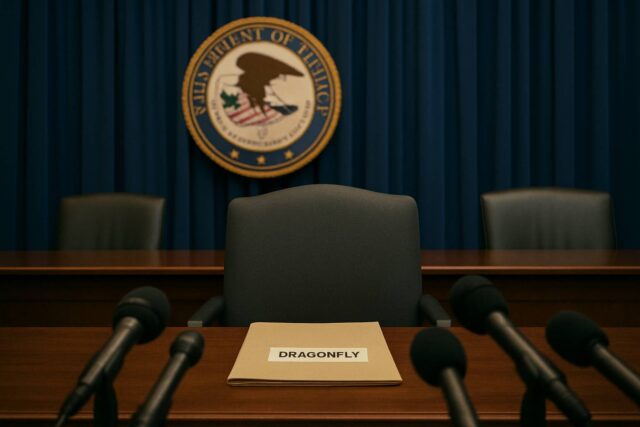
Empty government hearing room with microphones aimed at a vacant chair and a folder labeled "Dragonfly," with the Department of Justice seal blurred in the background, symbolizing media scrutiny during the Dragonfly DOJ investigation.

After briefly landing in the crosshairs of media speculation, crypto venture firm Dragonfly has been cleared by the U.S. Department of Justice. The DOJ’s clarification, that it is not investigating Dragonfly, may close the chapter for the firm, but it opens a new one for the entire crypto VC sector. As fears of retroactive enforcement grow, so does scrutiny of past DeFi investments and the way media reports shape perception. The Dragonfly DOJ investigation story is now over, but its ripple effects are only beginning.

What Sparked the Rumors?

The controversy began in mid-July when several crypto media outlets reported that the DOJ was “considering” criminal charges against Dragonfly Capital employees. These reports connected the firm’s early investment in privacy protocol Tornado Cash to the DOJ crypto probe into money laundering and sanctions violations.

Though framed cautiously, the implication was clear: Dragonfly Capital charges could be forthcoming. The headlines circulated widely, despite relying on unnamed sources and offering no confirmation from official channels.

The DOJ Clarifies: No Target, No Charges

In court, federal prosecutors reportedly acknowledged that Dragonfly was not identified as a target or subject in any ongoing investigation. This was disclosed through court filings. No formal charges have been filed, and Dragonfly maintains it has received no contact or inquiry from law enforcement.

This directly contradicted the prevailing narrative. Dragonfly responded by reaffirming that law enforcement never reached out to the company, and they did not know of any pending action. The DOJ clarification neutralized the legal threat, but the reputational damage had already been done.

This episode underscores how quickly a Dragonfly DOJ investigation became a trending phrase, despite the absence of any actual probe.

Who Is Dragonfly?

Founded in 2018, Dragonfly Venture Capital is a crypto-native investment firm with global operations spanning the U.S. and Asia. It has backed leading protocols and platforms like Ethereum, StarkWare, dYdX, Bybit, and zkSync. Known for its early-stage bets and conviction in privacy tech, the firm also invested in Tornado Cash well before the U.S. Treasury sanctioned it in 2022. At the time the investment occurred, the Tornado Cash Dragonfly connection was entirely legal.

Dragonfly rebranded in 2023, dropping “Capital” from its name. It has since positioned itself as a cross-border powerhouse in Web3 innovation.

Reputational Fallout and Industry Shockwaves

Even though Dragonfly was not a DOJ target, the public narrative briefly treated it as such. For VCs in the space, this raised a chilling question: Is any past investment safe from reinterpretation under evolving crypto VC regulation?

Legal scholars and crypto insiders voiced concern over the idea of retroactive liability. The suggestion that a venture firm could face charges simply for investing in a protocol, especially before any legal prohibition, set off alarm bells. This episode highlighted the systemic DeFi investment risk tied to regulatory ambiguity.

What This Means for Crypto VC Firms

The DOJ may not have pursued Dragonfly, but the message landed anyway: The lines between legal, compliant investing and criminal exposure are getting blurrier.

In a regulatory climate where sanctions can be applied retroactively and developers charged for open-source code, VCs must now weigh:

  • Jurisdictional exposure
  • Future legal interpretations of DeFi activity
  • Political risk associated with privacy tools

This adds a new layer of complexity to crypto venture firm scrutiny. It goes beyond smart contract audits and tokenomics.

Lessons Learned: Regulation, Risk, and Reporting

The biggest takeaway? Reputational damage doesn’t require actual guilt, only a suggestive headline. Dragonfly’s experience is a case study in how crypto media accountability and regulatory ambiguity can create a perfect storm.

Meanwhile, the Roman Storm Tornado Cash trial continues, keeping privacy protocols and their investors in the regulatory spotlight. Whether this leads to formal frameworks or further enforcement-first chaos, remains to be seen.

For now, the Dragonfly DOJ investigation is over. However, the scrutiny it unleashed on crypto venture firms is very much alive.

Readers’ frequently asked questions

What does it mean to be a “target” in a DOJ investigation?

In DOJ terminology, a “target” is a person or entity the government believes has substantial evidence against them and is likely to face charges. This is different from being a “subject,” who may be involved or have relevant information, but is not necessarily accused of wrongdoing.

What is Tornado Cash, and why did the U.S. Treasury sanction it?

Tornado Cash is a decentralized crypto mixer protocol that obfuscates transaction histories on the Ethereum blockchain. The U.S. Treasury sanctioned the protocol in August 2022 for allegedly facilitating the laundering of billions in illicit funds, including assets tied to North Korean hackers.

Roman Storm, co-founder of Tornado Cash, is currently facing U.S. federal charges related to money laundering, sanctions violations, and operating an unlicensed money transmitting business. His trial is a central legal test for how the U.S. applies financial crime laws to open-source protocol developers.

What Is In It For You? Action items you might want to consider

Review VC portfolio exposure to regulatory risk

Crypto investors and fund managers should assess whether any current or past investments are linked to protocols now facing sanctions or enforcement actions, particularly in the DeFi and privacy sectors.

Monitor developments in the Roman Storm trial

The outcome of the Tornado Cash co-founder’s case may influence future liability standards for developers, investors, and DAO contributors. Legal professionals and compliance teams should track proceedings closely.

Evaluate due diligence standards for DeFi investments

VCs active in early-stage crypto rounds should ensure their due diligence processes include legal and jurisdictional risk assessments, particularly for projects that operate without centralized control or compliance frameworks.

Crypto Meets Conventional: RAKBANK and Bitpanda Unlock Direct Trading for UAE Customers

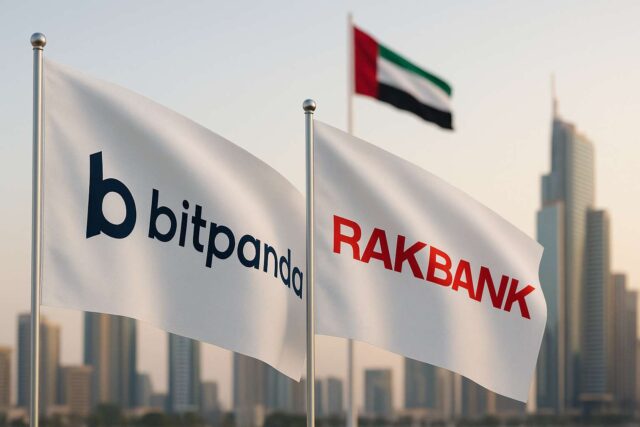
Flags of Bitpanda and RAKBANK side by side with the UAE flag in the background, set against a modern Dubai skyline. The companies partnered to launch embedded crypto trading services for UAE retail banking customers.

RAKBANK has officially rolled out crypto trading services for its retail customers, becoming the first traditional bank in the UAE to do so. Powered by European fintech Bitpanda, the new feature is built directly into the RAKBANK app, making it easy for users to buy, sell, and hold digital assets, such as Bitcoin and Ethereum. No separate exchange account is needed.

A New Era of Embedded Crypto Services

The launch marks a major milestone in the evolution of embedded crypto trading, integrating digital asset functionality into traditional financial services. With this rollout, RAKBANK crypto users can now buy, sell, and hold cryptocurrencies inside the bank’s existing mobile app.

This means no more switching platforms, setting up wallets, or navigating complex exchanges. It’s crypto access made simple, targeting everyday users who may have been hesitant to explore digital assets on their own.

The RAKBANK–Bitpanda Partnership

The collaboration between RAKBANK and Bitpanda UAE is the result of a year-long effort to align legacy banking infrastructure with modern digital finance tools. The partnership was first announced in August 2024, and the fully operational trading service officially launched on July 29, 2025.

RAKBANK acts as the customer-facing gateway, while Bitpanda Technology Solutions provides the white-label crypto infrastructure powering the service. All crypto assets are held in secure custody under Bitpanda’s EU regulatory framework. RAKBANK does not hold or trade crypto directly, ensuring compliance with local laws and financial safeguards.

What Can Customers Actually Do?

With just a few taps inside the RAKBANK app, retail customers can:

  • Buy and sell major cryptocurrencies, including Bitcoin (BTC), Ethereum (ETH), and others.
  • Access real-time market prices and execute trades instantly.
  • Hold crypto securely with Bitpanda’s EU-licensed custodial services.

This initiative brings crypto for retail customers into the mainstream. It eliminates friction for newcomers while reinforcing trust by embedding digital asset access within a familiar banking environment.

Why It Matters for the UAE and the Region

This launch positions RAKBANK at the forefront of crypto banking innovation in the Middle East. It reflects the UAE’s broader commitment to becoming a regulated crypto hub, with clear frameworks that enable safe and responsible adoption.

It also highlights a shift in consumer expectations. As digital natives demand more functionality from their banks, embedded features like crypto trading will likely become the norm, not the exception.

Bitpanda’s Regional Playbook

For Bitpanda, the launch is equally strategic. The Austria-based firm sees the UAE as a key market in its expansion roadmap. Therefore, it is leveraging its Bitpanda Technology Solutions arm to scale its white-label crypto infrastructure across other financial institutions in the region.

By powering RAKBANK crypto services, Bitpanda not only proves the viability of its platform. It also opens the door to more bank crypto partnerships across the Gulf.

Looking Ahead

The move raises important questions: Will other UAE banks follow RAKBANK’s lead? Could we soon see embedded access to tokenized securities, stablecoins, or even DeFi applications?

As the lines between banking and digital assets continue to blur, this rollout could mark the beginning of a broader wave of retail crypto adoption via institutional channels.

RAKBANK’s partnership with Bitpanda marks a significant inflection point in the evolution of consumer finance, in the UAE and globally. By embedding crypto services directly into its app, the bank is not only offering convenience. It is also redefining what everyday banking looks like in a digital-first economy.

For users in the UAE, crypto just became as easy as checking your balance, and that’s a breakthrough worth noting.

Readers’ frequently asked questions

Can I transfer the crypto I buy on RAKBANK’s app to an external wallet?

No, not at this stage. Crypto bought through the RAKBANK app is held in custody by Bitpanda and cannot be withdrawn to external wallets. This setup prioritizes regulatory compliance and user security.

Does RAKBANK hold a crypto license in the UAE?

No. RAKBANK does not hold or trade crypto directly and is not licensed as a virtual asset provider in the UAE. Instead, it partners with Bitpanda, which is fully regulated in the European Union and handles all crypto-related operations.

Which cryptocurrencies are available for trading in the RAKBANK app?

As of launch, users can trade leading cryptocurrencies like Bitcoin (BTC), Ethereum (ETH), and several others. The selection may expand over time, depending on Bitpanda’s support and regulatory alignment.

What Is In It For You? Action items you might want to consider

Explore crypto services from your existing bank

If you’re a retail customer in the UAE, check whether your bank is planning to offer crypto trading through embedded services. RAKBANK’s move could trigger similar offerings from competitors.

Test crypto trading inside traditional finance apps

Try using embedded crypto features if your bank offers them. These platforms may offer a smoother and more secure entry point into digital assets compared to setting up accounts on crypto-native exchanges.

Watch for Bitpanda’s expansion across the region

If you’re an investor or fintech professional, track Bitpanda Technology Solutions’ white-label deals in the Gulf. Their UAE launch could be a model for similar partnerships in Saudi Arabia, Qatar, or beyond.

- Advertisement -

FEATURED